Catholic saint biography
St. John the Apostle
- Commemoration:
- December 27
- Lived:
- First century; exact lifespan uncertain — Galilee
Roman feast of John, Apostle and Evangelist.
Why dates and liturgical observances can differ
Read the sources for this biography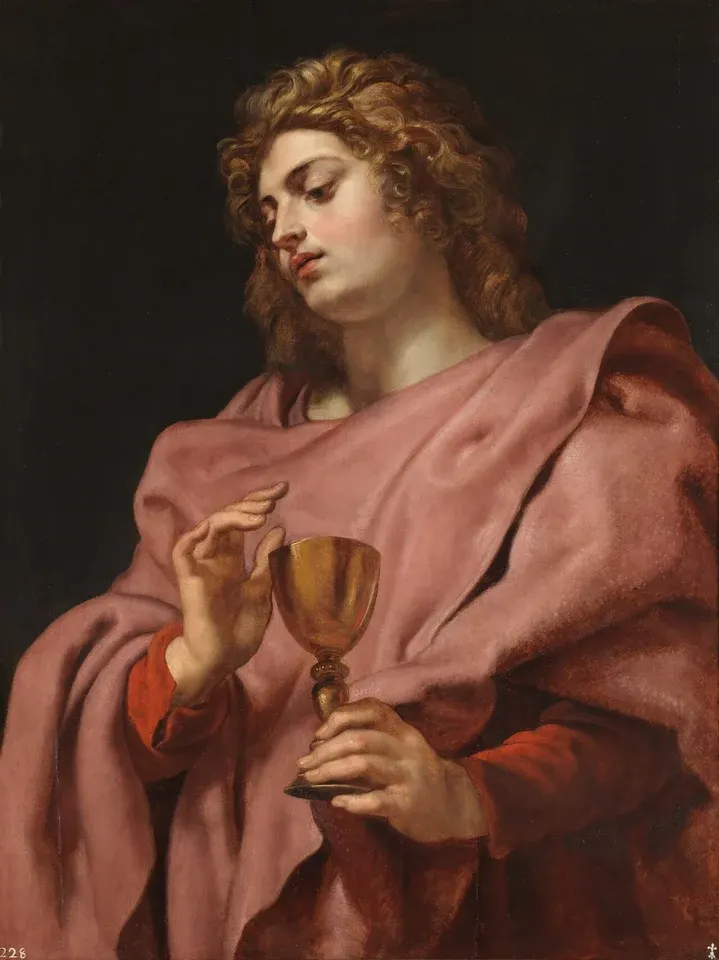
Biography
John, son of Zebedee and brother of James, was one of the Twelve Apostles. The Gospels place him among the disciples closest to Jesus, including at the Transfiguration and in Gethsemane. They also show the brothers needing correction when their ambitions or anger conflicted with Jesus' teaching.
The Gospel portraits do not begin with a detached theologian but with a fisherman called into discipleship alongside his brother. Their closeness to Jesus did not eliminate misunderstanding. Episodes of correction are part of the apostolic story and prevent later symbols of wisdom and love from flattening the human character of that calling.
Christian tradition identifies John with the beloved disciple of the Fourth Gospel and associates him with Ephesus and several New Testament writings. These identifications should be distinguished from what the texts explicitly say: the Gospel does not name its beloved disciple, and the identity of Revelation's John was disputed even in antiquity. The liturgical tradition remembers the apostle especially as a witness to divine love.
The Church reads the Johannine writings as an important witness to Christ, while their literary relationships remain a subject of scholarship. Revelation names a John exiled on Patmos; identifying that figure with the son of Zebedee is a traditional interpretation rather than an explicit statement of the book. The distinction protects the texts' actual testimony.
Context & contribution
Reading Revelation within the Johannine tradition
Benedict XVI's catechesis on the Johannine tradition locates Revelation among the troubles of seven churches in Asia Minor. The book addresses communities facing pressures from outside and tensions within. Its images therefore have a pastoral setting before they become material for later speculation about catastrophes.
The slain yet standing Lamb is central to that reading: the image joins Jesus' violent death with resurrection and authority. This theological interpretation does not settle the disputed identification of Revelation's author with the apostle. It shows how a text traditionally associated with John can be studied for its message while keeping the historical authorship question distinct.
Explore the sources for this section
AI-assisted source comparison updated 2026-09-26. Editorial approach
From the Saint Discovery blog
Keep exploring your faith
Practical guides to prayer, the saints, and living the Catholic faith.
Why Is Saint Luke's Symbol an Ox? Meaning and Biblical Roots
Discover why Saint Luke's symbol is a winged ox, its biblical roots, and how the image connects his Gospel with priesthood and sacrifice.
Go deeper into ScriptureRead the article Prayer & reflectionHow to Pray the Jesus Prayer: A Catholic Beginner's Guide
Learn the Jesus Prayer, its Eastern Christian roots and biblical meaning, with a simple Catholic practice focused on Christ and mercy.
Go deeper into ScriptureRead the articleFrom reading to reflection
What will you carry with you?
After reading about St. John the Apostle, take a moment to consider:
- Read Revelation's message to one of the seven churches and identify its concrete concern before interpreting the book's larger images.
These are reflection prompts from Saint Discovery, not quotations from the saint.
Sources and further reading
Biography source comparison recorded on . This is an AI-assisted comparison, not independent human or ecclesiastical approval.
What the recorded review covers
AI-assisted expansion of the existing source-reviewed biography with comparison to retrieved cited sources; not ecclesiastical approval
A source list helps you check an account; it does not establish that every claim is certain. Follow the biography’s qualifications about historical evidence, traditions and feast calendars.
Suggest a correction to this biography
How we research these pages and handle corrections · Directory corrections log
More lives to explore
Suggestions based on the site’s quiz themes, not a historical relationship or a measure of holiness.