Catholic saint biography
St. Basil the Great
- Commemoration:
- January 2
- Lived:
- About 329–379 — Cappadocia
Why dates and liturgical observances can differ
Read the sources for this biography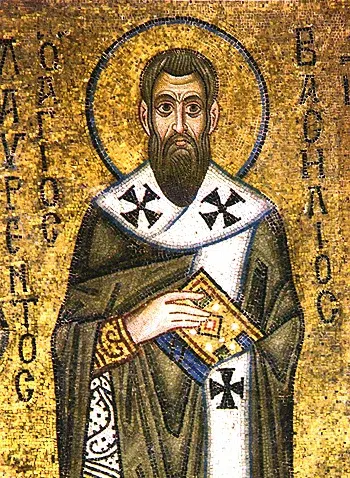
Biography
Basil the Great was a fourth-century bishop of Caesarea in Cappadocia, a theologian, and an influential guide to communal religious life. His leadership joined intellectual work with practical assistance to the poor and the sick.
Raised in a Christian family, Basil studied in major centers of learning before turning toward a more explicitly ascetic life. His sister Macrina’s example helped shape that change. He encouraged communities whose prayer and shared discipline remained connected with the needs of the local Church.
As bishop from 370, he defended the divinity of the Son and the Holy Spirit and worked to heal divisions among Christians. His writings also guided monastic life. Schools, hospitals, and the charitable institutions associated with his name made service a visible expression of the faith he taught.
Basil died in 379. His influence continues in Eastern Christian prayer and religious life, while Western monastic tradition also drew on his teaching. He is distinct from his father, Basil the Elder. The Roman calendar remembers him with Gregory of Nazianzus on January 2. His legacy cannot be understood through theology or charity alone: his life deliberately connected them.
Context & contribution
A community of prayer could also operate a school
Basil's communities remained connected with the local church through service, including schools and care for sick people. Benedict XVI emphasizes that this arrangement was a distinctive aspect of his monastic vision. Withdrawal for prayer did not remove communal obligations; it could prepare people to carry them out together.
The Basiliade brought several forms of assistance into an organized complex. Basil also shaped psalmody and Eucharistic prayer, so his legacy joins two kinds of shared practice: worship and material care. The combination matters theologically. People learned to speak of God's love in a community that also had to decide how to receive and support its vulnerable neighbors.
Explore the sources for this section
AI-assisted source comparison updated 2026-09-26. Editorial approach
From the Saint Discovery blog
Keep exploring your faith
Practical guides to prayer, the saints, and living the Catholic faith.
St. Josephine Bakhita: Hope Without Denying Suffering
Learn what St. Josephine Bakhita teaches about Christian hope, dignity, and freedom, with practical reflection prompts and an original prayer.
Faith in difficult timesRead the article Prayer & reflectionWhat Is Redemptive Suffering? A Catholic Guide
What is redemptive suffering? Learn what Catholics mean by offering it up, how to unite suffering to Christ, and why seeking help belongs with faith.
Faith in difficult timesRead the articleFrom reading to reflection
What will you carry with you?
After reading about St. Basil the Great, take a moment to consider:
- Plan a day for a Basilian community combining prayer, teaching, and care of the sick. Where would the commitments support each other, and where would scheduling demand judgment?
These are reflection prompts from Saint Discovery, not quotations from the saint.
Sources and further reading
- Benedict XVI: Saint Basil, general audience, 4 July 2007 ↗
- Catholic Encyclopedia: St. Basil the Great ↗
- Vatican News: January 2 calendar ↗
Biography source comparison recorded on . This is an AI-assisted comparison, not independent human or ecclesiastical approval.
What the recorded review covers
AI-assisted expansion checked against retrieved historical and institutional sources; traditions distinguished from documented history; not ecclesiastical approval
A source list helps you check an account; it does not establish that every claim is certain. Follow the biography’s qualifications about historical evidence, traditions and feast calendars.
Suggest a correction to this biography
How we research these pages and handle corrections · Directory corrections log
More lives to explore
Suggestions based on the site’s quiz themes, not a historical relationship or a measure of holiness.