Catholic saint biography
St. Virgil of Salzburg
- Commemoration:
- November 27
- Lived:
- Eighth century — Ireland; ministry in Salzburg
Why dates and liturgical observances can differ
Read the sources for this biography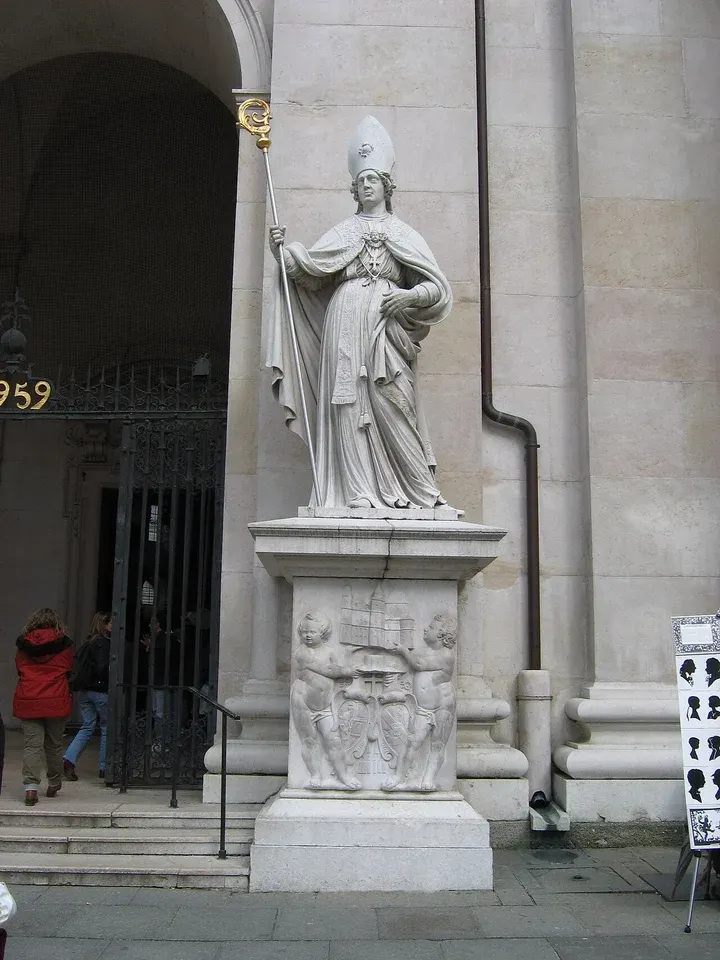
Biography
Virgil, also known as Vergilius or Fergal, was an Irish monk who traveled to continental Europe and became a leader of the Church at Salzburg. His work included monastic leadership, pastoral organization, and the development of the cathedral. He belongs to the wider movement of Irish religious travelers who helped shape early medieval European Christianity.
His journey took him through Frankish territory before he settled in Bavaria and became abbot of Saint Peter’s. Such movement carried learning and monastic connections across regions. At Salzburg, his responsibilities expanded from the life of a community to the wider organization of a diocese.
One dispute with Boniface concerned whether incorrect Latin wording invalidated a baptism; Pope Zachary supported Virgil’s position. Another concerned the implications of inhabitants on the other side of the earth. The surviving record is incomplete, particularly because Virgil’s own treatise on that subject has not survived.
He was also remembered for learning and for disagreements with Boniface. Accounts of the dispute about the earth and its inhabitants should not be reduced to a simple story of science opposing religion; its theological implications were central. His November 27 commemoration preserves his memory in both Ireland and Salzburg.
Context & contribution
A disagreement about baptism
One dispute between Virgil and Boniface concerned a priest who had used faulty Latin while baptizing. Virgil held that the baptism was valid; the question went to Pope Zachary, who decided in his favor. This episode gives a specific example of Church leaders disagreeing over how an error should be assessed.
It also prevents the better-known controversy about geography from becoming the whole story of Virgil's learning. His judgment had consequences for actual people whose baptism was being questioned. The account illustrates why careful distinctions matter in pastoral work: recognizing a verbal mistake and deciding what that mistake means are separate tasks, requiring more than an immediate assumption that everything has failed.
Explore the sources for this section
AI-assisted source comparison updated 2026-09-26. Editorial approach
From the Saint Discovery blog
Keep exploring your faith
Practical guides to prayer, the saints, and living the Catholic faith.
What Is the Domestic Church? John Paul II on Faith at Home
What Catholics mean by the domestic church, how John Paul II explained family life, and practical ways to begin with prayer, forgiveness and welcome.
Bring reflection into prayerRead the article Prayer & reflectionHow to Make a Spiritual Communion When You Cannot Receive
Learn how to make a spiritual communion, with a short original prayer and clear guidance on Mass, Confession, and times when you cannot receive.
Bring reflection into prayerRead the articleFrom reading to reflection
What will you carry with you?
After reading about St. Virgil of Salzburg, take a moment to consider:
- Read the baptism episode and identify the disputed question precisely. How can careful listening keep a technical disagreement from unnecessarily unsettling people?
These are reflection prompts from Saint Discovery, not quotations from the saint.
Sources and further reading
Biography source comparison recorded on . This is an AI-assisted comparison, not independent human or ecclesiastical approval.
What the recorded review covers
AI-assisted expansion using the linked historical and ecclesiastical sources; devotional traditions distinguished from documented history.
A source list helps you check an account; it does not establish that every claim is certain. Follow the biography’s qualifications about historical evidence, traditions and feast calendars.
Suggest a correction to this biography
How we research these pages and handle corrections · Directory corrections log
More lives to explore
Suggestions based on the site’s quiz themes, not a historical relationship or a measure of holiness.