Saint John Leonardi is a patron saint of pharmacists because his life connects training as an apothecary with a lasting concern for people who needed care. Before becoming a priest, he studied the preparation and dispensing of medicines. His later ministry kept the sick, Christian formation, and service to others in view.
For a pharmacy student, a healthcare worker, or someone grateful for a pharmacist's help, his story offers a useful question: how can knowledge become a patient and generous form of service?
The official connection with pharmacists
This patronage is more than a popular association with his former occupation. In his general audience of October 7, 2009, Pope Benedict XVI stated that Leonardi was chosen as Patron of Pharmacists on August 8, 2006. He had been canonized on April 17, 1938.
Benedict described a young man who spent about ten years learning the apothecary's craft in Lucca before deciding to prepare for priesthood. Leonardi later founded the religious community known as the Clerics Regular of the Mother of God. He died in Rome in 1609 after contracting influenza while ministering to people affected by an epidemic.
Those details give the patronage its shape: sustained study, a changed vocation, and attention to suffering people. Our John Leonardi biography provides a fuller introduction to his life.
An apothecary belongs to a different historical world
It is helpful to keep the period in view. Leonardi's training took place in sixteenth-century Italy, centuries before today's pharmacy degrees, medicines, and professional regulations.
Calling him a pharmacist makes his connection with the modern profession understandable. It should not make us imagine that his daily work was identical to a present-day community or hospital pharmacist's practice. We can recognize a meaningful continuity of service without treating the two settings as interchangeable.
That distinction also keeps us from turning a saint's biography into a medical manual. The spiritual value of his story lies in the person he became and the responsibilities he embraced. It does not establish the effectiveness of historical remedies or provide instructions for treatment today.
What does patronage mean for a profession?
A patron saint gives Catholics someone whose example they can study and whose prayers they can seek. Patronage is not a promise that work will become easy or that every hoped-for result will follow.
The Catechism of the Catholic Church, paragraph 2683, describes the saints as witnesses who contribute to the Church's life of prayer through their example and intercession. It encourages us to ask them to pray for us and for the world.
For pharmacists, that can mean asking for patience, honesty, sound judgment, and compassion. For students, it can mean bringing the effort of learning into prayer. For patients and families, it can mean praying for the people who help them navigate an unfamiliar and sometimes frightening situation.
You can read more about this relationship in our explanation of why Catholics pray to saints.
Knowledge and compassion belong together
Leonardi's patronage invites us to think about the person on the other side of a professional encounter.
In a separate address to Catholic pharmacists in 2007, Benedict XVI emphasized pharmacists' educational responsibilities, ethical formation, and concern for access to necessary medicines, especially for poorer people. He also insisted that biomedical knowledge should serve the whole person and respect the patient's participation in care.
This address helps give the patronage a practical context. A person may need an explanation repeated, reassurance that a question is welcome, or help finding the right place to raise a concern. Expertise and a respectful manner can support each other.
As an original reflection prompt, consider the difference between completing an interaction and making sure a person has been heard. Where does your own work give you an opportunity to slow down, listen carefully, or explain something more clearly?
You do not have to work in a pharmacy to learn from him
A saint associated with one profession can speak to people in many circumstances.
A teacher knows how easily a confident explanation can pass over someone who is struggling to understand. A caregiver knows how practical tasks can become rushed. A parish volunteer knows that people asking for assistance may find it difficult to say what they need.
Leonardi's story can prompt each of us to examine how we use our skills. What have I learned that could genuinely help someone? Where do I need more preparation before offering advice? When would humility mean admitting that another person is better equipped to help?
These are suggested applications of his example, not instructions attributed to Leonardi. They let a historical life become a starting point for reflection without inventing words he never said.
How to remember Saint John Leonardi on October 9
The USCCB's 2026 liturgical calendar lists October 9 as his optional memorial. The word optional matters: a parish may celebrate the weekday or another permitted observance, so his name will not necessarily appear at every Mass that day.
A simple way to mark the date is to read a short account of his life and pray for pharmacists, pharmacy technicians, students, and the people they serve. You might also thank someone whose patient explanation helped your family.
A parish group could use his story for a brief conversation about gratitude and service. Keep the focus on a real contribution someone made, and ask what habit of care the group could practice in its own work.
If calendar terms are unfamiliar, our guide to solemnities, feasts, and memorials explains the differences.
An original prayer for pharmacists and those they serve
This prayer is original to Saint Discovery.
Lord Jesus, bless those who prepare, explain, and provide medicines. Give them care in their work, patience in their conversations, and compassion for people who are anxious or overlooked. Help students grow in knowledge and humility. Comfort those who are sick, and guide those responsible for their care. Saint John Leonardi, pray for us. Amen.
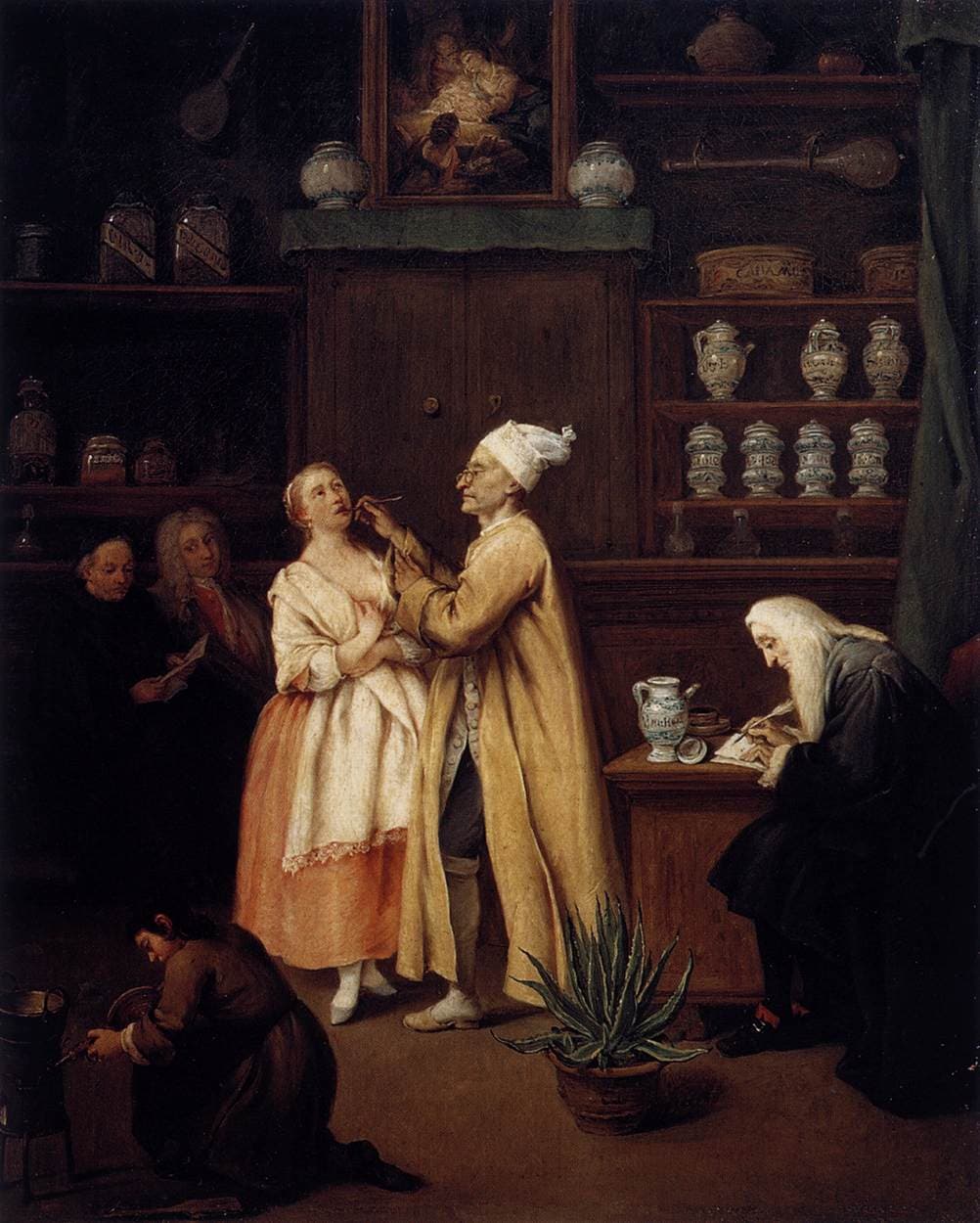
Artwork: Pietro Longhi's The Apothecary, circa 1752, via Web Gallery of Art and Wikimedia Commons, is a public-domain scene of an apothecary's shop. It illustrates the historical subject; it is not a portrait of John Leonardi.
