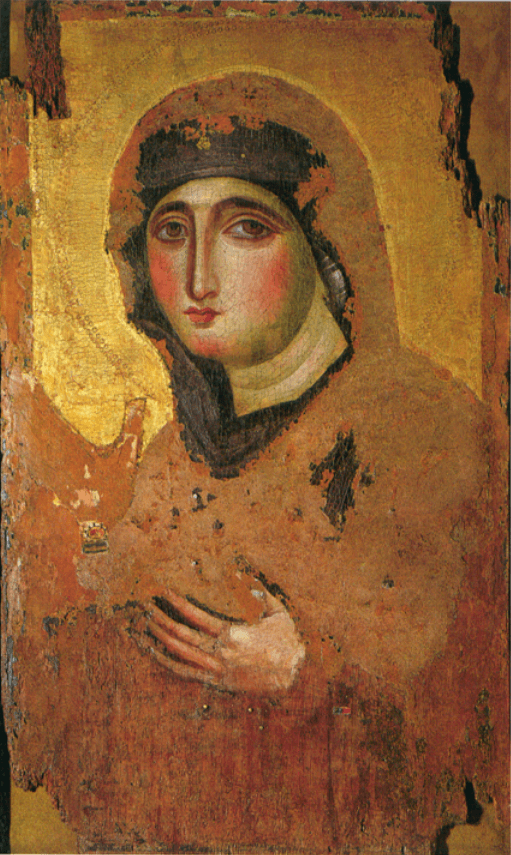
Catholics believe Mary was sinless because God gave her a unique grace through Jesus Christ: he preserved her from original sin from the first moment of her existence, and his grace sustained her freedom from personal sin throughout her life. The first of these teachings is called the Immaculate Conception. Both point to the power of Christ's salvation. See the Catechism of the Catholic Church, paragraphs 490–493.
For someone exploring Catholicism, this raises reasonable questions. Where does the belief come from? Did Mary still need Jesus? And what about the Bible's teaching that everyone has sinned? Understanding the terms makes the conversation much clearer.
What does the Immaculate Conception mean?
The Immaculate Conception concerns Mary's own conception. The virgin birth concerns Jesus being conceived in Mary's womb through the Holy Spirit, without a human father. These are distinct beliefs, even though people often confuse their names. The Catechism explains them in paragraphs 491 and 496.
Original sin also needs a careful definition. It does not mean a newborn has personally committed an evil act. Catholic teaching describes it as the loss of the original holiness humanity was meant to share with God, a wounded condition inherited within the human family. Personal sins are the wrongs someone actually chooses. See Catechism, paragraphs 404–405.
If Mary was sinless, why did she need a Savior?
Mary herself rejoices in God as her Savior in Luke 1:46–47. Catholics take that seriously. Her holiness does not mean she saved herself or lived beyond the reach of God's mercy.
When Pope Pius IX formally defined the Immaculate Conception in 1854, he explicitly connected Mary's preservation from original sin to the merits of Jesus Christ. Her gift depended on the Savior of the human race. Read the definition in Ineffabilis Deus.
Consider a simple illustration: someone can rescue you after you fall into danger, or prevent you from falling into it. In either case, you owe your safety to the rescuer. This analogy has limits, but it helps explain what Catholics mean by Mary's being redeemed through preservation. The source of her salvation remains Jesus.
Where do Catholics see this belief in the Bible?
Gabriel's greeting in Luke 1
In Luke 1:28–38, Gabriel greets Mary as favored by God, tells her she will bear Jesus, and receives her willing response. The familiar wording “full of grace” in the Hail Mary expresses how the Church understands her exceptional gift from God. The New American Bible, Revised Edition (NABRE), renders the greeting “Hail, favored one! The Lord is with you” (Luke 1:28, NABRE).
Catholics read this greeting in light of the Church's teaching about Mary's holiness. It would overstate the argument to say that a single English phrase independently proves every detail of the Immaculate Conception. The doctrine involves the Church's reading of Scripture together with the faith handed down in its tradition. Catechism, paragraphs 490–491 connects Gabriel's greeting with that understanding.
Mary as the new Eve
Catholic tradition also reads Mary's faithful obedience alongside Eve's disobedience. Vatican II recalls this ancient comparison, including the teaching of Saint Irenaeus: Mary's willing response participates in God's saving plan through her Son. She remains dependent on him. See Lumen Gentium, paragraph 56.
This is a way of reading the connected story of salvation, often called typology. It helps explain the Catholic understanding of Mary's role; it is not a verse that explicitly states the later dogmatic definition word for word.
Doesn't Romans 3:23 say everyone has sinned?
Romans 3:23–24 teaches humanity's need for redemption and immediately emphasizes that justification is God's gift through Christ. The surrounding argument includes both Jews and Gentiles: no group can claim salvation through its own superiority.
Christians also confess that Jesus truly shares our humanity yet is without sin, as Hebrews 4:15 teaches. That establishes that being human does not, by itself, require having committed a personal sin. It does not by itself establish Mary's sinlessness.
The Catholic answer about Mary rests on the particular grace the Church believes she received through Christ. She still needs redemption; she receives it in a unique way. Other Christians may not accept that interpretation or the Church's authority to define it. An honest conversation should acknowledge the disagreement rather than pretend the question disappears after quoting one verse.
Was this belief invented in 1854?
December 8, 1854, is the date of the solemn definition by Pius IX. His document describes earlier devotion, liturgical observance, papal teaching, and consultation with bishops before defining the doctrine. It therefore records a history preceding the definition itself. See Ineffabilis Deus.
A careful explanation should distinguish an earlier tradition of honoring Mary's holiness from the precise language of a later definition. Saying that the dogma was formally defined in 1854 is accurate; assuming that every earlier Christian expressed it in exactly those terms goes further than that historical evidence allows.
Does grace mean Mary had no real freedom?
Catholic teaching presents Mary's response as willing cooperation with God. Vatican II describes her as actively serving the saving plan through faith and obedience, rather than as a passive instrument. See Lumen Gentium 56. Holiness and freedom therefore belong together in this account; freedom is not defined by the necessity of committing sin.
Keep the source of the gift and the person's response distinct. The doctrine attributes Mary's preservation to God's grace through Christ. The Gospel account also presents her listening, asking a question, and responding. An explanation that omits grace makes her seem self-sufficient; an explanation that omits her response loses the personal character of her faith.
How to explain Marian belief without overstating it
Begin with the exact question someone is asking. Are they confusing Mary's conception with Jesus' conception? Are they questioning original sin, or asking why Catholics accept the Church's definition? Those require different explanations. Repeating a familiar phrase such as “full of grace” may not address the real difficulty.
The council also warns against exaggeration and describes genuine Marian devotion as rooted in faith and imitation, not credulity or passing sentiment. See Lumen Gentium 67. In practice, explain what the Church actually teaches before introducing private devotions or popular stories. You can acknowledge that another Christian reads the evidence differently while representing Catholic belief accurately. For the relationship between Scripture and the Church's received faith, our Sacred Tradition guide supplies the wider framework.
What does Mary's sinlessness mean for everyday faith?
The Gospel picture of Mary includes trust, questions, and suffering. Vatican II describes her journey of faith and her presence at Jesus' cross. Her holiness does not make her life effortless or her love for her Son abstract. See Lumen Gentium, paragraphs 57–58.
For a reader learning to pray, that offers a useful starting point. Read Luke 1:26–38 slowly. Notice Mary's question, her listening, and her response. Then ask where you need God's help to take your own next faithful step: reconciling with someone, keeping a commitment, or making time for prayer.
You can continue with our biography of Mary, Mother of God, explore why Catholics ask saints to pray for them, or try a simple daily prayer routine.
Artwork credit
Cover: Madonna Advocata, image by Asia, via Wikimedia Commons. Used under Creative Commons Attribution-ShareAlike 4.0; the original file is used without alteration.
