The history of the Bible stretches across centuries of writing, worship, copying, translation, and careful discernment. Its books emerged from ancient Israel and the earliest Christian communities. Over time, the Church recognized the collection Catholics receive today: 46 books in the Old Testament and 27 in the New Testament, for a total of 73.
Understanding that history makes Scripture easier to approach. It explains why the Bible contains different kinds of writing, why translations differ, and why recognizing a book as Scripture is different from composing it. Here is a Catholic guide to how the Bible came together and why its history still matters.
Who wrote the Bible, and when?
The Bible is a collection of books written by different human authors in different historical settings. Its pages include law, poetry, wisdom, prophecy, narratives, Gospels, and letters. Some books developed through stages of composition and editing; the exact dates and authorship of particular writings remain subjects of scholarly study.
Catholics believe these human writings are inspired by God. Divine inspiration does not erase an author’s language, abilities, or cultural setting. Vatican II’s Dei Verbum, sections 11–12, teaches both divine inspiration and genuine human authorship, and calls readers to consider literary forms and historical context.
That helps explain why reading a psalm is different from reading a letter. A prayer of anguish, a symbolic vision, and an account of Jesus’ ministry communicate in different ways. Recognizing their forms helps us listen more carefully.
The Old Testament: Scripture rooted in Israel
The Old Testament grew out of Israel’s life with God across many centuries. It preserves accounts of covenant, liberation, kingship, exile, and return, alongside laws, prophetic preaching, songs, and wisdom. The USCCB’s introduction to biblical literacy outlines these major collections and their development.
Most Old Testament books were written in Hebrew; Aramaic and Greek also belong to the Bible’s linguistic history. These writings were preserved through communities that prayed, taught, copied, and interpreted them. Christians receive Israel’s Scriptures as an enduring part of their Bible, rather than merely a discarded introduction to Christianity.
For an overview of the biblical narrative itself, read our guide to the story of salvation. The story Scripture tells and the history of how its books reached us illuminate one another.
What was the Septuagint?
The Septuagint is the name associated with ancient Greek translations of Jewish Scriptures. It became central to the scriptural world of Greek-speaking Christians. A surviving witness is Codex Sinaiticus, whose Old Testament text is Greek and whose New Testament is also written in Greek.
Translation therefore belongs near the beginning of Christian biblical history. The faith spread among people who did not all speak the same language, and Scripture traveled with them.
How did the New Testament develop?
The earliest Christians proclaimed Jesus’ death and Resurrection before the New Testament existed as a completed collection. Apostolic preaching, community life, and written testimony belonged together. The Gospels and letters emerged within that living Church.
Paul’s letters give a window into this early period. The USCCB introduction to First Thessalonians connects the letter with events around AD 51. It addresses an actual community’s faith and concerns. Biblical books often began with particular listeners and needs, even as the Church came to receive them for all generations.
The four Gospels proclaim the life, teaching, death, and Resurrection of Jesus. Acts follows the early Church’s mission, while the letters instruct and encourage Christian communities. Revelation offers prophetic witness through powerful imagery. Their arrangement in a modern Bible is not simply the order in which they were written.
Who decided which books belong in the Bible?
The canon is the recognized collection of biblical books. For Catholics, the Church discerned and received inspired Scripture within apostolic Tradition. Declaring a book canonical recognizes its authority; it does not make a previously uninspired book inspired. This relationship is explained in Dei Verbum, section 8, and in our guide to Sacred Tradition.
Historical evidence shows a process of recognition rather than one instant decision. In his Festal Letter 39, written in AD 367, Saint Athanasius lists the same 27 New Testament books used today. His treatment of Old Testament writings differs from the later Catholic list, illustrating why the history needs more care than a single date or slogan.
In 1546, the Council of Trent’s fourth session formally listed the books received by the Catholic Church. The decree appealed to their established reception and use. It did not claim to have written the books or discovered them for the first time.
Did the Council of Nicaea choose the Bible?
No. The familiar claim that Nicaea selected the Bible’s books in AD 325 is not supported by its surviving decrees. The Nicene Creed and council canons address Christ’s divinity and matters of Church order; they do not issue a biblical book list. Nicaea’s importance should not be confused with a task its records do not show it performing.
Why do Catholic Bibles have 73 books?
Catholic and Protestant Bibles share the same 27-book New Testament. The difference concerns the Old Testament: Catholic Bibles contain 46 books, while most Protestant Bibles contain 39.
The seven books are Tobit, Judith, Wisdom, Sirach, Baruch, and First and Second Maccabees. Catholic Bibles also include portions of Esther and Daniel absent from most Protestant editions. The USCCB’s Bible questions and answers explains these deuterocanonical writings and Catholic belief in their inspiration.
“Deuterocanonical” does not mean less inspired. These writings have the same status as Scripture in Catholic teaching. Differences between Christian canons deserve accurate explanation and respectful conversation, especially when reading the Bible with friends from another tradition.
From handwritten manuscripts to printed Bibles
For centuries, biblical texts were reproduced by hand. Ancient manuscripts let scholars examine how those texts were transmitted. Codex Sinaiticus, produced in the fourth century, preserves the earliest complete surviving New Testament. Its corrections also show that copying and checking the text were real human tasks.
The Dead Sea Scrolls, whose discovery began in the winter of 1946–1947, opened another window into ancient Scripture. These roughly two-thousand-year-old manuscripts include biblical writings and other Jewish texts, helping scholars study the world in which Christianity emerged. A manuscript’s age and the date its underlying work was composed are different questions.
Saint Jerome and the Latin Vulgate
In the late fourth and early fifth centuries, Saint Jerome undertook extensive biblical translation and study. His work became foundational to the Latin Vulgate tradition that shaped Western Christianity. Pope Francis’s Scripturae Sacrae Affectus describes Jerome’s scholarship and his attention to Hebrew and Greek sources.
Jerome’s task was translation and interpretation of existing Scriptures. The Bible was not originally written in Latin, and translating it did not create its books.
Gutenberg and the spread of printed Scripture
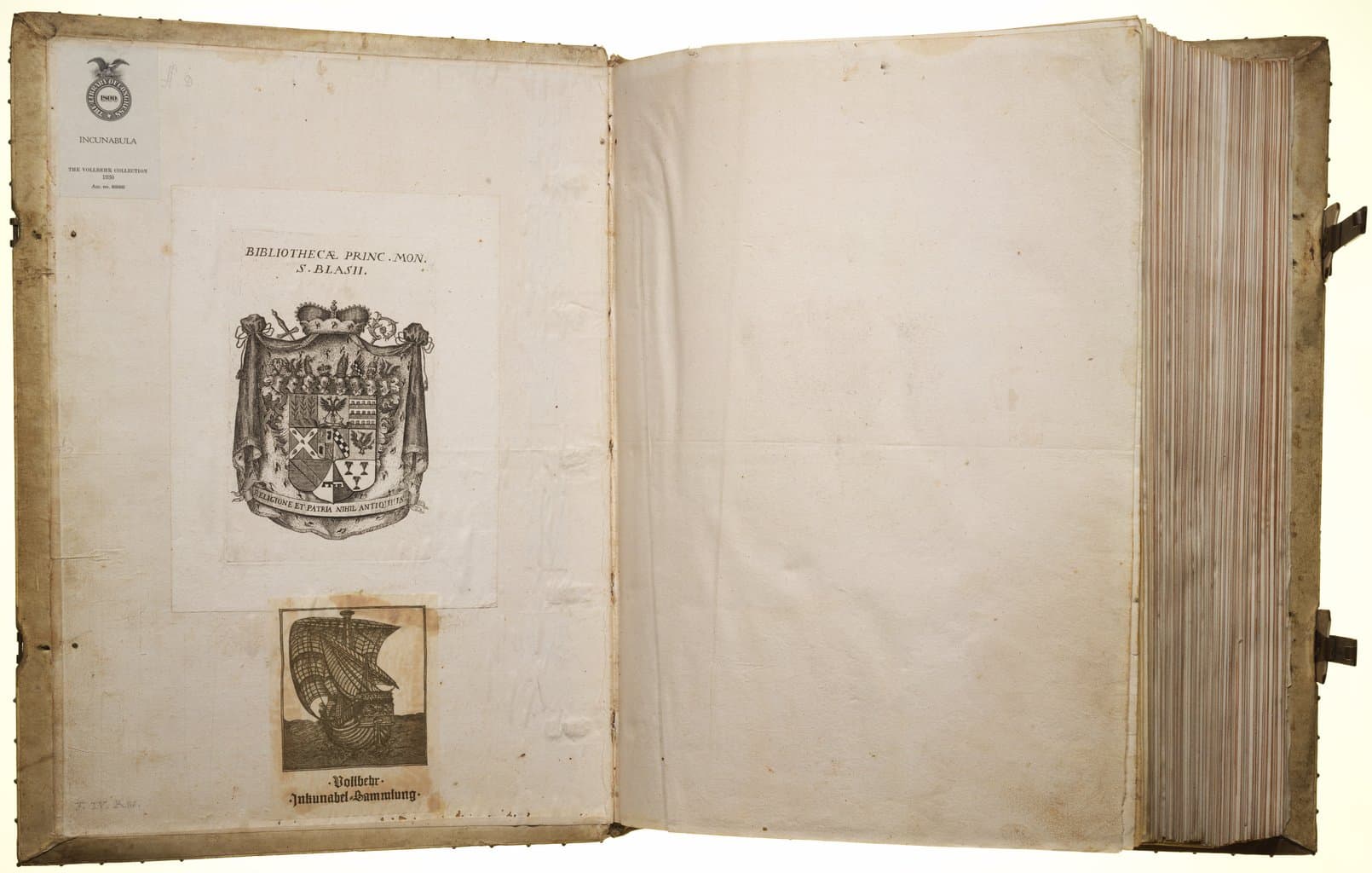
Around 1455, Gutenberg’s Latin Bible marked a turning point in European printing. The Library of Congress guide identifies it as the first large-format typographic Bible produced in Europe. Printing made it possible to reproduce books on a different scale. It changed the way Scripture circulated, long after the biblical writings themselves had been composed.
Why are there different Bible translations today?
Languages change, and translators must decide how best to communicate ancient words, expressions, and literary forms. Different wording does not automatically mean a different biblical canon. A translation concerns how a text is rendered; the canon concerns which books are included.
Dei Verbum, section 22, encourages suitable translations, especially from the original languages. For personal study, choose a Catholic edition with introductions and explanatory notes. When a passage is difficult, read its context and consult those notes before drawing conclusions from one isolated sentence.
What does a manuscript footnote actually mean?
Four questions are easily confused. The canon asks which books belong to Scripture. Manuscript study compares surviving witnesses to a passage. Translation asks how to express that passage in another language. An editor's heading or explanatory note helps a reader navigate the text; it is not another inspired biblical verse. Keeping those questions separate makes unfamiliar footnotes less alarming.
For a concrete example, look at Acts 8 and its note on verse 37. The USCCB edition explains that the oldest and best manuscripts omit a verse found in another textual tradition. Its note lets readers see the evidence rather than concealing the difference. This is a question about the wording transmitted at one point in Acts, not a decision to remove Acts from the New Testament.
When you encounter brackets or a missing verse number, read the edition's note before assuming a translator deleted a doctrine. Write down exactly what is disputed: a word, a sentence, a translation choice, or a book's place in the canon. Those require different kinds of evidence and should not be collapsed into one claim that “the Bible was changed.”
How to choose an edition for actual reading
Begin with a Catholic edition, then compare readability, print size, introductions, cross-references, and explanatory notes. The USCCB's guide to translation choices explains why a more word-for-word rendering and one that prioritizes natural English can sound different. Neither label, by itself, settles how well a particular verse has been translated.
Consult the bishops' approved translations for private prayer and study. Approval for personal use and authorization of a text for proclamation at Mass are separate matters; the USCCB Bible questions explain the Lectionary. For your first purchase, a readable edition that you will open regularly is more useful than collecting several you find difficult to navigate.
Start reading the Bible with its history in mind
Try beginning with one Gospel, then read Acts to follow the Church’s early mission. Add a psalm to your prayer and gradually explore the Old Testament. Keep a notebook for questions about historical setting, unfamiliar words, or links between passages.
You do not need to master every date before opening Scripture. Our Catholic prayer guide for beginners can help you turn reading into a conversation with God. The people who preserved, translated, and taught these texts have placed a remarkable inheritance within reach. Set aside time to receive it.