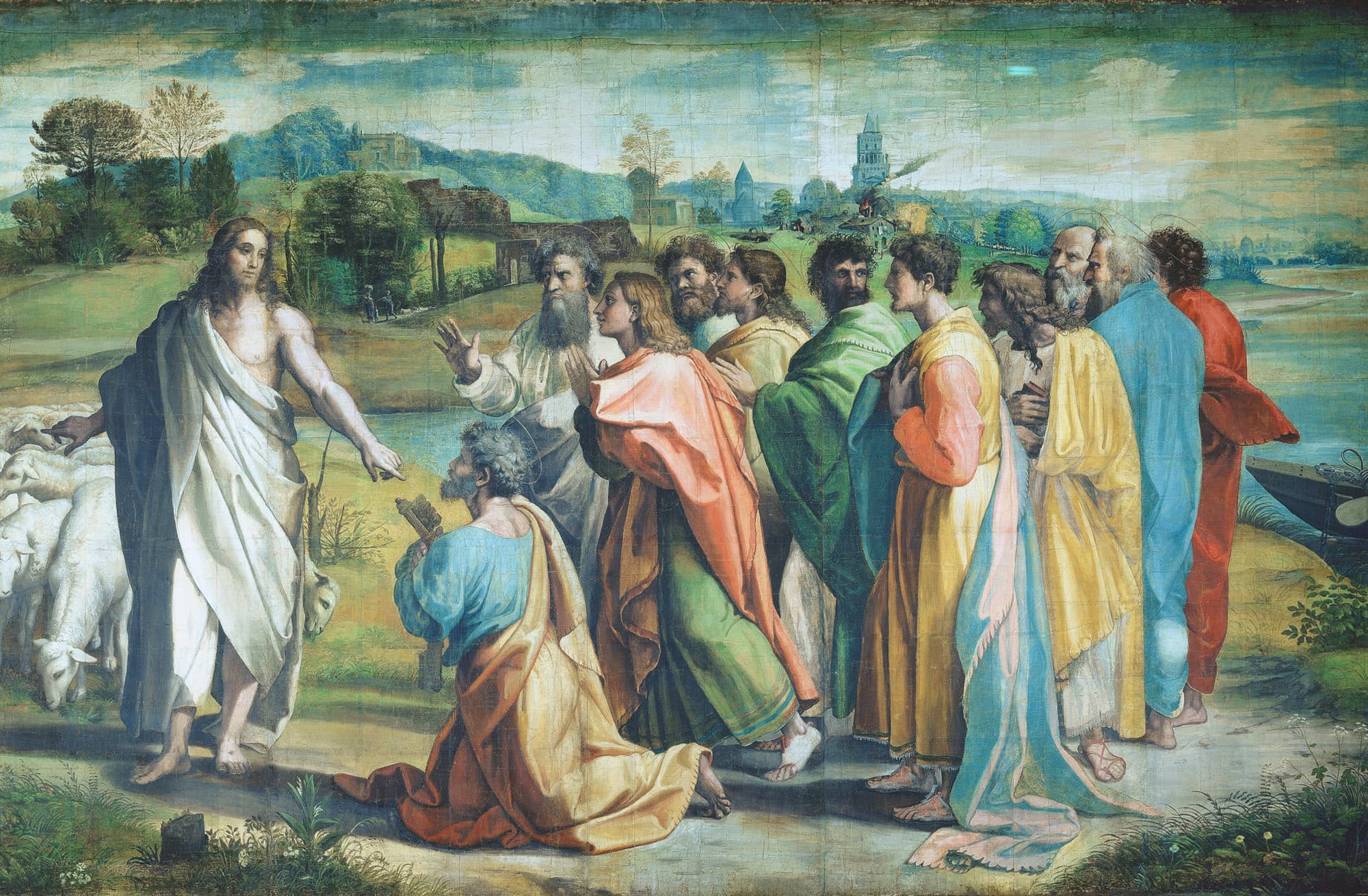
Sacred Tradition is the living transmission of the faith the apostles received from Jesus Christ and through the Holy Spirit. It includes the Church’s handing on of the Gospel through teaching, worship, and life across generations. Catholics understand it as closely joined to Sacred Scripture, with both serving the transmission of God’s revelation. See Catechism 75–79.
The word “tradition” can also mean a family celebration or a familiar parish custom. That everyday meaning explains some of the confusion. To understand Sacred Tradition, we need to ask what is being handed on, where it comes from, and how it relates to the Bible.
Where does Sacred Tradition come from?
Jesus entrusted the Gospel to the apostles. They communicated what they received through preaching, example, and the life of the communities they formed. The apostolic message was also committed to writing under the inspiration of the Holy Spirit. The Catechism describes this transmission in both oral and written forms. Read Catechism 76.
Sacred Tradition therefore concerns the faith received from Christ and handed on in the Church. Its starting point is the apostolic Gospel, rather than the age or popularity of a particular practice.
Sacred Scripture and Sacred Tradition: how do they fit together?
Sacred Scripture is God’s word expressed in writing under divine inspiration. Sacred Tradition transmits the word entrusted to the apostles in the Church’s continuing life. Vatican II teaches that both come from the same divine source and together form one sacred deposit of God’s word. Read Dei Verbum, sections 9–10.
“Deposit of faith” means the revealed gift entrusted to the Church to preserve and proclaim. It helps explain why Catholics read Scripture within the faith handed down from the apostles. The relationship is not a competition over which one matters more.
Catholic teaching also states that the Church does not draw certainty about every revealed truth from Scripture alone. Scripture and Tradition are both received with reverence. See Catechism 80–82.
Is Sacred Tradition mentioned in the Bible?
In 2 Thessalonians 2:15, believers are instructed to hold to the teaching they received through spoken instruction as well as a letter. The passage shows that apostolic teaching was communicated in more than one way. Read 2 Thessalonians 2.
Another example appears in 1 Corinthians 15:3–5. Paul recounts the message he received and handed on: Christ’s death for our sins, burial, Resurrection, and appearances. This is the central Christian proclamation being transmitted within the early Church. Read 1 Corinthians 15.
These passages help establish the biblical pattern of receiving and transmitting the faith. They do not mean that any later custom automatically becomes apostolic teaching. A claim about a particular belief still needs careful examination.
Sacred Tradition versus Church traditions
The Catechism distinguishes apostolic Tradition from theological, disciplinary, liturgical, and devotional traditions that arise in particular times and places. These later expressions can be preserved, adapted, or discontinued under the Church’s guidance. See Catechism 83.
For example, a parish’s annual procession route or a family’s choice of Advent songs may help express the faith. Neither choice becomes a revealed truth simply because people have followed it for generations. Such customs can be meaningful without carrying the same authority as the apostolic faith.
The practical question is more precise than “Is this traditional?” Ask whether something is a revealed teaching, a Church discipline, a devotional practice, or a local preference.
A concrete comparison: faith, discipline, and devotion
Consider three different questions: Is Jesus truly risen? Who may be ordained while married? Must my family pray a particular devotion every evening? These questions are not all settled in the same way. The Resurrection belongs to the apostolic proclamation. Rules governing clerical life include disciplines applied by Church authority. A household's choice of a particular optional devotion belongs to another category again.
For a documented disciplinary example, Catechism 1579–1580 describes the Latin Church's normal practice of choosing priests from celibate men and the Eastern Churches' longstanding practice of ordaining married men to the priesthood. These different disciplines coexist within Catholic communion. The distinction does not mean an individual may ignore the rules that apply to his own situation; it shows why one familiar practice cannot simply be equated with the entire deposit of faith.
Are private revelations part of Sacred Tradition?
Even a private revelation recognized by the Church does not add a new article to the deposit of faith. Catechism 66–67 explains that such revelations may help Christians live the definitive revelation given in Christ; they cannot improve, replace, or complete it. This matters when a devotion associated with an apparition is presented online as though every Catholic must accept every reported message.
A devotion may be fruitful without becoming another Gospel. Ask both what the Church has actually recognized and what claim is being made on its behalf. Recognition of a devotion is not blanket approval for everything that later speakers attach to it.
What are examples of Sacred Tradition at work?
The Gospel received and proclaimed
Paul’s account in 1 Corinthians 15 shows the Church receiving the proclamation of Jesus’ saving death and Resurrection and passing it to others. Sacred Tradition remains centered on this living Gospel. Our guide to the story of salvation places that proclamation within the broader biblical story.
The Church’s celebration of the Eucharist
In 1 Corinthians 11:23–26, Paul passes on what he received concerning the Lord’s Supper. The passage joins apostolic teaching with the worship of the Christian community. It illustrates why Tradition involves the Church’s sacramental life as well as spoken instruction. Read 1 Corinthians 11.
Recognizing the books of Scripture
The Catechism teaches that through apostolic Tradition the Church discerned which writings belong in the canon, the authoritative collection of biblical books. This recognition did not make those books inspired; it identified the writings received as inspired. See Catechism 120.
What role does the Magisterium play?
The Magisterium is the Church’s teaching office, exercised by the bishops in communion with the pope. Its responsibility includes authentically interpreting God’s word, whether written or handed on. It serves that word rather than standing above it. See Catechism 85–86.
That distinction matters: Scripture and Tradition transmit revelation, while the Magisterium has a responsibility to guard and interpret it. For an introduction to one solemn exercise of the Church’s teaching authority, read our guide to ecumenical councils.
Common questions about Sacred Tradition
Didn’t Jesus condemn tradition?
In Mark 7, Jesus condemns human traditions used to set aside God’s commandment. The example includes a practice that undermines responsibility toward one’s parents. His criticism exposes a misuse of religious tradition that obstructs obedience to God. Read Mark 7:1–13.
Catholics distinguish that misuse from faithfully transmitting the apostolic Gospel. Something being old or familiar is never, by itself, enough to establish its truth.
Can the Church’s understanding of Tradition develop?
Yes. The Catechism explains that understanding can deepen through believers’ study and contemplation, spiritual experience, and the preaching of bishops. Development seeks a fuller understanding of the faith received; it does not authorize replacing that faith with its opposite. See Catechism 94.
Does Tradition reduce the importance of reading the Bible?
No. Dei Verbum strongly encourages the faithful to read Scripture and accompany that reading with prayer. Receiving the Bible within the Church’s Tradition should lead to deeper engagement with it. See Dei Verbum, section 25. Our Catholic guide to prayer offers practical ways to begin.
How to check a claim that “the Church has always taught this”
Look for an identifiable source, not merely the age of the quotation. Read the whole paragraph and note whether it is defining doctrine, regulating a practice, recommending a devotion, or describing a local custom. Then ask who is addressed and whether the statement applies universally. A rule for one religious community cannot automatically be imposed on every Catholic family. This short source check helps turn a vague appeal to tradition into a question that a catechist can actually answer.
A simple way to learn more
Start by reading Catechism 75–95 alongside the Scripture passages linked above. Write down one question about the relationship between Scripture, Tradition, and Church authority. Bring it to a parish Bible study, your OCIA sessions, or a trusted catechist.
When you encounter a claim online, look for its actual source. Read the surrounding paragraph and ask what kind of teaching or practice is being discussed. Patient reading will help you distinguish the faith the Church receives from the preferences people sometimes attach to it.