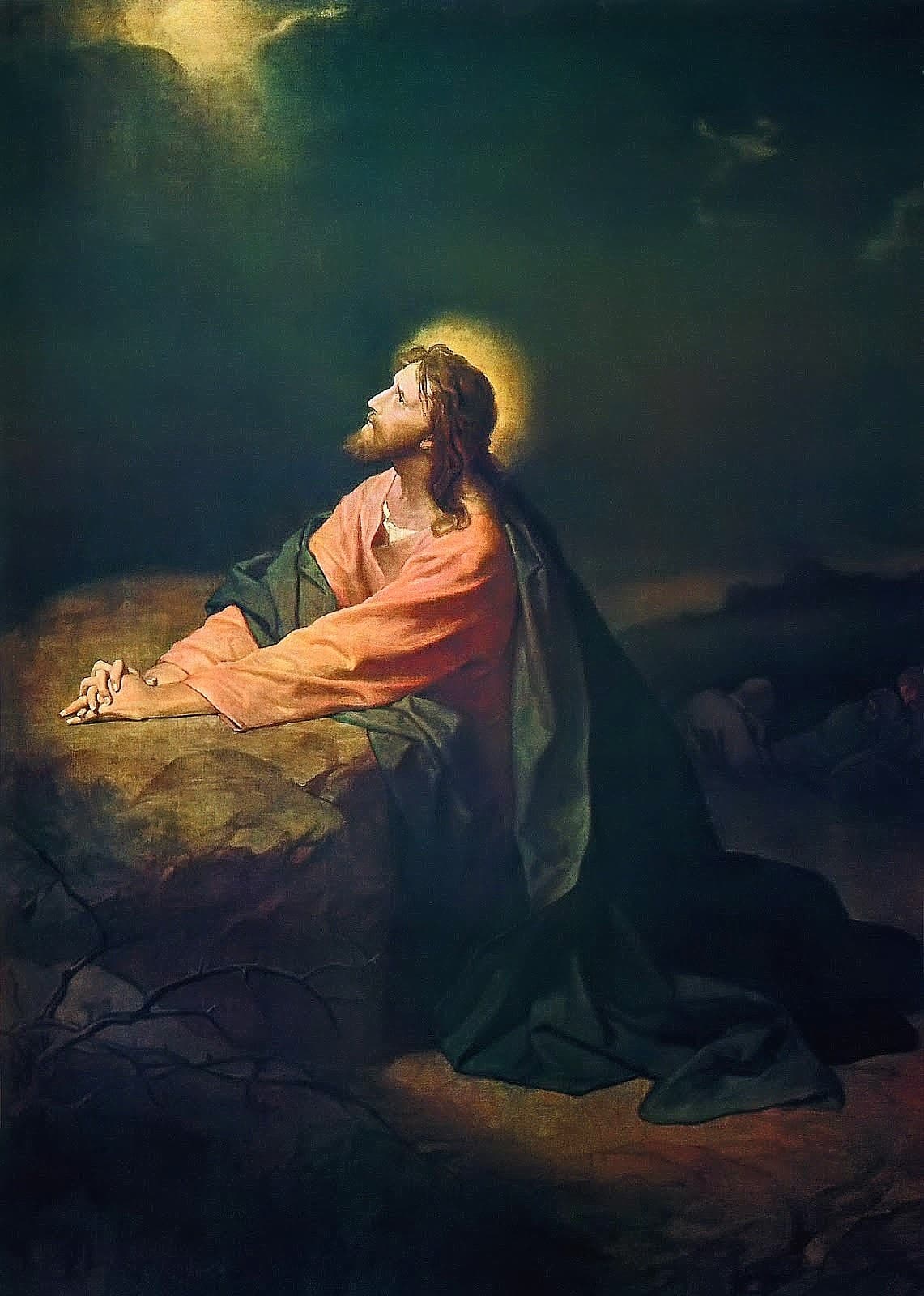
Prayer is turning our minds and hearts toward God, bringing him our needs, and responding to his love. In Catholic teaching, it is a living relationship with the Father, through Jesus Christ, in the Holy Spirit. It can include familiar words, personal conversation, Scripture, and silence. The Catechism introduces prayer in paragraphs 2558–2565.
You do not need an impressive vocabulary to begin. If you have ever wanted to pray but wondered what to say, this guide explains the basics of Catholic prayer and offers a simple place to start.
Why do Catholics pray?
We pray because God invites us into communion with him. The Catechism describes prayer as a gift before it describes it as our activity: Christ comes to meet us, and we respond. Prayer allows us to bring ordinary life into that relationship, including gratitude, sorrow, uncertainty, and hope. See Catechism 2560–2565.
Think of a conversation with someone you love. Some days you have much to say; other days, being present matters more than finding new words. That comparison is only a starting point, but it can help remove the pressure to make every prayer sound profound.
How did Jesus teach us to pray?
When a disciple asked Jesus to teach them to pray, Jesus gave them the Lord’s Prayer. In Luke’s account, it includes honoring the Father, asking for his kingdom, seeking daily bread and forgiveness, and asking for protection from temptation. Jesus also encourages perseverance in asking God for help. Read Luke 11:1–13.
The Our Father is therefore a natural starting point. Pray it slowly, pausing over one phrase rather than rushing to finish. A request for daily bread can open into prayer about work, family responsibilities, or someone who needs food today.
What are the five forms of Catholic prayer?
The Catechism identifies blessing, petition, intercession, thanksgiving, and praise as basic forms of Christian prayer. See Catechism 2644–2649. The brief examples below are original suggestions you can adapt.
Blessing and adoration
We bless God in response to his gifts and adore him as our Creator. Adoration acknowledges who God is and our dependence on him. See Catechism 2626–2628. You might begin: “Lord, you are holy, and I place myself before you.”
Petition
Petition means asking God for what we need, including forgiveness. For example: “Father, forgive my impatience and help me make things right.”
Intercession
Intercession is prayer for someone else. You might say: “Please strengthen my friend during this difficult week.” Remember people beyond your immediate circle, too.
Thanksgiving
Thanksgiving recognizes the gifts we receive. Be specific: “Thank you for the person who listened to me today.”
Praise
Praise gives glory to God for who he is, beyond a particular favor received. Try: “God, your goodness is worthy of praise.”
These forms often overlap. One short prayer can include gratitude, a request for help, and concern for another person.
Vocal prayer, meditation, and contemplation
The Church also distinguishes three main expressions of prayer. Vocal prayer uses words, whether spoken aloud or interiorly. Meditation prayerfully engages our thoughts and imagination, often through Scripture. Contemplative prayer is a gift of loving attention to God in silence. These expressions share a call to an attentive heart. See Catechism 2720–2724.
For meditation, you could read a short Gospel passage and ask what it reveals about Jesus. Then speak to him about your response. In quiet prayer, you do not need to manufacture a special feeling or force your mind to become completely blank. Make space to be present to God.
How to start praying as a Catholic
Here is a simple exercise for someone beginning or returning to prayer. Treat it as a helpful structure you can adjust.
1. Choose a manageable moment
Set aside a few minutes in a place where you can pause. Put your phone aside if that helps. You might begin with the Sign of the Cross and a simple acknowledgment: “God, I am here.”
2. Bring your real day to God
Name one thing you are grateful for and one thing that concerns you. Avoid editing your experience into something that sounds more religious. An honest sentence is enough to begin.
3. Use a familiar prayer or a short Scripture passage
Pray the Our Father or read a few Gospel verses. Stay with a word or phrase that helps you turn toward God. You can use both learned prayers and your own words.
4. Leave a little silence
Pause without demanding an immediate answer. If your attention wanders, return to a simple phrase such as “Jesus, help me listen.” Close by asking for grace to love someone well today.
If you want help making this a regular practice, our daily prayer routine for busy Catholics offers a more detailed rhythm.
Try it: pray one part of the Our Father with your actual day
Here is an original exercise based on the prayer Jesus teaches in Luke 11:1–4 (NABRE). Begin with the whole prayer, then return to one petition. If today's concern is providing for your household, pause over the request for daily bread in verse 3. Name the practical need plainly. Then remember someone whose needs are less visible to you. Asking for “our” bread can widen a concern that began with “my” problem.
If you pause over forgiveness, name your own wrong without turning the prayer into an explanation of why someone else caused it. Ask for the grace to put it right. A concrete next step might be correcting a misleading message you sent or apologizing without adding a defense. This is a response to prayer, not a bargain intended to make God grant a different request.
End by saying the petition again and allowing a brief silence. You have used a learned prayer, personal words, attention to Scripture, and an intention for daily life within one simple exercise. None requires pretending that every feeling has been resolved.
What does “listening to God” mean for a beginner?
Start by attending to what God has revealed in Scripture and to the teaching of the Church. In personal prayer, you may notice a memory, a responsibility, or a possible decision. You do not need to label every thought as God's direct instruction. Write an important question down, return to it calmly, and seek wise advice before acting on a major decision. Prayer leaves room for patient discernment.
Nor must silence produce a message on demand. Romans 8:26–27 describes the Holy Spirit helping us precisely in our weakness and inability to pray as we should. When words fail, offering that weakness to God can itself be an honest beginning. You are responding to grace rather than performing a conversation flawlessly.
Prayer with the Church
Catholic prayer also has a communal home in the liturgy, especially the Mass. The Catechism describes liturgy as sharing in Christ’s prayer to the Father through the Holy Spirit. Personal prayer draws nourishment from this worship and carries it into everyday life. See Catechism 1071–1073. If you are learning, ask your parish for help following the prayers and responses at Mass.
What if prayer feels difficult?
Distraction is a familiar difficulty in prayer. The Catechism recommends turning the heart back toward God rather than becoming absorbed in chasing every distraction. It also recognizes spiritual dryness, when prayer brings little emotional satisfaction. See Catechism 2729–2731.
A distracted moment does not require abandoning the whole prayer. Begin again gently. If prayer has become a persistent source of confusion or distress, consider talking with a trusted priest or spiritual director who can listen to your particular experience.
Common questions about Catholic prayer
Can I pray directly to Jesus?
Yes. Catholic prayer includes prayer addressed directly to Jesus and to the Holy Spirit. Asking Mary or the saints to intercede is not a prerequisite for speaking to God. See the Catechism on the way of prayer. Our guide to praying to saints explains intercession further.
What if God does not answer the way I hoped?
Christian prayer is an act of trust, not a method for controlling outcomes. The Catechism acknowledges the difficulty of feeling unheard and invites us to examine both our requests and our relationship with the Father. We can keep bringing our needs to him while remaining open to his wisdom. See Catechism 2734–2741. Avoid assuming that someone’s ongoing hardship proves they prayed badly.
Which Catholic devotion should I try first?
Choose one that helps you begin, without trying to learn everything at once. Our Rosary guide explains prayerful reflection on Christ’s life, while our Divine Mercy guide introduces the Chaplet and its focus on trust in Jesus. You can explore these gradually alongside your regular prayer.
An original prayer for someone learning to pray
Father, thank you for welcoming me. Teach me to speak honestly, listen patiently, and trust your love. Jesus, stay close when I struggle to find words. Holy Spirit, guide my prayer and help me carry it into the way I treat others. Give me the courage to begin again tomorrow. Amen.