The story of salvation is the account of God bringing humanity into communion with himself: creating us in love, remaining faithful after sin, preparing a people through his covenants, and saving us through Jesus Christ. Catholics often call this salvation history. It connects the books of the Bible around God’s unfolding plan, which reaches its fullness in Jesus. See Catechism 50–53 on God’s revelation.
If the Bible sometimes feels like a collection of disconnected names and events, this overview gives you a place to begin. Creation, Abraham, Moses, the prophets, the Cross, and Pentecost belong within one larger story.
What does salvation mean?
In Catholic teaching, salvation includes liberation from sin and the gift of new life in Christ. Jesus’ death and Resurrection belong together: through his death he frees us from sin, and through his Resurrection he brings us into new life with God. The Catechism explains this in paragraph 654.
That meaning helps us read the biblical story as more than a record of human failure. Its center is God’s initiative to heal our relationship with him.
Salvation history in nine stages
1. Creation: life begins with God’s goodness
Genesis begins with God creating a good world. Human beings are made in his image, giving every person a dignity that precedes achievement, wealth, or status. Our starting point is a gift: existence itself. Before the Bible tells us about sin, it tells us that creation is good and humanity belongs within God’s loving purpose. Read Genesis 1, especially verses 26–31.
2. The Fall: sin wounds communion
The account of Adam and Eve describes humanity’s disobedience and loss of trust in God. Sin damages our relationship with him and with one another. Yet God does not abandon humanity. Catholic tradition reads Genesis 3:15 as the first announcement of the coming Redeemer, sometimes called the “first gospel.” See Catechism 397–410.
This introduces a pattern that continues throughout Scripture: human unfaithfulness meets God’s persistent offer of mercy.
3. Noah and Abraham: God makes promises
A covenant is a solemn bond establishing a relationship and its commitments. Through the covenant with Noah, God’s concern embraces humanity and the living world. With Abraham, the story takes a particular path: God calls a family through whom blessing will reach the nations. Israel’s election serves a purpose that reaches beyond itself. The Catechism outlines these stages in paragraphs 56–61.
4. Moses and the Exodus: freedom for a life with God
God liberates Israel from slavery in Egypt and establishes the covenant at Mount Sinai. Through Moses, Israel receives the law and learns to worship and serve the Lord. The Exodus joins deliverance with vocation: a rescued people is called to live in fidelity to God. See Catechism 62.
5. David and the prophets: hope for a lasting kingdom
God promises David an enduring royal house, a promise central to the biblical hope for the Messiah. Read 2 Samuel 7:12–16.
The prophets call the people back to faithfulness and announce hope beyond judgment and exile. Jeremiah speaks of a new covenant with Israel and Judah in which God’s law will be written within them and sins forgiven. This is a promise of inward renewal. Read Jeremiah 31:31–34.
6. Jesus Christ: God comes among us
Catholics believe Jesus is the eternal Son of God made human, born of the Virgin Mary. In him, God’s promises reach their fulfillment. Jesus is fully divine and fully human; the Incarnation brings God’s saving action into our human life in a unique way. See Catechism 456–469.
At the Last Supper, Jesus identifies the cup with the new covenant in his blood. His words connect the covenant story with the sacrifice he is about to offer. Read Luke 22:14–20.
7. The Cross and Resurrection: the decisive victory
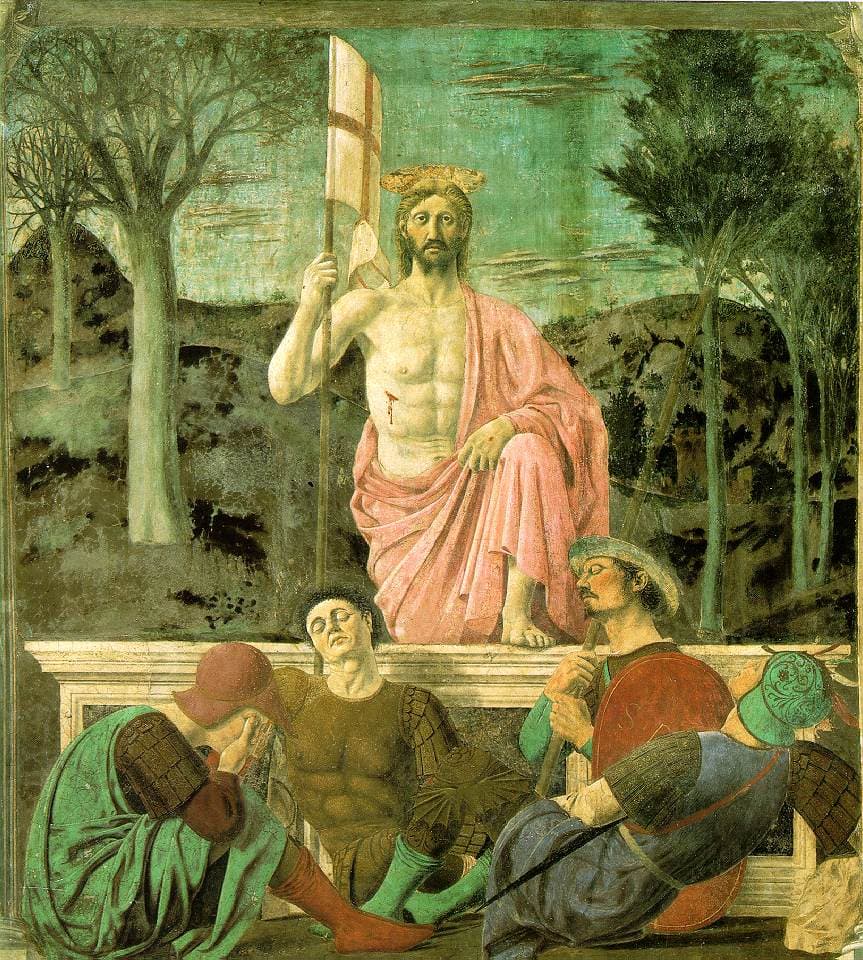
Jesus gives his life and rises from the dead. Catholics call his passage through suffering and death into risen life the Paschal Mystery. The Resurrection is not merely a return to ordinary earthly life: Christ enters a glorified life and becomes the source of our own resurrection. See Catechism 646 and 654–655.
To reflect on how this hope meets difficult experiences, read our guide to redemptive suffering.
8. Pentecost and the Church: the Gospel goes outward
At Pentecost, the Holy Spirit empowers the disciples to proclaim Jesus. Acts describes people responding through repentance and Baptism, then sharing in the apostles’ teaching, communal life, the breaking of bread, and prayer. The message moves outward to people of different languages and backgrounds. Read Acts 2.
The story now includes the Church’s mission to announce Christ and welcome people into a life of faith.
9. New creation: the hope toward which we live
Revelation presents the vision of a renewed heaven and earth, God dwelling with his people, and the end of death and mourning. Christian hope reaches toward the renewal of creation and lasting communion with God. Read Revelation 21:1–5.
This hope gives direction to the present: the biblical story leads us to await God’s fulfillment while living faithfully today.
How do earlier events point toward Christ?
Catholics call one way of reading these connections typology: recognizing patterns in God's earlier works that find fulfillment in Christ. Catechism 128–130 also insists that the Old Testament keeps its own value as revelation. A Christian reading must not erase Israel's story or reduce every character and object to a secret code.
The crossing of the Red Sea gives a concrete example. First, attend to the Exodus account as Israel's liberation from slavery. Then notice how the Church relates passage through the water to liberation through Baptism; Catechism 1221 explicitly makes that connection. The Christian meaning grows from the earlier story rather than replacing it with an unrelated symbol.
Try making two columns in a notebook. In the first, describe what the Old Testament passage says in its own setting. In the second, note a connection actually made by the New Testament or the Church's teaching. Leave a question mark where the evidence is unclear. This original study exercise prevents a clever association from being mistaken for an authoritative interpretation.
If Christ has saved us, why is the story still unfinished?
The New Testament holds together a gift already received and a fulfillment still awaited. In Romans 8:14–25, Paul speaks of believers as God's children while also describing suffering, creation's longing, and the future redemption of our bodies. Salvation does not mean that every consequence of a wounded world disappears immediately.
That distinction helps place your own life on the timeline. Baptism, repentance, worship, and works of love belong to life in Christ now; Christian hope also looks toward resurrection and renewed creation. A person who continues to grieve or struggle has not thereby fallen outside the biblical story. The story itself gives language for waiting faithfully, rather than pretending the promised fullness has already arrived in every part of experience.
Where do we fit into the story of salvation?
Salvation begins with grace, God’s freely given help. Even our preparation to respond is already supported by grace. Catholics therefore do not understand salvation as something we purchase through good behavior. God invites a free response of faith and a life transformed by his love. See Catechism 1996–2002.
The sacraments are concrete encounters with Christ’s saving action. Through them, Christ communicates grace and the Holy Spirit draws believers into his life. See Catechism 1127–1129. Our guide to the seven sacraments explains their place in Catholic life.
Common questions about salvation history
Does the Old Testament still matter for Catholics?
Yes. Jesus and the earliest Christians belong within Israel’s history, and Christians receive Israel’s Scriptures as part of their own Bible. Catholic teaching recognizes the Church’s enduring bond with the Jewish people and the irrevocable character of Israel’s election. Reading the Old Testament as part of salvation history should deepen respect for those roots. See the Pontifical Biblical Commission’s study of the Jewish people and their Scriptures.
What is a simple way to begin reading this story?
Start with the passages linked above, one at a time. After each reading, ask: What does God give or promise? How do people respond? What question would I like to understand better? Keep a notebook and bring those questions to a parish Bible study or OCIA session. You do not need to master the whole timeline before beginning.
How can I make this more than a history lesson?
Choose one response this week: read a Gospel passage slowly, make time for prayer, or ask your parish about learning the faith. Our daily prayer guide offers a manageable starting point. Let learning lead to a conversation with God, using honest words about your hopes, doubts, and need for mercy.