The Liturgy of the Hours is the Church's daily prayer of praise and intercession, arranged for different parts of the day. Also called the Divine Office, it brings together psalms, Scripture readings, hymns, and prayers. Catholics can participate in a parish, with others, or alone. Its purpose is to turn the passing hours toward God, rather than leave prayer confined to one weekly gathering. The Catechism explains this daily prayer in paragraphs 1174–1178.
If a prayer book full of ribbons and unfamiliar headings has ever intimidated you, begin with the purpose before the page numbers. You are joining a shared prayer, not inventing an impressive one. This guide explains the current Roman Catholic Liturgy of the Hours and suggests a manageable first week.
Is it only for priests and religious?
No. The Second Vatican Council explicitly encouraged lay people to pray the Divine Office with priests, among themselves, or individually. Its Constitution on the Sacred Liturgy, paragraph 100, also encourages communal Evening Prayer on Sundays and major celebrations.
For an ordinary lay beginner who has not undertaken a specific obligation, joining one Hour does not mean taking on the entire daily Office. Some clergy and religious have obligations connected with their vocation; your starting point is an invitation to participate. A parish celebration can make that invitation tangible: you hear how the psalms flow and learn by praying alongside other people.
You can therefore ask your parish whether it offers Morning or Evening Prayer. If it does, tell the leader that you are new and ask for help finding the text. You do not need to arrive already knowing the responses.
What do the different Hours mean?
An Hour here means a particular prayer service, not a requirement to pray for sixty minutes. Morning Prayer is also called Lauds, and Evening Prayer is called Vespers. These are the principal daily Hours. The Office of Readings includes more substantial readings and can be prayed at different times of day; Daytime Prayer provides pauses before noon, at midday, or in the afternoon. These arrangements are explained in Paul VI's Laudis Canticum, section 2.
Night Prayer, or Compline, closes the day before sleep, even when bedtime falls after midnight. See the General Instruction on the Liturgy of the Hours, paragraph 84.
Choose a time that matches the prayer you are beginning. Evening Prayer might fit after returning home; Morning Prayer might fit before the day's first commitments. You can learn one service before trying to understand the whole schedule.
What happens in Morning or Evening Prayer?
Their usual sequence moves from an opening invocation and hymn into psalms and a biblical canticle. A Scripture reading and response follow. Then comes a Gospel canticle: the Canticle of Zechariah at Morning Prayer or Mary's Magnificat at Evening Prayer. Intercessions, the Lord's Prayer, a concluding prayer, and the conclusion complete the service. The General Instruction, paragraphs 41–54, explains the order and its variations.
An antiphon is a short text associated with a psalm or canticle; follow the instructions for saying it before and after. A canticle is a biblical song outside the Book of Psalms. These names can sound technical, but they become familiar as you encounter the same structure again.
Use the complete prepared liturgical text rather than this outline as your prayer service. The outline is a map of what you will encounter. The liturgical texts have their own approved translations; this article explains their arrangement without reproducing Scripture passages or offering replacement wording.
Why does the text change from day to day?
The current Roman arrangement uses a four-week cycle of psalms, alongside texts connected with seasons and celebrations. Paul VI describes the change to that cycle in Laudis Canticum, section 4. You are not expected to choose a new collection of psalms yourself each morning.
A printed book may require moving between sections; a prepared daily text can place the parts together. Before starting, check the date and the Hour you intend to pray. Ask a parish leader which approved edition and calendar to follow where you live. If you are learning with a book, ask someone to show you one complete service and mark its starting places together.
Understanding the calendar can also help explain why a saint's celebration affects the prayer. Our guide to solemnities, feasts, and memorials introduces those distinctions without requiring you to master every rule on your first day.
A practical plan for your first week
Choose either Morning or Evening Prayer for the week. Find the complete text before your planned pause, so that the pause is not spent searching. Read slowly enough to notice what you are saying, and follow the instructions on the page. If you lose your place, stop, find the next section, and continue.
Afterward, notice one thing you learned: perhaps the order became clearer, or a petition reminded you of someone who needs care. This brief reflection is a learning suggestion, not an extra part of the official service. Avoid measuring the prayer solely by whether you felt calm or moved.
If you miss a day, return at the next suitable time. At the end of the week, decide whether to continue that Hour, join a parish celebration, or ask for help with the book. Our daily prayer routine for busy Catholics offers ways to protect a regular pause around actual responsibilities.
You can also explore Saint Benedict's biography. His monastic tradition provides a setting for learning about sustained prayer, while our article on his Rule considers lessons for ordinary work and family life. You do not need to copy a monastery's timetable to learn from its seriousness about prayer.
How does it relate to Mass and personal prayer?
The Hours complement the Eucharistic celebration and personal devotion. They give shared words to daily praise and petition without making your own conversation with God unnecessary. The Catechism, paragraphs 1176–1178, connects the practice with attentive understanding, Scripture, and other forms of prayer.
Benedict XVI also encouraged Morning, Evening, and Night Prayer as ways of deepening engagement with Scripture and participation in the Eucharist. See Sacramentum Caritatis, paragraph 45. The Hours belong within that wider life of worship; they are not a substitute for Mass.
Begin with one complete service and enough patience to learn it. Over time, its familiar structure can give you somewhere to turn when your own words are plentiful, and when they are difficult to find.
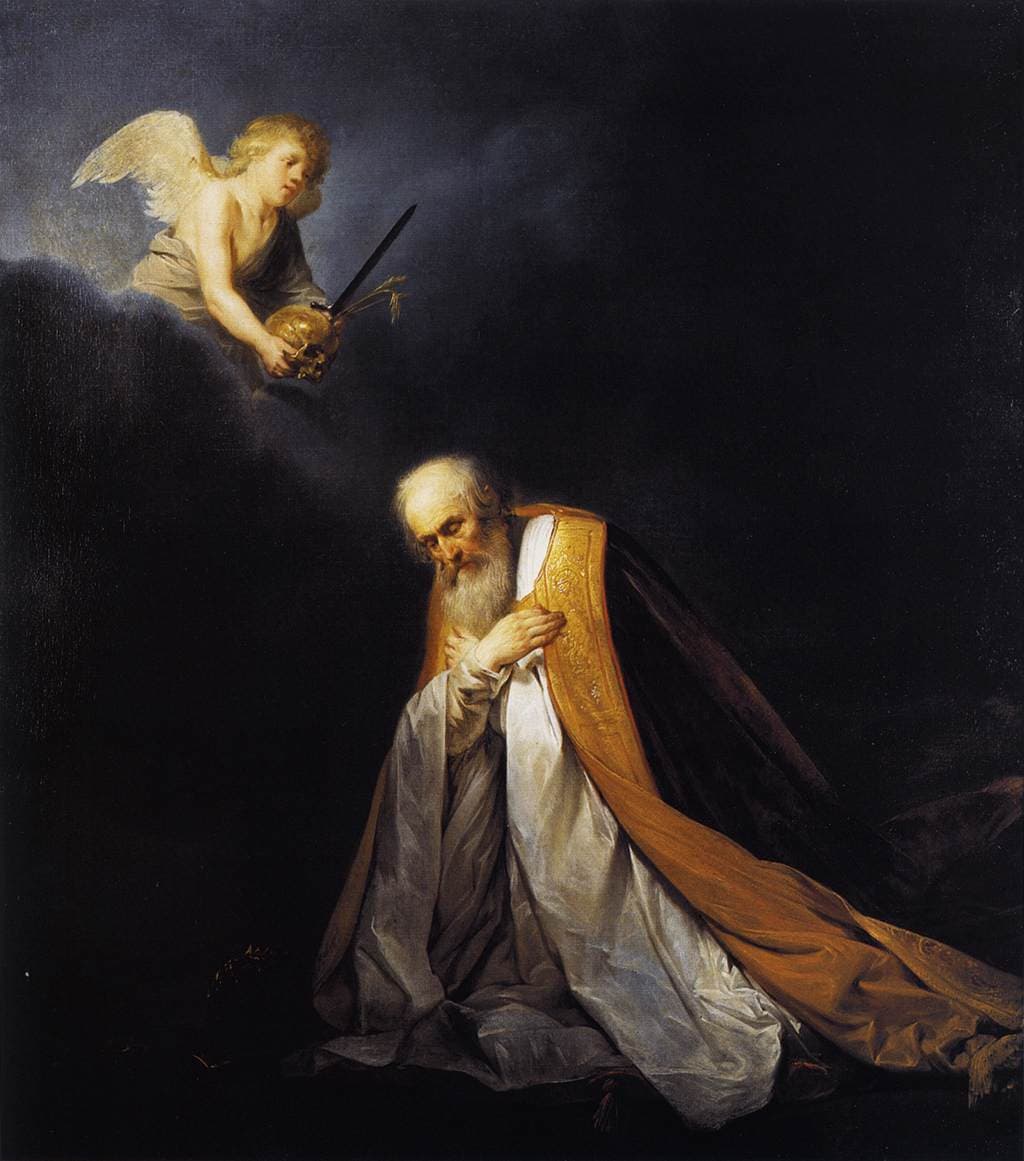
Cover artwork: Pieter de Grebber, King David in Prayer, c. 1635–1640, Museum Catharijneconvent. Artwork source and public-domain information.
