Saint Benedict's Rule can help Catholics approach ordinary responsibilities with greater attention to God and other people. Its lessons include listening before responding, giving prayer a place in the day, doing necessary work faithfully, and welcoming people with care. You do not need to reproduce a monastery's timetable to begin learning from it.
The important distinction is context: Benedict wrote a rule for a monastic community. The household and workplace examples below are suggested applications, not requirements he gave to every Christian. Read them as invitations to practice one habit thoughtfully, rather than a new checklist to complete.
What is the Rule of Saint Benedict?
Benedict was born around 480 in what is now Italy. His Rule guides the shared life of monks, addressing worship, leadership, meals, work, and relationships. Pope Benedict XVI explains that its spiritual wisdom can also help people outside monasteries. He also notes that Gregory the Great's account of Benedict is a spiritual portrait, not a biography in the modern sense. That distinction matters when reading stories about the saint. See the papal audience on Saint Benedict.
For more about his life, visit our Saint Benedict biography. Here, the focus is narrower: what can specific passages of his Rule teach us about a rushed morning, a difficult conversation, or an unfinished task?
Begin with listening, then act
The Prologue to the Rule begins by calling its reader to attentive listening and obedience. It also directs the reader to ask God's help before beginning good work. Listening, in this setting, involves receiving instruction and responding through action.
A practical experiment is to pause before the first demanding conversation of the day. Ask God for the patience to understand what the other person needs. Then let that person finish speaking before preparing your answer. At work, this might mean asking a colleague to explain a concern instead of assuming that you already know the problem.
At home, try repeating the concern in your own words before proposing a solution. You may discover that a child needs help understanding an assignment, rather than another reminder to finish it. This exercise is our application of Benedict's emphasis on listening; it is not a passage from the Rule.
Give prayer and work their own time
In chapter 48, Benedict assigns times for manual labor and sacred reading. The arrangements vary across the year. The chapter even provides for rest after a meal and requires consideration for those unable to bear demanding work.
The lesson for a lay reader is to make deliberate room for different responsibilities. Necessary tasks can consume every available minute if prayer always waits until everything else is finished. Conversely, a spiritual plan that ignores a family's needs is unlikely to serve that family well.
Choose one reliable point in your actual day for prayer: after waking, during a quiet break, or before bed. If you already pray regularly, protect that time before adding another devotion. For help reading Scripture prayerfully, use our beginner's guide to lectio divina.
Consider a parent who plans ten minutes of reading after breakfast but must care for a sick child. A shorter prayer and later return to reading can be a reasonable adjustment. The purpose of the plan is to help the parent attend to God and responsibilities, not to turn an interrupted morning into evidence of spiritual failure.
Practice hospitality with preparation
Chapter 53 directs the community to receive guests as Christ and gives particular attention to poor people and pilgrims. It also addresses kitchens, beds, assigned duties, and additional help for those serving visitors. Hospitality involves practical arrangements as well as goodwill.
For a household, this might mean inviting someone for a simple meal and checking whether they can manage the stairs or need transport. For a parish group, it might mean explaining where newcomers should go, learning their names, and making the event's cost clear.
Notice a useful question: what would help this person participate comfortably? A polished invitation accomplishes little if a visitor arrives and nobody knows who will welcome them. Decide who will answer questions and who will handle the practical details.
These examples are suggestions, not an expectation that every home become an open guesthouse. Choose forms of welcome appropriate to your circumstances and the needs of the people involved.
Read the Rule with its monastic context intact
Some instructions concern an abbot's authority, a community's possessions, or ancient disciplinary practices. They should not simply be transferred into a modern family or workplace. Learning from a saint includes understanding whom he was addressing.
Benedict XVI highlights the Rule's moderation and the importance of leaders who listen, including to younger members. His explanation of Benedict's leadership offers a helpful starting point for distinguishing an enduring spiritual principle from a particular monastic arrangement.
A manager, for example, could invite concerns before finalizing a rota. A parent could explain a decision after hearing a teenager's perspective. Neither situation makes the manager or parent a monastic superior. The application is the willingness to listen responsibly.
Try one Benedict-inspired habit this week
Choose a recurring situation, rather than redesigning your whole life. Perhaps you interrupt your spouse when tired, postpone prayer until midnight, or offer help without following through.
Write down one small response: let the person finish, pray at a realistic time, or confirm the practical details of your offer. After a week, ask what happened. Did the habit help someone? Was the plan realistic? What needs adjusting? These are reflection questions, not a measure of your standing before God.
If you are considering Benedict as a Confirmation saint, compare this particular teaching with the virtues you hope to develop. Our Confirmation saint guide can help you move from admiration to a thoughtful choice. Begin with one passage, one concrete response, and the willingness to learn again tomorrow.
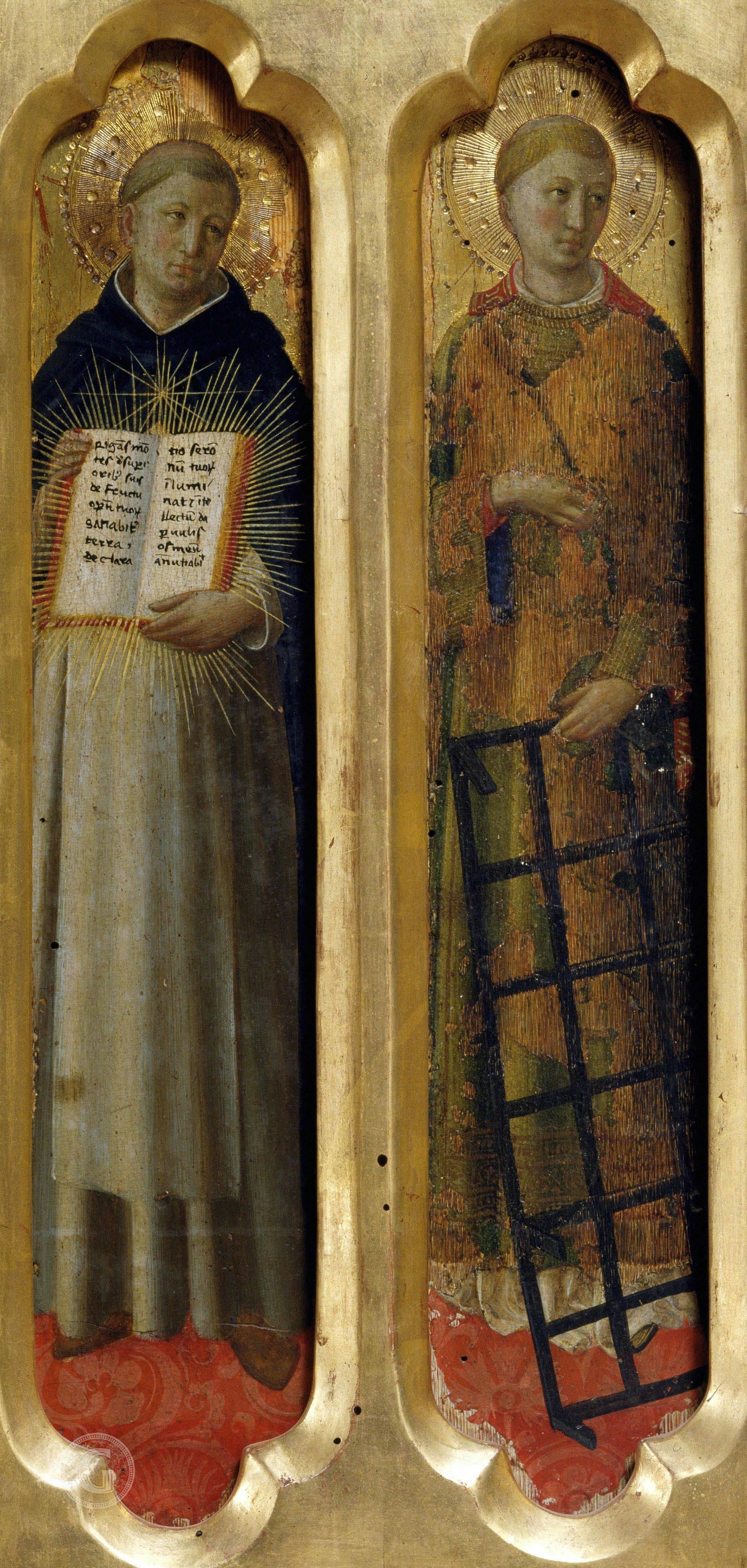
Cover artwork: Fra Angelico's panel depicting Saint Benedict and Saint Lawrence from the Perugia Altarpiece. Public-domain reproduction; see the Wikimedia Commons artwork and rights record.
