Begin Saint Teresa of Ávila's Interior Castle with the author's preface and the opening chapter of the First Mansions. Read a little at a time, keep a notebook for unfamiliar words, and allow the reading to lead into prayer. You do not need to identify your spiritual level before opening the book.
Teresa's October 15 memorial offers a timely invitation. The USCCB's 2026 liturgical calendar lists her as Saint Teresa of Jesus, Virgin and Doctor of the Church. But this is a book you can return to throughout the year, without setting a deadline for finishing it.
What is the Interior Castle about?
Teresa wrote the Interior Castle in 1577. It describes the soul's journey toward union with God through the image of a castle with seven dwelling places, often translated as mansions. Benedict XVI's introduction to Teresa presents the work within her teaching about prayer, Christ, and Christian holiness.
In First Mansions, chapter 1, Teresa compares the soul to a beautiful castle and describes prayer and meditation as its entrance. She includes vocal prayer, provided that it involves attention to the One being addressed. Her concern reaches beyond what happens when a person sits in silence.
For a first reading, hold on to that image before attempting to understand every later experience she describes. The book begins by inviting attention to God and to the dignity of the soul. Its opening can be fruitful even while much of the rest remains unfamiliar.
Why should I read the preface first?
The author's preface identifies her original audience as the Discalced Carmelite nuns. Teresa explains that she is writing under obedience to help her sisters with difficulties concerning prayer.
Knowing that audience changes how you hear the book. When she addresses her sisters, she is speaking within a particular community and way of life. A parent, student, or person working long hours can learn from her without pretending to share every circumstance of that community.
Read her as a teacher in conversation with real people. Note when she offers an image, describes an experience, or gives advice. If a sentence seems abrupt, read the surrounding paragraph before deciding what it means. Keeping those distinctions in a notebook is more useful than collecting striking lines without their context.
Which translation or edition should I choose?
Choose a complete translation that identifies its translator and includes an introduction. If older English slows you down, look for an edition whose language you can follow comfortably. Try a page before deciding; the best starting point is one you will actually read attentively.
For readers who want support, ICS Publications' study edition uses the translation by Kieran Kavanaugh, OCD, and Otilio Rodriguez, OCD. It provides chapter commentary, interpretive notes, reflection questions, and a glossary. These can help distinguish Teresa's text from an editor's explanation.
The freely accessible historical translation linked in this article also lets you begin without buying a book. Whichever edition you use, cite a passage by mansion and chapter when discussing it with someone else. Page numbers change between editions, and even the terms mansions and dwelling places may differ.
A manageable plan for your first week
This is an original suggested reading plan, not a schedule Teresa prescribed.
In your first session, read the preface. Write one sentence about whom Teresa is addressing and why she is writing. Stop there if your attention is tired. Returning tomorrow is a better beginning than racing through several chapters you cannot remember.
In your second session, read the opening of First Mansions, chapter 1. Notice the castle image. Ask what changes when you approach prayer as a relationship with God rather than a task to perform perfectly.
In your third session, return to the chapter's explanation of entering through prayer. Consider a familiar prayer you already use. Spend a few minutes praying it with attention to whom you are addressing, without trying to manufacture an unusual feeling.
Use the remaining sessions to reread, note questions, and continue into the next chapter when ready. A short paragraph can be enough. The Carmelite Friars' approach to reading Teresa prayerfully similarly encourages slow reading and a personal response to God.
Should I try to work out which mansion I am in?
For a first reading, resist turning the book into a self-assessment chart. You can understand an image without deciding that it describes your own experience. Keep a question mark beside passages you do not yet understand.
If something troubles or confuses you, bring the specific passage to a knowledgeable priest, Carmelite community, or spiritual director. Our guide to finding spiritual direction explains how to begin that conversation.
Also keep the ending in view. In Seventh Mansions, chapter 4, Teresa joins prayer with humility, virtues, and service to others. She brings Martha and Mary together and directs her sisters toward the good they can actually do.
After reading, a useful question is therefore practical: who needs my patience, honesty, or help today? That does not measure a mystical state. It gives your reading somewhere to bear fruit.
How does this differ from Teresa's four waters?
The four waters belong to Teresa's Life, while the castle and its seven dwelling places organize this later book. Our guide to Teresa's four waters explores that earlier image. You do not need to fit both works into a single chart before beginning either one.
For the setting of her writing, visit our Saint Teresa of Ávila biography. Then return to the first chapter with a modest aim: understand one passage, pray honestly, and carry one act of love into the rest of the day.
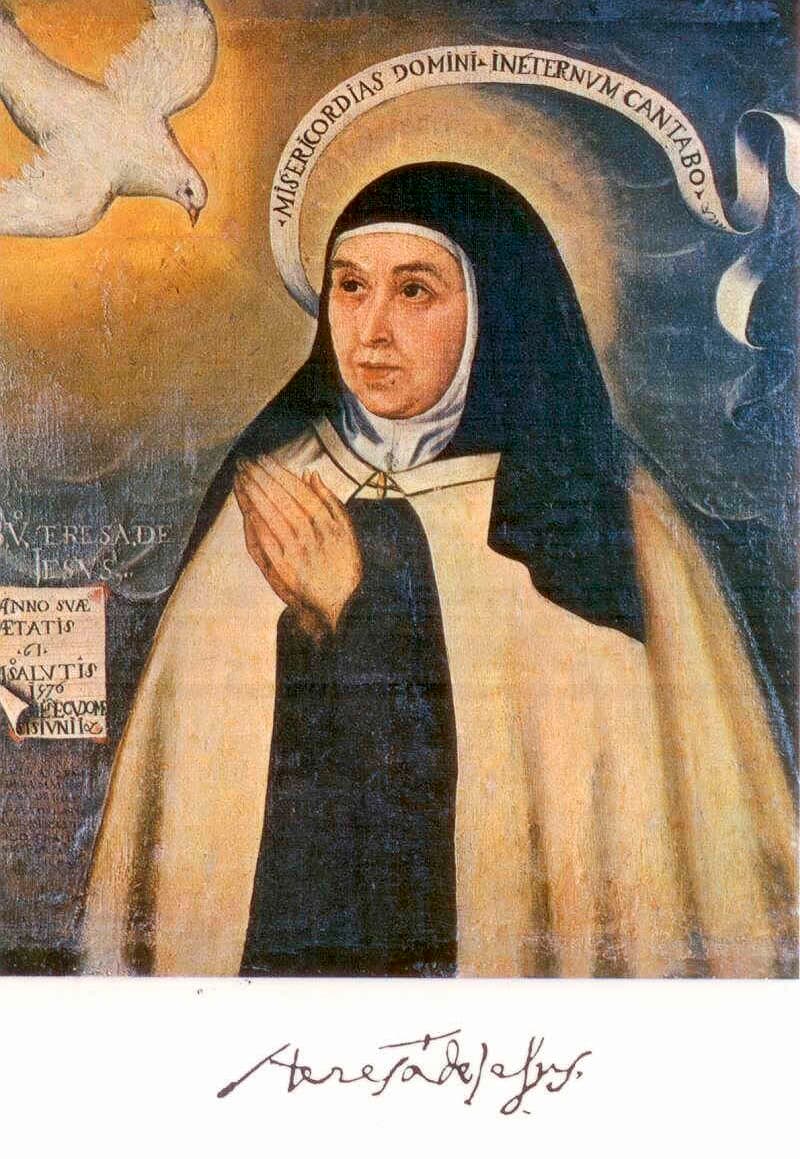
Cover artwork: Juan de la Miseria, Portrait of Saint Teresa of Ávila, 1576; public domain. Artwork source and rights information.
