Saint Faustina's Diary can be a moving introduction to Divine Mercy, but opening it for the first time can also feel overwhelming. Personal memories, prayers, ordinary convent life, and accounts of unusual spiritual experiences appear together. Where should you begin, and how should a Catholic understand what the book says?
Begin slowly, with the Gospel close at hand. Read the Diary as a saint's spiritual testimony, keep private revelation in its proper place, and let each reading lead toward trust in God and concrete mercy toward another person.
What is Saint Faustina's Diary?
Faustina Kowalska was a Polish religious sister who lived from 1905 to 1938. Her convent assignments included cooking, gardening, and serving as a porter. At her confessors' request, she recorded her spiritual life and experiences she understood as communications from Jesus. The Vatican biography of Saint Faustina places those writings within a life of prayer and ordinary responsibilities.
The Diary is therefore more personal than a catechism and more varied than a collection of devotional instructions. Some passages describe events; others record prayer or interior struggles. When it recounts a vision or words attributed to Jesus, it is presenting Faustina's account of her experience. Reading carefully means noticing that distinction.
Her optional memorial falls on October 5 in the General Roman Calendar, following the Vatican's 2020 decree. That makes this a fitting day to discover her writing, though you can begin at any time. Our Saint Faustina biography offers background before you open the book.
Is the Diary part of the Bible?
No. This is the most useful boundary to establish before reading.
The Catechism of the Catholic Church, paragraphs 66–67, distinguishes God's definitive revelation in Christ from later private revelations. Recognized private revelations do not add to or complete that definitive revelation. Their role is to help people live it more fully.
Keep Scripture and the Church's teaching as the foundation of your reading. Do not give an isolated Diary passage the same authority as a biblical text or use it to set aside the Gospel. If something puzzles you, consider its context and ask a knowledgeable priest or spiritual director for help.
In his homily at Faustina's canonization in 2000, Saint John Paul II connected her message with the Easter Gospel. That gives beginners a helpful direction: look for how the writing draws attention to Christ's mercy.
Why does the opening sometimes seem out of order?
You have not necessarily missed a page. The opening combines recollections with entries about experiences occurring while Faustina was writing.
The Marian Fathers' explanation of the Diary's opening describes how earlier material had to be reconstructed. This helps explain why the first part does not always follow a simple chronological sequence.
You can read from the beginning without understanding every transition immediately. When an entry returns to an earlier event, note the change and continue. A brief introduction in your edition and the book's numbered entries can help you find your place. Record entry numbers in your notes rather than page numbers alone, which may differ between editions.
Choose an edition from an established Catholic publisher, and check its introduction, translator information, and explanatory notes. An excerpt on social media rarely gives you enough context to understand a difficult passage.
A simple way to begin reading
Set aside ten minutes and read only a few entries. The goal is attentive reading, so a small amount is enough. Trying to finish a large section at once can make the changes in subject harder to follow.
First, notice what kind of passage you are reading. Is Faustina remembering an event, expressing a prayer, describing a difficulty, or recounting an extraordinary experience? That small pause helps you avoid flattening the whole book into one kind of statement.
Then identify one theme. Perhaps it is trust, repentance, patience, or concern for someone who is suffering. Write one sentence in your own words about what you understood. Mark questions separately so that uncertainty does not turn into a confident conclusion.
Finish with a practical response. You might apologize for a harsh comment, pray for someone you resent, or complete a neglected responsibility with greater care. These are suggestions for reflection, not a prescribed method from Faustina's Diary.
Read alongside a Gospel passage
One useful companion reading is Luke 15, which includes the lost sheep, the lost coin, and the father with two sons. Read the chapter itself before trying to connect it with the Diary.
Notice the father's welcome and the elder son's difficulty accepting his brother's return. Then ask how a Diary passage about mercy might help you reflect on that Gospel. Keep the biblical passage in view; do not force every detail of the two writings into a one-to-one correspondence.
You can alternate a short Diary reading with a Gospel reading on another day. If you already practice a daily Examen, bring one question about receiving or offering mercy into your evening reflection.
What if a passage makes me anxious or confused?
Pause. You do not need to solve every spiritual question in one sitting.
Read the surrounding entries and consult the edition's notes. Be especially careful with passages about suffering, obedience, or promises associated with particular devotions. An isolated sentence is a poor basis for a major personal decision.
Bring persistent questions to a trusted priest or spiritual director. You can also return to a clear Gospel passage and come back to the Diary later. Reading a spiritual book should not become a contest to reproduce another person's experiences.
The Vatican biography highlights Faustina's own distinction between extraordinary spiritual gifts and holiness. Her emphasis on conformity to God's will offers a steadier focus than fascination with visions.
Let reading become an act of mercy
A helpful question after reading is: who needs my attention today?
John Paul II's canonization homily connects mercy with our neighbors' material and spiritual needs. A patient conversation, a visit, practical assistance, or a willingness to seek reconciliation can give your reflection a concrete direction.
For an introduction to the associated devotion, see our guide to Divine Mercy, the Chaplet, and Divine Mercy Sunday. You do not need to master every practice before beginning to read.
This original prayer can close a reading session: Lord Jesus, help me receive your mercy with humility. Give me patience with what I do not yet understand, and show me one act of kindness I can offer today. Amen.
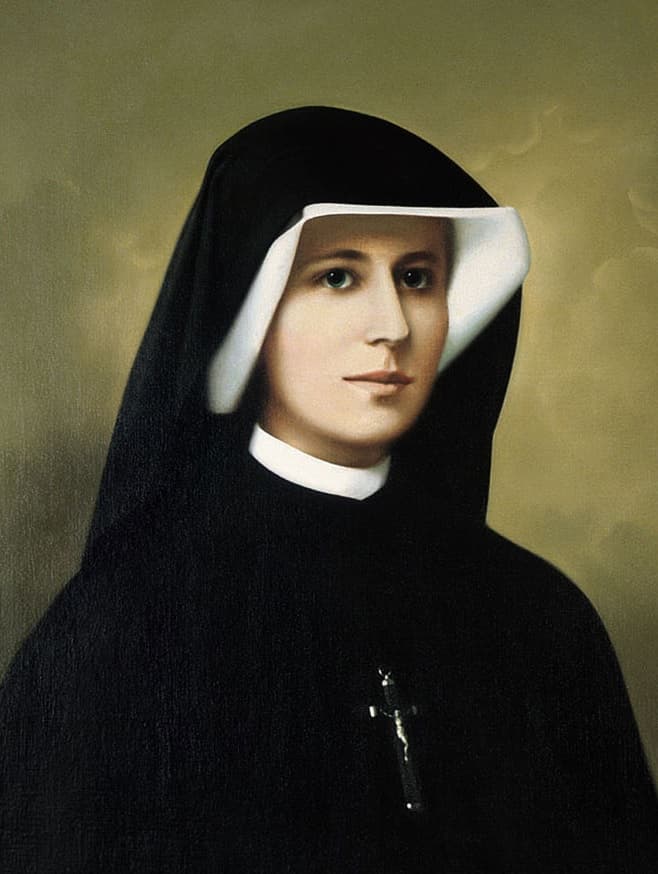
Artwork: Painted portrait of Saint Faustina Kowalska by Stanisław Sztama, via Wikimedia Commons. The Marians of the Immaculate Conception released the image into the public domain.
