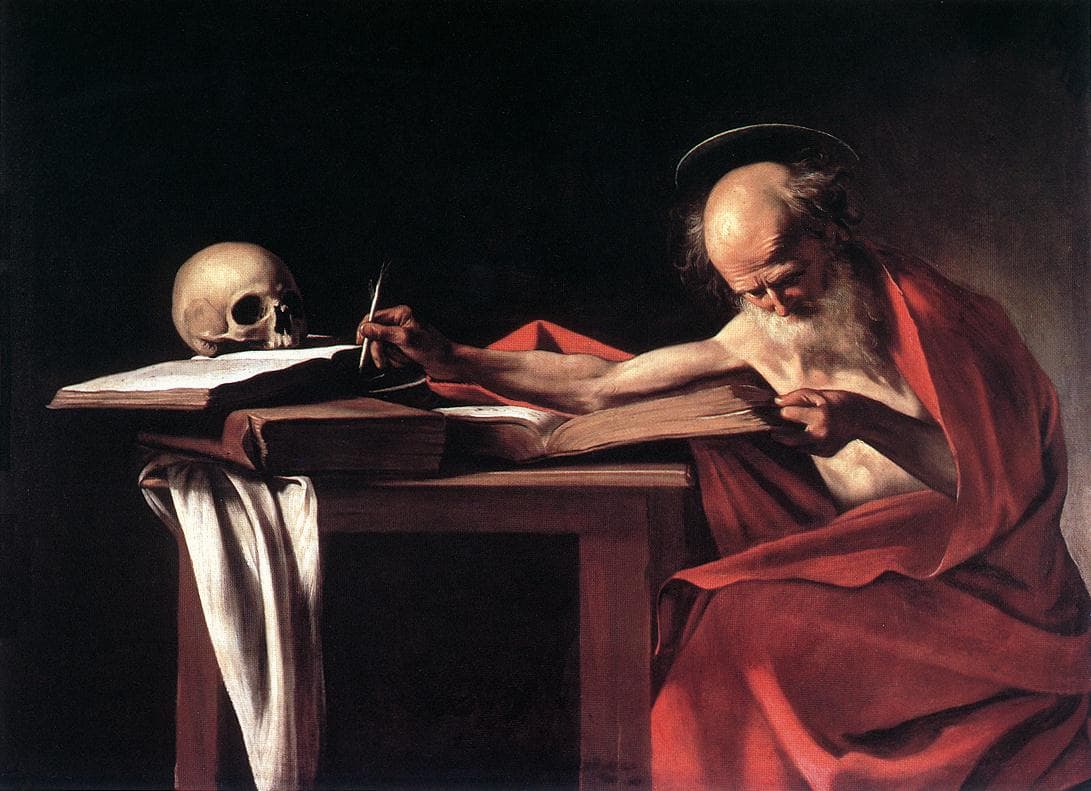
Saint Jerome can teach us to read the Bible with patient attention, a willingness to ask questions, and a desire to live what we learn. His example joins serious study to Christian discipleship. You do not need to know ancient languages to begin following it.
The Church remembers Jerome as a priest and Doctor of the Church on September 30, as the USCCB's liturgical calendar confirms. His approaching memorial is a good occasion to open a biblical book you have been meaning to read. Here is what his work offers a reader who feels curious, busy, or unsure where to turn when a passage is difficult.
What did Saint Jerome contribute to the Bible?
Jerome revised earlier Latin Gospel texts and translated extensively from Hebrew, work that became foundational to the Latin Vulgate tradition. He also wrote commentaries and helped others study Scripture. Pope Francis describes these contributions in Scripturae Sacrae Affectus, his 2020 letter on Jerome.
Translation did not mean inventing the Bible or writing its original books. Nor should the Vulgate's long history be reduced to a single moment when one man produced an entirely new Bible. For that broader story, read our history of the Catholic Bible. For Jerome's life, visit his saint biography.
His work also depended on learning from others. Francis describes Jerome's language study, manuscript work, and collaboration, including the scriptural learning of Paula and Eustochium. The practical lesson is encouraging: asking for help belongs within serious study. It is not evidence that you are failing at faith.
Begin with the desire to know Christ
Jerome's best-known biblical counsel is brief: “Ignorance of the Scriptures is ignorance of Christ.” Benedict XVI's audience on Jerome explains his emphasis on frequent reading, prayer, and a life consistent with God's word.
That gives Bible reading a purpose larger than finishing a checklist. Start with a manageable passage and ask what it reveals about God and the life of discipleship. If you miss a day, return to the text. Familiarity grows through repeated attention; you do not have to understand every reference on the first reading.
A useful starting commitment is one short Gospel passage several times this week. Keep a notebook with two spaces: what the passage says, and what you want to understand better. Separating those helps you notice when you have moved from the author's words to your own assumptions.
Read the passage before applying it to yourself
An isolated sentence can sound very different from the paragraph around it. The Second Vatican Council's Dei Verbum, paragraph 12, calls readers to attend to the human authors' intentions, literary forms, and historical circumstances. It also places interpretation within the unity of Scripture and the Church's living Tradition.
Before deciding what a verse means for today's problem, read what comes before and after it. Who is speaking? To whom? Is this a prayer, a parable, a letter, or a narrative? Consult the introduction and notes in a Catholic study Bible when a custom or unfamiliar phrase matters. These questions help you listen carefully before forming an application.
For example, read Luke 10:25–37, the Good Samaritan passage, including the conversation surrounding the story. Notice the question about the neighbor at the beginning and Jesus' question about who acted as a neighbor at the end. The account directs attention toward mercy expressed in action. An application might be to notice someone you have been passing by, then choose an appropriate way to help.
This is an example for today's reader, not a claim that Jerome prescribed this particular exercise.
When you are puzzled, ask a specific question
Instead of concluding that an entire book makes no sense, mark the exact verse and name the difficulty. Perhaps you do not recognize a place, cannot tell who a pronoun refers to, or are troubled by a violent episode. Those are different questions and may require different kinds of help.
Bring the passage to a parish Bible study, catechist, or priest. Ask for a reliable commentary that addresses it. You can continue reading while leaving an honest question open. A confident social-media explanation without context does not become reliable simply because it offers a quick answer.
Reading with the Church also involves humility about our conclusions. A private impression can be meaningful without settling a disputed interpretation. When discussing a passage, distinguish what the text states, what a qualified source explains, and what you personally find challenging.
Let learning change the way you treat people
Benedict's account of Jerome emphasizes the connection between teaching and conduct, including care for people who are poor or suffering. That is a useful check on our own study: does growing knowledge make us more attentive, truthful, patient, and ready to serve?
After reading, choose one proportionate response. It could be an apology you owe, practical help you can offer, or a question you need to ask before judging someone. Avoid turning a passage into a demand that somebody else change while you remain untouched by it.
For a prayerful way to linger with a passage, our guide to lectio divina offers a fuller method. Study and prayer can support each other without every reading session needing to accomplish everything.
A small plan for Saint Jerome's memorial
On September 30, set aside ten quiet minutes. Read one Gospel scene, identify one question, and use a reliable note or introduction to explore it. Finish by asking God for help to live one thing you understood. Return to the same scene later in the week and notice what becomes clearer.
That is a modest beginning, but it gives Jerome's example a place in ordinary life: open the text, learn patiently, seek help, and let understanding lead to love.
Cover artwork: Caravaggio, Saint Jerome Writing, circa 1606, Galleria Borghese, Rome. This later artistic depiction is a public-domain painting, not a contemporary portrait; see the image source and licensing information.
