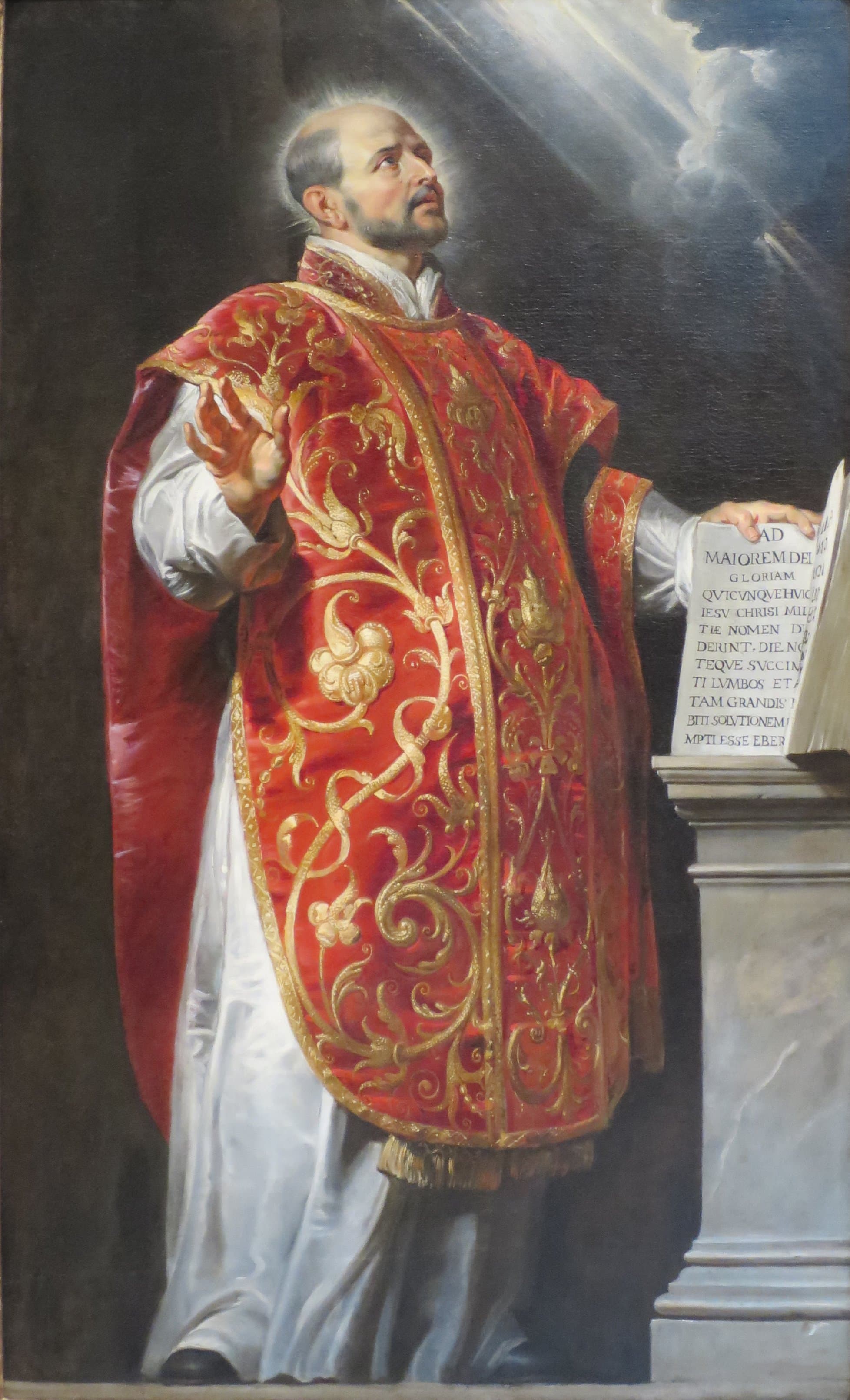
To pray the daily Examen, pause with God, give thanks, ask for help seeing clearly, review your day, seek forgiveness, and choose a faithful response for tomorrow. This prayer associated with Saint Ignatius of Loyola brings ordinary experiences into conversation with God. You do not need an eventful day or an impressive journal entry to begin.
The guide below explains a traditional five-part pattern and then follows it through an original example. If you already use our daily prayer routine, the Examen can deepen its evening pause without adding another appointment to your day.
What is the Examen prayer?
The Examen is a prayerful review of lived experience: what you received, how you responded, and where you need God's help. The Jesuits' Office of Ignatian Spirituality emphasizes that it uses guiding movements rather than a required script. Different versions arrange those movements differently.
Its connection with Saint Ignatius of Loyola matters. In his explanation of Ignatian reflection, Jesuit David Fleming places the Examen within the Spiritual Exercises and connects reflection with responding to God in active life. It is prayer directed to God, rather than a private performance review. Read Reflection and Our Active Lives for that background.
Five steps for praying the daily Examen
These movements follow the pattern presented by the Jesuits in Britain. The prompts and everyday examples below are original suggestions for beginners, not quotations from Ignatius or an official prayer text.
1. Begin with gratitude
Name something you actually received today. It could be a friend's patience, food someone prepared, or help with an unfamiliar task. Stay with the particular gift long enough to thank God for it. If the day was painful, you do not have to rename that pain a blessing; gratitude can be as modest as acknowledging someone who stayed beside you.
2. Ask God to help you see clearly
Before judging your choices, ask for honesty and the grace to change. A simple original prompt is: “God, help me notice what I missed and face what I need to face.” Allow room for both an overlooked kindness and an uncomfortable truth. You are asking for help, not trying to predict what God must say.
3. Revisit the day's encounters and choices
Move through the main parts of the day: waking, work or school, meals, conversations, and the present moment. Notice your thoughts, words, actions, and responses to others. Choose one encounter that deserves attention rather than constructing a minute-by-minute transcript.
Ask what happened before interpreting it. “I interrupted twice” is more specific than “I am always selfish.” “I listened when I wanted to leave” recognizes a choice without declaring the whole day a success. Bring the concrete moment into prayer.
4. Ask forgiveness where it is needed
Name a real wrong without excuses or sweeping accusations against yourself. If you embarrassed someone, withheld help you could reasonably give, or repeated a rumor, acknowledge that particular action. Ask God's mercy and consider what repair is possible. An apology should address the harm, not demand that the other person immediately reassure you.
5. Entrust tomorrow to God and choose a response
Look toward one situation you are likely to face again. Ask for grace and make a modest, specific intention. “I will let my colleague finish before answering” gives you a recognizable action. “I will become perfectly patient” does not. Close with the Our Father or a brief prayer in your own words.
A worked example after a difficult conversation
Imagine a student whose group project meeting ended badly. This is an invented teaching example, not a testimony about an actual person.
First, the student remembers that a classmate shared useful notes and thanks God for that generosity. Next comes a request for clarity about the meeting, including anything the student has overlooked. On reviewing it, the student notices feeling anxious about the deadline and then dismissing another person's suggestion before hearing it.
The anxiety helps describe the situation; it does not excuse the interruption. The student asks forgiveness for speaking dismissively and considers a repair: a short apology naming the interruption, followed by a genuine invitation to explain the suggestion. For the next meeting, the intention is to ask one clarifying question before objecting.
The prayer need not solve the entire project. It has connected gratitude, honest attention, mercy, and a concrete next action. A teacher or Confirmation sponsor could adapt this example by asking which details are observations, which are interpretations, and which response would actually help the relationship.
Are good and bad feelings messages from God?
Feelings deserve attention, but a pleasant feeling is not automatically divine approval, and an uncomfortable feeling is not automatically spiritual failure. The Jesuits in Britain distinguish consolation and desolation from simply feeling happy or sad; the deeper question concerns movement toward or away from God.
For example, an honest apology can feel embarrassing while expressing love. Winning an argument can feel satisfying while damaging a friendship. These original examples show why the question “How did I feel?” needs a second question: “How did I respond, and what did that response encourage?” Avoid making a major decision on the strength of one night's impression. A spiritual director can help you consider persistent patterns.
Is the Examen the same as preparing for confession?
The two practices overlap in honest self-examination, sorrow for sin, and a desire to change. The daily Examen also gives explicit attention to gratitude and the broader experience of the day. It does not replace sacramental confession.
The Catechism, paragraphs 1454–1456, describes examination of conscience in preparation for the sacrament and the importance of confessing sins to a priest. Our guide to Padre Pio and confession offers further context about mercy and honest preparation.
How can I start without overcomplicating it?
Choose a quiet pause you can reasonably keep and follow the five movements once. The Jesuit tradition includes midday and evening practice, as the Office of Ignatian Spirituality explains; that does not make twice-daily practice a universal obligation for lay Catholics.
You may jot down one gift, one encounter, and one intention, but writing is optional. If reflection becomes repetitive fault-finding, discuss it with a trusted confessor or spiritual director instead of extending the exercise indefinitely. Tomorrow, return to prayer with the day you actually lived.
Artwork credit
Cover: Saint Ignatius of Loyola by Peter Paul Rubens, Norton Simon Museum. Public-domain artwork and faithful reproduction, via Wikimedia Commons. The painting illustrates Ignatius; it is not a depiction of the fictional student example.
