October 13 marks the anniversary of the final reported Marian apparition at Fátima in 1917. For Catholics exploring its meaning, the starting point is prayer, conversion, and peace. Fátima is an approved private revelation; it does not add a new Gospel or a requirement to follow every devotional practice associated with it.
If you have encountered Fátima through dramatic videos or arguments about secrets, a quieter introduction may help. Begin with the historical account, read the Church's explanation, and choose a practical response that draws you toward Christ and the people entrusted to your care.
What happened at Fátima on October 13?
Three Portuguese children, Lúcia dos Santos and her cousins Francisco and Jacinta Marto, reported encounters with Mary in 1917. The Shrine of Fátima's chronology identifies October 13 as the sixth apparition and describes the large gathering at Cova da Iria.
The shrine reproduces a contemporary newspaper account describing unusual appearances of the sun, commonly called the Miracle of the Sun. It also records that Mary identified herself to the children as the Lady of the Rosary. These are elements of the reported apparition and its historical reception, rather than instructions to look for signs in the sky today.
The same chronology records the Bishop of Leiria's approval in 1930. October 13 is therefore meaningful as an anniversary of these events. It should not be confused with May 13, the date associated with the first apparition and the feast of Our Lady of Fátima.
Do Catholics have to believe in Fátima?
Catholics do not owe an approved private revelation the same assent of faith they owe God's definitive Revelation in Christ. The Catechism, paragraphs 65–67, explains that private revelations do not belong to the deposit of faith and cannot improve or complete Christ's Revelation.
The Vatican's 2000 document, The Message of Fátima, applies this distinction directly. Cardinal Joseph Ratzinger's theological commentary describes approved private revelation as help offered to believers, which they are not obliged to use. Its value is measured by whether it leads them toward Christ.
That leaves room for sincere devotion and thoughtful questions. A Catholic who finds Fátima helpful can receive its call to prayer with gratitude. Someone whose spiritual life centers on other approved devotions need not collect every apparition story. Neither person should use a particular devotion as a test of another person's Catholic identity.
What about the secrets and predictions?
The Vatican published the third part of the Fátima secret in 2000, together with supporting documents and theological commentary. That commentary emphasizes the symbolic character of the vision and rejects treating it as a fixed film of future events.
For a reader, this suggests a useful boundary: do not let a headline about a hidden timetable determine your spiritual life. Read the original Church document before trusting a secondhand claim. Ask whether the writer distinguishes the children's accounts, the Church's interpretation, and the writer's own speculation.
If an article leaves you frightened but gives no clear source, step back. You can ask a priest or knowledgeable catechist to help you examine it. There is no need to forward it to family members while you are still unsure what it means.
Why are Francisco and Jacinta saints?
Pope Francis canonized Francisco and Jacinta on May 13, 2017. In his homily at their canonization, he presented them as examples of adoration and hope, and connected the pilgrimage with care for others rather than indifference.
Their place in the Church invites more than curiosity about an extraordinary event. You can read our biographies of Saint Francisco Marto and Saint Jacinta Marto with a simple question: what might their attention to God and concern for others ask of my ordinary day?
Choose one detail to discuss rather than trying to copy every feature of a child's life in another time. For families, that could become a conversation about praying for someone who is ill, listening carefully, or noticing a person who feels forgotten.
How can I mark October 13 at home?
The following is an original suggested practice, not a required observance or an official Fátima prayer program.
Set aside ten quiet minutes. Name a person or place for which you want to pray for peace. If you pray the Rosary, choose a decade and bring that intention into it. Our Rosary introduction explains the prayer for beginners.
Then identify one action within your reach. Perhaps you can repair an unkind remark, contact a lonely relative, or offer practical help to a neighbor. Make the action specific enough to do today. Praying for peace can accompany the patient work of becoming more peaceful in a real relationship.
With children, begin with the names of the three shepherd children and one clear idea: prayer turns our attention toward God and others. Allow questions about the story. Avoid using frightening details to force interest or promising that a prayer will prevent every difficulty.
An original prayer for peace
The following prayer was written for this article; it is not a quotation from the Fátima apparitions.
Lord Jesus, receive the people and places we carry in our hearts. Teach us to seek peace in our words, patience in our homes, and courage in caring for others. Through Mary's intercession, help us turn toward you with trust and begin again where we have failed to love. Amen.
About the cover photograph
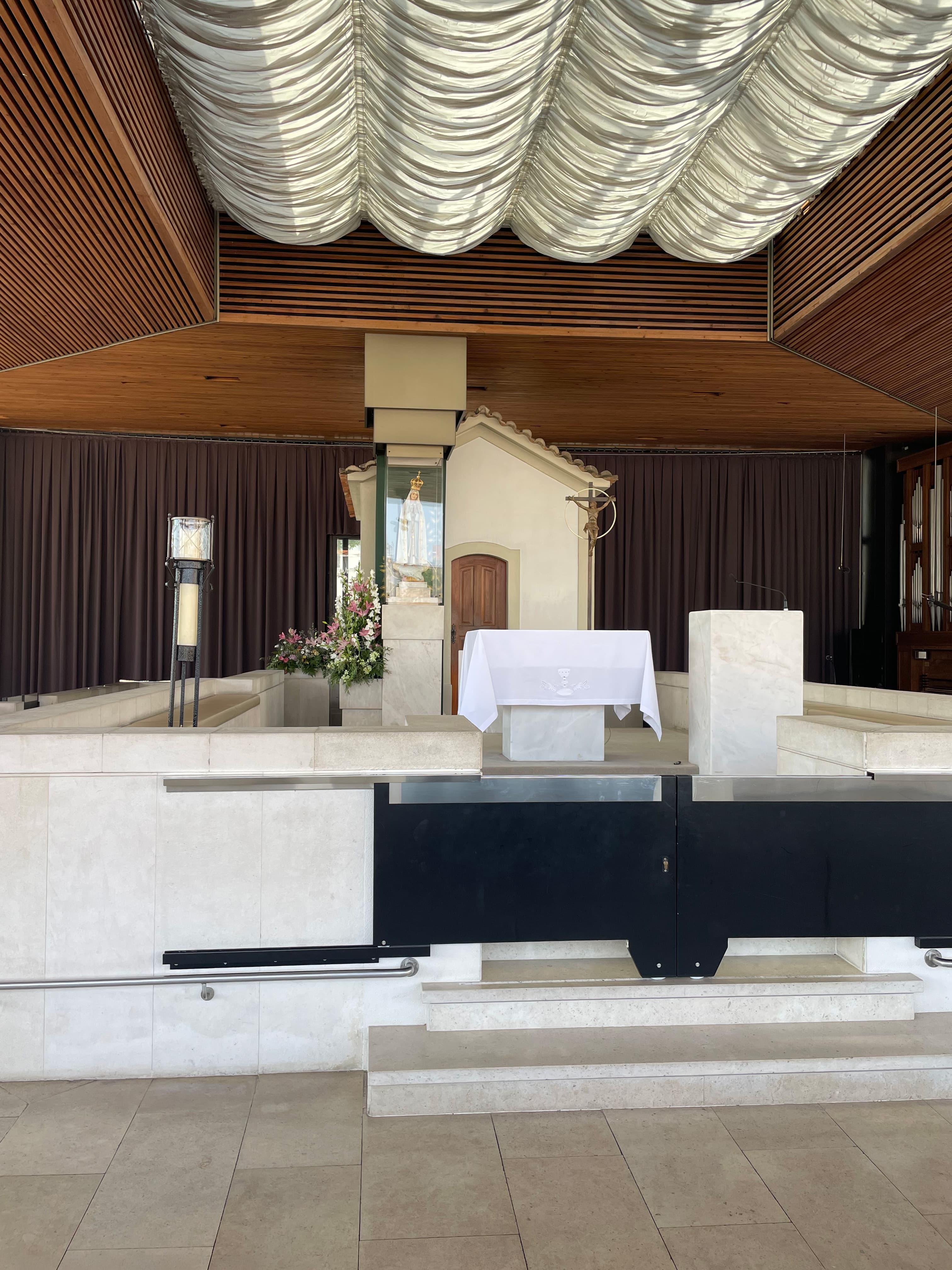
The cover shows the Chapel of the Apparitions at Fátima. It is a modern photograph of the shrine, not a photograph of the 1917 apparition. The image is by Einaz80, available through its Wikimedia Commons file page under CC BY-SA 4.0. We use the original image without editorial alterations; the site's cover layout may crop its display, under the same license.
