Catholic saint biography
St. Francisco Marto
- Commemoration:
- February 20
- Lived:
- 1908–1919 — Aljustrel, Portugal
February 20 with Jacinta, where their liturgical celebration is observed; Francisco died April 4.
Why dates and liturgical observances can differ
Read the sources for this biography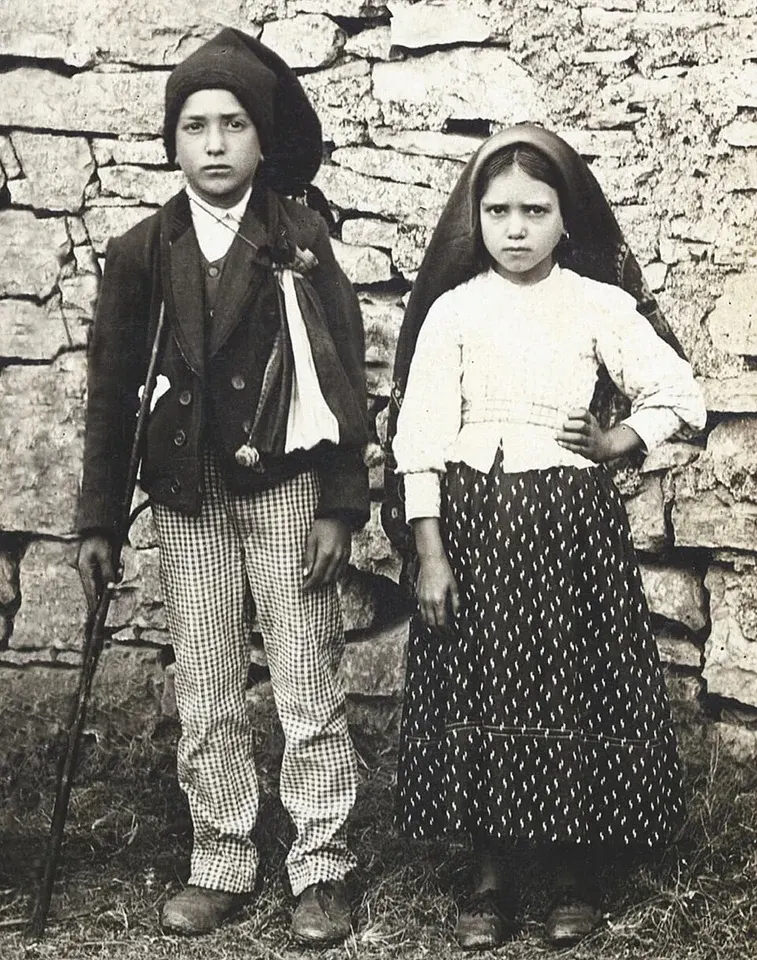
Biography
Francisco Marto was one of the three shepherd children associated with the reported Marian apparitions at Fátima in 1917. His particular place in the account centers on quiet prayer and a desire to console Christ.
He lived near Fátima with his sister Jacinta and often tended sheep with their cousin Lúcia. In the children's descriptions of the apparitions, Francisco saw the figure but did not hear her words. Their experiences must therefore be described with attention to the differences within their own testimony.
Accounts of his response emphasize extended periods of prayer rather than a public preaching role. His life was soon cut short by the influenza epidemic. He became ill in late 1918 and died on April 4, 1919, shortly before his eleventh birthday.
Francisco and Jacinta were beatified in 2000 and canonized in 2017. Their shared liturgical remembrance is February 20, although they died on different dates. The Church's recognition of their holiness concerns their Christian lives; the Fátima apparitions remain approved private revelation rather than an addition to Scripture. That distinction keeps the children's biography separate from claims that all Christians must accept every devotional interpretation.
Context & contribution
From a village grave to a pilgrimage basilica
Francisco was first buried in Fátima's cemetery; his remains were transferred to the basilica in March 1952. The movement from a local burial to a major place of pilgrimage marks a stage in the public remembrance of a child whose own life had been brief and largely rural.
The Vatican's earlier biographical page still calls him Blessed because it belongs to the record of his beatification. Reading it today requires attention to the document's date. An archival title records the status at publication; it does not reverse the later canonization or create a second person.
Explore the sources for this section
AI-assisted source comparison updated 2026-09-26. Editorial approach
From the Saint Discovery blog
Keep exploring your faith
Practical guides to prayer, the saints, and living the Catholic faith.
Why Is October the Month of the Rosary? History & Prayer
October’s Rosary devotion connects the October 7 memorial, Lepanto in 1571 and papal encouragement. Understand the history and start a manageable prayer…
Bring reflection into prayerRead the article Meet the saintsWhat Is the Domestic Church? John Paul II on Faith at Home
What Catholics mean by the domestic church, how John Paul II explained family life, and practical ways to begin with prayer, forgiveness and welcome.
Bring reflection into prayerRead the articleFrom reading to reflection
What will you carry with you?
After reading about St. Francisco Marto, take a moment to consider:
- Build a three-point timeline of Francisco's death, transfer of remains, and canonization. Explain why an older Vatican document may still use the title Blessed.
These are reflection prompts from Saint Discovery, not quotations from the saint.
Sources and further reading
Biography source comparison recorded on . This is an AI-assisted comparison, not independent human or ecclesiastical approval.
What the recorded review covers
AI-assisted expansion checked against cited sources; historical traditions distinguished from documented evidence; not ecclesiastical approval
A source list helps you check an account; it does not establish that every claim is certain. Follow the biography’s qualifications about historical evidence, traditions and feast calendars.
Suggest a correction to this biography
How we research these pages and handle corrections · Directory corrections log
More lives to explore
Suggestions based on the site’s quiz themes, not a historical relationship or a measure of holiness.