A man hears a radio warning that the river beside his home is about to flood. He stays because he believes God will save him. Help arrives, but he keeps turning it away. The drowning man parable asks an uncomfortable question: could we miss an answer to prayer because it looks more ordinary than we expected?
This is a modern teaching story, sometimes called the story of the boats and the helicopter. It is not a parable Jesus tells in the Bible. Its lesson can nevertheless open a useful Catholic conversation about providence, prayer, and accepting help.
The man, the radio warning, and the rising river
Here is an original retelling of the familiar story.
A man living beside a river hears an urgent radio report: heavy rain will send floodwater through the town, and residents must leave. He decides to stay, confident that God will protect him.
Water soon surrounds his house. A neighbor comes by in a boat and offers him a seat. The man declines, convinced that divine rescue is still on its way.
The water rises to the upper floor. Another rescue boat stops, but again he refuses. Eventually he climbs onto the roof. A helicopter crew lowers a rescue line. He waves them away too.
The flood overwhelms the house, and he dies. In the story's imagined encounter with God, he asks why his prayers went unanswered. God points to the warning, the boats, and the helicopter: help had reached him repeatedly, but he had refused to receive it.
Versions differ in their details. A 2015 Redemptorist Lenten reflection, for example, includes a truck, a boat, and a helicopter. That is an example of the story's use in Catholic reflection, not evidence of its original author or a historical event.
What is the meaning of the drowning man parable?
The man's mistake is assuming that God's help must arrive without human involvement. He has decided what rescue should look like before it comes. Because ordinary people offer it, he fails to recognize it as something he can gratefully accept.
The Catechism of the Catholic Church, paragraphs 306–308, teaches that God works through his creatures and gives people a real share in caring for creation and one another. Human action and divine providence are not competing explanations. A person's skill, generosity, and responsible decisions can serve God's purposes.
Applied to the story, boarding the boat would be consistent with trust in God. The rescuer's work does not become less valuable because it involves training, equipment, and effort. Those ordinary means are precisely what make rescue possible.
Trusting God includes taking the next responsible step
Prayer does not require us to ignore evidence or create an emergency to demonstrate our faith. In Matthew 4:5–7, the devil urges Jesus to throw himself from the temple, invoking God's promised protection. Jesus refuses to put God to the test. The passage concerns Jesus' temptation, but it also challenges the idea that deliberately courting danger proves trust.
In a real emergency, following official evacuation instructions and accepting assistance are responsible actions. Praying while doing those things is entirely possible.
The same lesson reaches quieter parts of life. Someone praying for work might accept help reviewing a résumé. Someone longing for friendship might respond to a parish invitation. Someone asking for reconciliation might begin with an honest apology. None of those actions guarantees the desired outcome. Each offers a concrete way to move forward while continuing to pray.
Our Catholic guide to prayer explores that ongoing relationship with God beyond a single request or result.
Sometimes we are the person in the boat
It is easy to picture ourselves as the person waiting for help. The story also invites us to notice when we can offer it.
In James 2:14–17, wishing someone well while withholding needed food or clothing exposes a failure to live out faith. Prayer for a neighbor can accompany a meal, a ride, a listening ear, or another appropriate act of care. We need not choose between intercession and practical generosity.
Ask before deciding what someone needs. A useful offer is specific and leaves room for their answer: could you bring groceries, help with a task, or accompany them to a parish event? Their dignity matters as much as your desire to help. Our guide to the corporal works of mercy offers more everyday examples.
What this story cannot explain
The drowning man story is a memorable illustration, not a complete account of suffering. It cannot explain why one person survives a disaster and another does not. People may lack warnings, transportation, accessible shelter, or any realistic opportunity to escape. We must not use a fictional man's choices to judge actual victims.
Nor does the story promise that every sincere prayer will produce a visible rescue. The Catechism acknowledges that the problem of evil admits no quick answer and that God's providence often remains mysterious to us (paragraphs 309 and 314). Christian care begins with compassion, not an explanation imposed on another person's pain.
Receiving help also requires discernment. An offer is not automatically God's will because it arrives after prayer. Consider whether it is safe, honest, and consistent with your responsibilities, and seek trustworthy advice when needed.
A short reflection for your own prayer
Bring one present concern to God. Then ask yourself: have I already received useful information or a reasonable offer of help? Am I resisting it because I feel embarrassed, want control, or expected a more dramatic answer? What small, responsible action could I take today?
You might also ask whose burden you could help carry. Returning to these questions during the daily Examen can help you notice both gifts received and opportunities missed.
Original prayer: Lord, help me recognize the good you make possible through other people. Give me humility to receive help, wisdom to choose responsibly, and generosity to respond when my neighbor needs me. Teach me to trust you while taking the next faithful step. Amen.
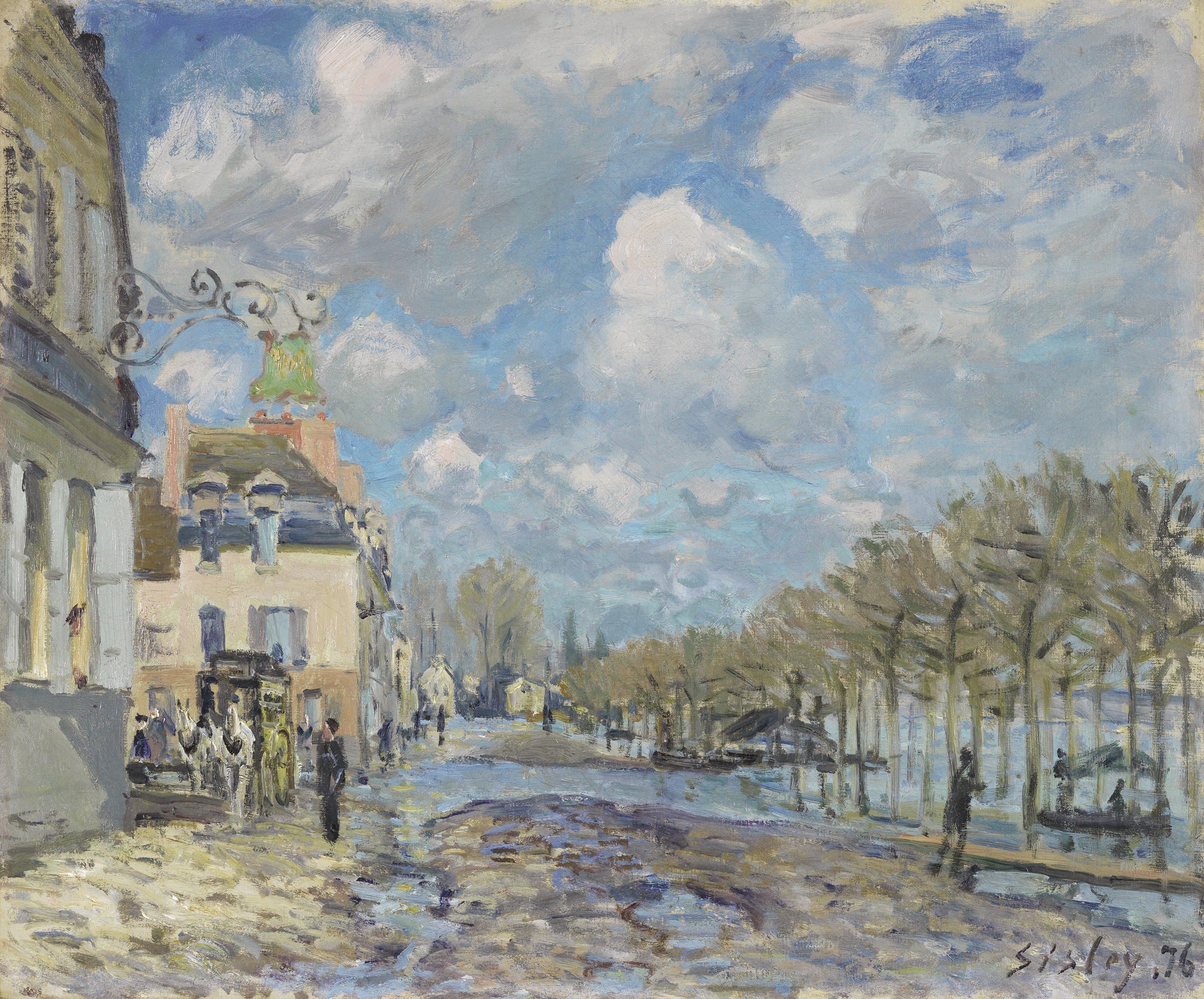
Artwork: Alfred Sisley's Flood at Port-Marly, 1876, shown as an illustration of a flooded town; it does not depict the fictional story.
