Catholic saint biography
St. Vincent of Saragossa
- Commemoration:
- January 22
- Lived:
- Died 304 — Saragossa and Valencia, Spain
Why dates and liturgical observances can differ
Read the sources for this biography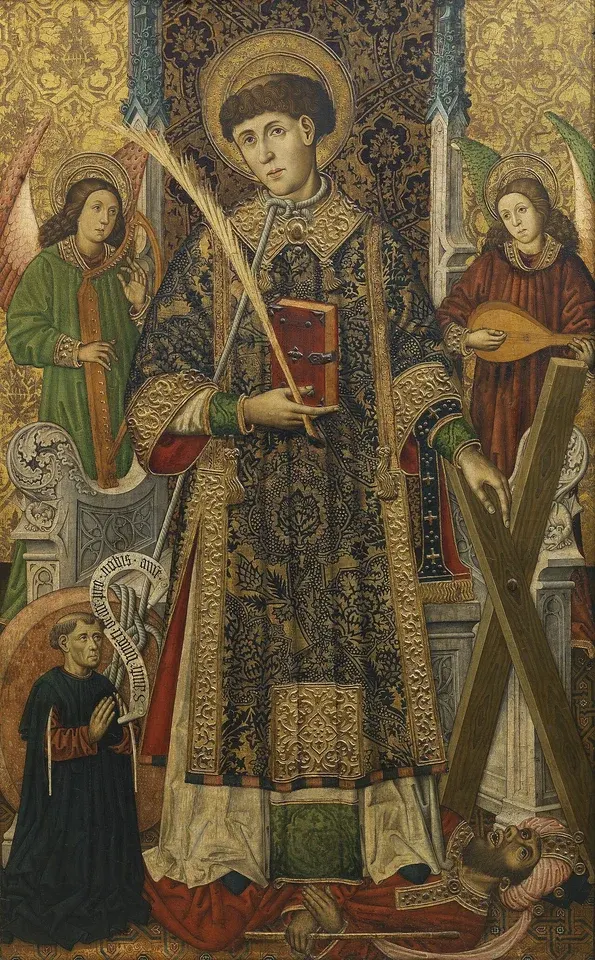
Biography
Vincent was a Spanish deacon associated with Saragossa who died during the persecution under Diocletian. He is remembered for preaching and for refusing to abandon his Christian faith after arrest. His martyrdom at Valencia in 304 led to early and widespread veneration.
The received account associates him with Bishop Valerius and gives him a prominent role in preaching. Both were brought to Valencia, but their remembered fates differ: the bishop was exiled and the deacon killed. The story places Vincent’s witness within the service of a local church.
His reputation spread early enough for Augustine to preach in his honor in North Africa. Prudentius also celebrated him in verse, while later versions developed the martyrdom narrative further. This early reception gives a firmer foundation for his importance than treating every subsequent dramatic detail as an eyewitness report.
The surviving tradition emphasizes courage under severe suffering. Rather than treating every detail of later torture narratives as equally certain, his biography can rest on his identity as a deacon and martyr of the early Spanish Church. His January 22 feast preserves the memory of ministry joined to fidelity when public profession of Christianity carried grave danger.
Context & contribution
How a martyr's memory crossed the sea
Vincent's remembrance spread well beyond the Spanish cities associated with his life. Augustine's preaching witnesses to accounts of Vincent being read in North African churches, while later church dedications and inscriptions show the reach of his veneration. These traces help explain why a deacon from Spain became familiar to Christians in distant communities.
They also call for a distinction between early evidence of devotion and the surviving, later versions of his martyrdom narrative. A community's ancient celebration does not establish every detail in a subsequent account. Following the sermons, dedications, and inscriptions offers a richer way to study Vincent than concentrating only on descriptions of his suffering.
Explore the sources for this section
AI-assisted source comparison updated 2026-09-26. Editorial approach
From the Saint Discovery blog
Keep exploring your faith
Practical guides to prayer, the saints, and living the Catholic faith.
Why Is St. Thérèse the Patron Saint of Missions?
Why is St. Thérèse patron saint of missions? Discover her support for missionaries and practical ways to participate in the Church's mission from home.
Sharing the faithRead the article Everyday faithWhat Is Evangelization? A Catholic Guide to Sharing the Faith
What is evangelization? Learn the Catholic meaning, the new evangelization, and practical ways to share your faith with respect, confidence, and love.
Sharing the faithRead the articleFrom reading to reflection
What will you carry with you?
After reading about St. Vincent of Saragossa, take a moment to consider:
- Find Spain and North Africa on a map. What might the shared remembrance of a martyr have offered Christian communities separated by the Mediterranean?
These are reflection prompts from Saint Discovery, not quotations from the saint.
Sources and further reading
Biography source comparison recorded on . This is an AI-assisted comparison, not independent human or ecclesiastical approval.
What the recorded review covers
AI-assisted expansion using the linked historical and ecclesiastical sources; devotional traditions distinguished from documented history.
A source list helps you check an account; it does not establish that every claim is certain. Follow the biography’s qualifications about historical evidence, traditions and feast calendars.
Suggest a correction to this biography
How we research these pages and handle corrections · Directory corrections log
More lives to explore
Suggestions based on the site’s quiz themes, not a historical relationship or a measure of holiness.