Catholic saint biography
St. Eleutherius, Pope
- Commemoration:
- May 26
- Lived:
- Second century; pope about 175–189 — Traditionally Nicopolis in Epirus; ministry in Rome
May 26 is the papal commemoration; September 6 belongs to a different Eleutherius.
Why dates and liturgical observances can differ
Read the sources for this biography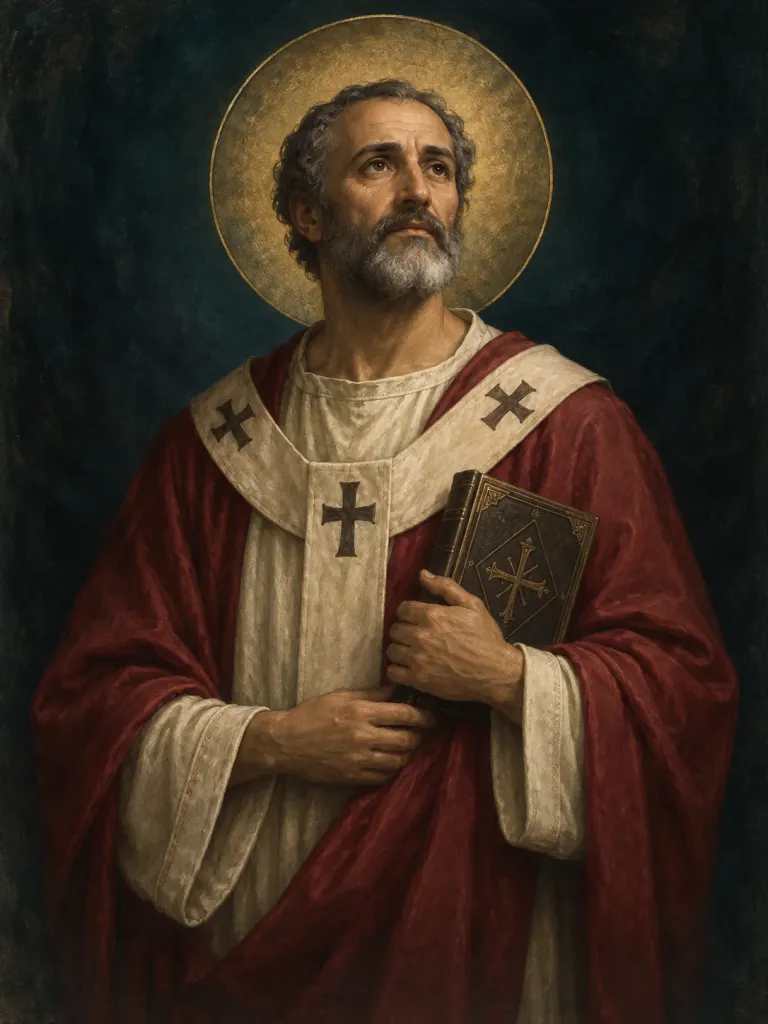
Biography
Eleutherius was bishop of Rome in the later second century, approximately from the 170s to the 180s. Early evidence places him within networks of communication linking Roman Christians with churches elsewhere in the empire.
Hegesippus remembered him as a deacon under Pope Anicetus before he eventually succeeded Soter. Such notices provide a firmer basis for his biography than the detailed decrees and missionary stories assigned to him in much later sources.
In 177, imprisoned Christians at Lyon sent a letter carried by the priest Irenaeus to Eleutherius. Their concern included the prophetic movement known as Montanism. The exchange illustrates communities trying to preserve unity while discerning controversial claims about prophecy and religious authority.
The precise course of Rome's response is uncertain. A later account about a British king named Lucius asking Eleutherius for conversion has significant historical difficulties and should not be treated as established evidence for a personal British mission. His martyrdom is likewise not securely documented. His May 26 remembrance honors an early pope whose surviving record is brief but valuable for understanding the relationships between local churches.
Context & contribution
Why attributed decrees require caution
A rule about Christians not rejecting foods is attributed to Eleutherius in the Liber Pontificalis. The Catholic Encyclopedia explains that this may preserve an early decree, but may instead reflect a later compiler assigning a more recent rule to an earlier pope. The attribution alone does not settle the question.
This case is useful because it concerns an apparently ordinary administrative detail, not a spectacular miracle. Historical caution applies to lists of regulations as well as legends. Eleutherius's short surviving record should therefore not be enlarged into a confidently reconstructed program of papal legislation.
Explore the sources for this section
AI-assisted source comparison updated 2026-09-26. Editorial approach
From the Saint Discovery blog
Keep exploring your faith
Practical guides to prayer, the saints, and living the Catholic faith.
Why Do Catholics Pray to Saints? Intercession Explained
Why do Catholics pray to saints? Learn how intercession differs from worship, how it relates to Jesus, and a simple way to ask a saint to pray for you.
A next step with your saintRead the article Living the seasonsHow to Celebrate Your Patron Saint's Feast Day at Home
Celebrate your patron saint's feast day with prayer, a short biography, and an act of kindness. A practical plan for families, sponsors, and individuals.
A next step with your saintRead the articleFrom reading to reflection
What will you carry with you?
After reading about St. Eleutherius, Pope, take a moment to consider:
- Write two possible captions for the food decree: one that overstates certainty and one that accurately represents the source problem. Explain the difference.
These are reflection prompts from Saint Discovery, not quotations from the saint.
Sources and further reading
Biography source comparison recorded on . This is an AI-assisted comparison, not independent human or ecclesiastical approval.
What the recorded review covers
AI-assisted expansion checked against cited sources; historical traditions distinguished from documented evidence; not ecclesiastical approval
A source list helps you check an account; it does not establish that every claim is certain. Follow the biography’s qualifications about historical evidence, traditions and feast calendars.
Suggest a correction to this biography
How we research these pages and handle corrections · Directory corrections log
More lives to explore
Suggestions based on the site’s quiz themes, not a historical relationship or a measure of holiness.