Catholic saint biography
St. Apollinaris of Ravenna
- Commemoration:
- July 20
- Lived:
- Early Christian period; chronology uncertain — Ravenna and Classe, Italy
Why dates and liturgical observances can differ
Read the sources for this biography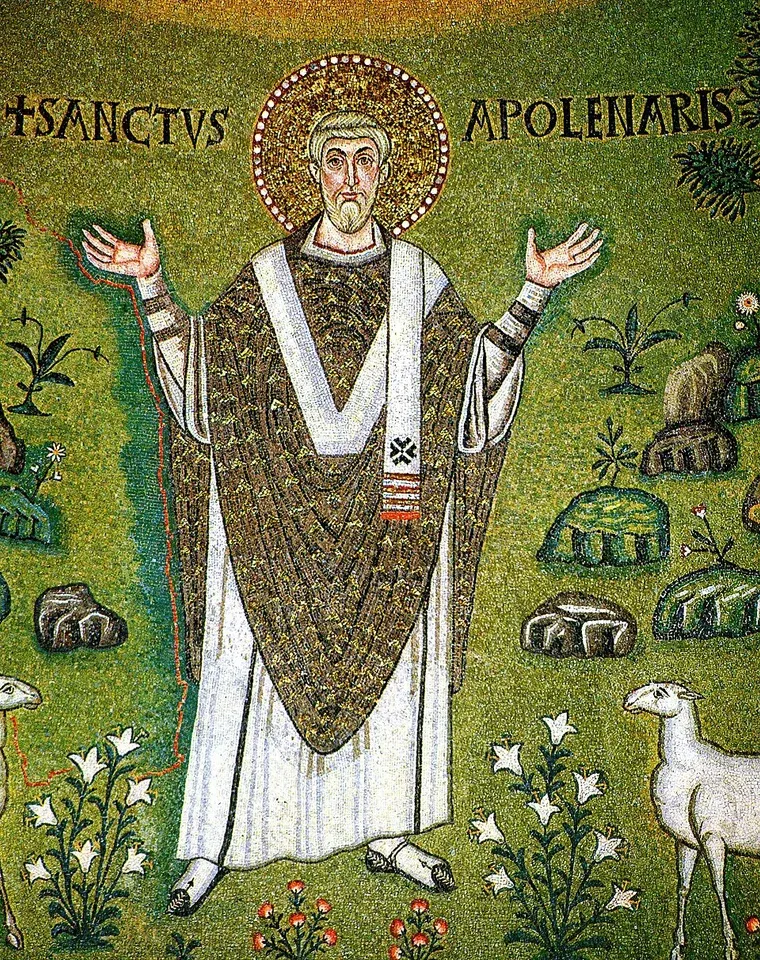
Biography
Apollinaris is honored as Ravenna’s first bishop and as a martyr. Tradition connects him with Antioch and Peter’s mission, but the evidence does not securely establish those details or an exact date for his life. Proposed chronologies place him in different periods of the early Church.
The traditional narrative presents him as a missionary sent to the port of Classe near Ravenna. That setting helps explain the story’s connection with movement between the eastern Mediterranean and Italy. It describes conversions, resistance to pagan sacrifice, and repeated hostility to his preaching.
These accounts cannot settle whether he lived in the first century or later. The monumental basilica and its art are evidence for the strength of his subsequent cult, not contemporary portraits of the bishop. His July 20 commemoration preserves Ravenna’s memory of its first pastor.
His enduring significance is visible in Ravenna’s churches and its local Christian memory. The Basilica of Sant’Apollinare in Classe was consecrated in 549, centuries after the period attributed to him. Stories of his missionary journeys, suffering, and miracles express this tradition of veneration and should be distinguished from securely dated events.
Context & contribution
A port city remembers its first pastor
The traditional placement of Apollinaris's mission at Classe gives his story a maritime setting. Vatican News describes a naval base with people from the eastern Mediterranean. Even though the precise chronology of his life is uncertain, that setting helps explain why Ravenna's account of its origins looks outward across the sea.
The title of first bishop also gives later generations a way to imagine continuity in their local church. The basilica dedicated to him belongs to that later act of remembrance. Reading the mission story beside the monument therefore raises two separate questions: how Christianity reached a connected port, and how Ravenna subsequently represented its Christian beginnings.
Explore the sources for this section
AI-assisted source comparison updated 2026-09-26. Editorial approach
From the Saint Discovery blog
Keep exploring your faith
Practical guides to prayer, the saints, and living the Catholic faith.
Why Do Catholics Pray to Saints? Intercession Explained
Why do Catholics pray to saints? Learn how intercession differs from worship, how it relates to Jesus, and a simple way to ask a saint to pray for you.
A next step with your saintRead the article Living the seasonsHow to Celebrate Your Patron Saint's Feast Day at Home
Celebrate your patron saint's feast day with prayer, a short biography, and an act of kindness. A practical plan for families, sponsors, and individuals.
A next step with your saintRead the articleFrom reading to reflection
What will you carry with you?
After reading about St. Apollinaris of Ravenna, take a moment to consider:
- On a Mediterranean map, locate Classe and Antioch. Explain why a port is a plausible setting for cultural exchange without claiming the map proves Apollinaris's itinerary.
These are reflection prompts from Saint Discovery, not quotations from the saint.
Sources and further reading
Biography source comparison recorded on . This is an AI-assisted comparison, not independent human or ecclesiastical approval.
What the recorded review covers
AI-assisted expansion checked against retrieved historical and institutional sources; traditions distinguished from documented history; not ecclesiastical approval
A source list helps you check an account; it does not establish that every claim is certain. Follow the biography’s qualifications about historical evidence, traditions and feast calendars.
Suggest a correction to this biography
How we research these pages and handle corrections · Directory corrections log
More lives to explore
Suggestions based on the site’s quiz themes, not a historical relationship or a measure of holiness.