Catholic saint biography
St. Timothy
- Commemoration:
- January 26
- Lived:
- First century — Lystra, Asia Minor
Why dates and liturgical observances can differ
Read the sources for this biography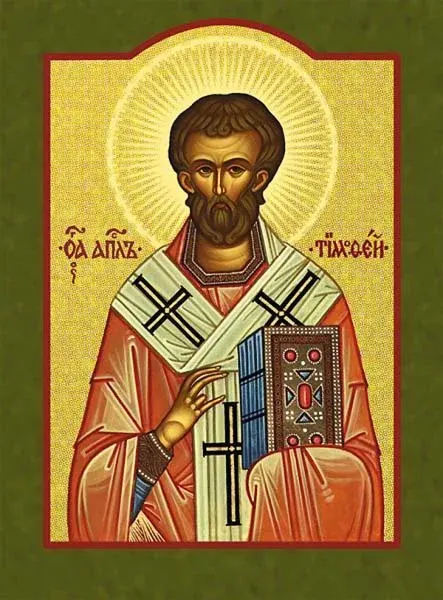
Biography
Timothy was a trusted collaborator of Paul, born to a Jewish mother and a Gentile father. Acts and Paul’s letters associate him with missionary travel and important responsibilities among the emerging Christian communities. Paul’s references show unusual confidence in his concern for the people entrusted to him.
The opening of Second Timothy recalls the faith of his grandmother Lois and mother Eunice. It places his vocation within a family’s transmission of belief, while also remembering affection and tears between teacher and disciple. Ministry appears here as a personal relationship, not merely an assignment.
The same chapter urges him to renew the gift received through the laying on of hands and to meet hardship with courage, love, and self-control. These counsels explain the spiritual portrait associated with Timothy: a leader entrusted with something precious who still needs encouragement and support.
Later church tradition identifies Timothy as the first bishop of Ephesus. Two New Testament letters bear his name as recipient and address Christian teaching and pastoral responsibility. His biography illustrates that the apostolic mission depended on faithful collaborators as well as its most prominent figures. He is commemorated with Titus on January 26.
Context & contribution
A trusted person sent between communities
Timothy’s assignments included visiting Thessalonica to strengthen believers and bringing news back to Paul. His name also appears alongside Paul’s in letters. These details show communication sustained by a person who traveled, observed, encouraged, and reported.
Benedict XVI’s account makes this quieter work visible beside the better-known missionary journeys. A developing church needed trustworthy intermediaries, not only gifted public speakers. Timothy’s contribution helps explain how concern for distant communities became more than a sentiment.
Explore the sources for this section
AI-assisted source comparison updated 2026-09-26. Editorial approach
From the Saint Discovery blog
Keep exploring your faith
Practical guides to prayer, the saints, and living the Catholic faith.
Why Is St. Thérèse the Patron Saint of Missions?
Why is St. Thérèse patron saint of missions? Discover her support for missionaries and practical ways to participate in the Church's mission from home.
Sharing the faithRead the article Everyday faithWhat Is Evangelization? A Catholic Guide to Sharing the Faith
What is evangelization? Learn the Catholic meaning, the new evangelization, and practical ways to share your faith with respect, confidence, and love.
Sharing the faithRead the articleFrom reading to reflection
What will you carry with you?
After reading about St. Timothy, take a moment to consider:
- What makes a messenger trustworthy when they must represent one community’s concerns to another?
These are reflection prompts from Saint Discovery, not quotations from the saint.
Sources and further reading
Biography source comparison recorded on . This is an AI-assisted comparison, not independent human or ecclesiastical approval.
What the recorded review covers
AI-assisted expansion using the linked historical and ecclesiastical sources; devotional traditions distinguished from documented history.
A source list helps you check an account; it does not establish that every claim is certain. Follow the biography’s qualifications about historical evidence, traditions and feast calendars.
Suggest a correction to this biography
How we research these pages and handle corrections · Directory corrections log
More lives to explore
Suggestions based on the site’s quiz themes, not a historical relationship or a measure of holiness.