Catholic saint biography
St. Rupert of Salzburg
- Commemoration:
- March 27
- Lived:
- Late seventh–early eighth centuries — Frankish lands; ministry in Salzburg
Also celebrated on September 24 in Salzburg.
Why dates and liturgical observances can differ
Read the sources for this biography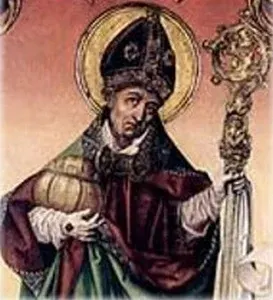
Biography
Rupert was a missionary bishop associated with the establishment of Christian communities in the region of Salzburg. With support from Duke Theodo, he developed a church and monastery at the former Roman settlement of Juvavum. He also established the women’s community at Nonnberg, placing Erentrude at its head.
His mission developed through cooperation with local rulers rather than through preaching alone. He surveyed settlements and established places where Christian worship could continue after a visiting missionary had departed. The church at Seekirchen was another early center connected with this work.
At Salzburg, the foundations of Saint Peter and Nonnberg gave men and women a lasting place in the region’s religious life. Recruiting companions and obtaining land were practical parts of Rupert’s mission: communities needed people, buildings, and resources as well as religious instruction.
His foundations became important centers of worship, education, and monastic life. Traditions about his origins and precise chronology vary, so an exact birth year is not secure. His memory remains closely connected with Salzburg; March 27 recalls his death, while September 24 is a major local celebration associated with his relics.
Context & contribution
Foundations that needed people as well as land
Rupert’s work at Salzburg involved more than selecting a place for buildings. The historical account describes his return with companions and the appointment of Erentrude to lead the women’s community at Nonnberg. A foundation needed a living community capable of carrying its purpose forward.
The reuse of the former Roman settlement also places his ministry within an existing landscape. Christian institutions developed through decisions about sites, resources, and leadership. This gives his legacy a material history that can be studied alongside the religious traditions, without inventing precise details about his uncertain birth or ancestry.
Explore the sources for this section
AI-assisted source comparison updated 2026-09-26. Editorial approach
From the Saint Discovery blog
Keep exploring your faith
Practical guides to prayer, the saints, and living the Catholic faith.
Why Is St. Thérèse the Patron Saint of Missions?
Why is St. Thérèse patron saint of missions? Discover her support for missionaries and practical ways to participate in the Church's mission from home.
Sharing the faithRead the article Everyday faithWhat Is Evangelization? A Catholic Guide to Sharing the Faith
What is evangelization? Learn the Catholic meaning, the new evangelization, and practical ways to share your faith with respect, confidence, and love.
Sharing the faithRead the articleFrom reading to reflection
What will you carry with you?
After reading about St. Rupert of Salzburg, take a moment to consider:
- Why would recruiting capable companions be as important to a foundation as obtaining a site?
These are reflection prompts from Saint Discovery, not quotations from the saint.
Sources and further reading
Biography source comparison recorded on . This is an AI-assisted comparison, not independent human or ecclesiastical approval.
What the recorded review covers
AI-assisted expansion using the linked historical and ecclesiastical sources; devotional traditions distinguished from documented history.
A source list helps you check an account; it does not establish that every claim is certain. Follow the biography’s qualifications about historical evidence, traditions and feast calendars.
Suggest a correction to this biography
How we research these pages and handle corrections · Directory corrections log
More lives to explore
Suggestions based on the site’s quiz themes, not a historical relationship or a measure of holiness.