Catholic saint biography
St. Patrick
- Commemoration:
- March 17
- Patron Saint of:
- Ireland
- Lived:
- Fifth century; exact dates disputed — Roman Britain and Ireland
Why dates and liturgical observances can differ
Read the sources for this biography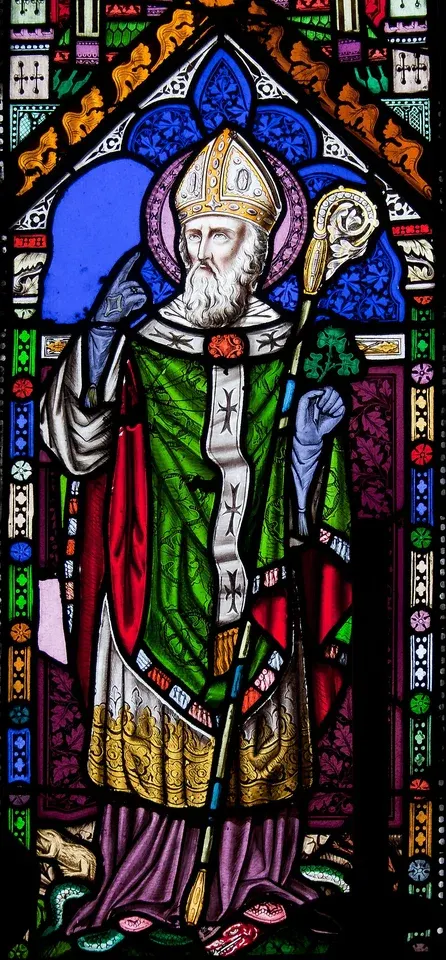
Biography
Patrick's own Confession describes his capture in Britain as a teenager and enslavement in Ireland. During those years he developed a deep life of prayer. After escaping and returning home, he eventually went back to Ireland as a bishop and missionary.
Patrick understood his return as a response to a call from the people among whom he had once been enslaved. His account of that vocation includes dreams, difficult decisions, and an awareness that his education had been interrupted. It is unusually personal evidence for an early missionary.
The familiar shamrock imagery belongs to a much later strand of his reception. Keeping that distinction allows readers to appreciate both the historical Patrick's testimony and the symbols through which later generations remembered Ireland's Christian heritage.
The Confession begins with an acknowledgment of limitations rather than a list of accomplishments. Patrick identifies himself as the son of a deacon and grandson of a priest, yet describes his own youthful faith as undeveloped. Captivity became, in his telling, the place where prayer and awareness of God changed his life. The text is both personal testimony and an explanation of why he believes he was called to serve.
His account also remembers the affection of the family who welcomed him home and begged him not to leave again. Returning to Ireland therefore meant a costly separation, not simply an adventurous journey. Readers encounter a missionary who feels vulnerable, dependent on grace, and responsible for the people he has baptized. That direct voice makes his writings valuable even where they leave modern questions about dates and locations unanswered.
His writings also reveal the difficulties of his ministry, his defense of his vocation, and his concern for Christians subjected to violence and enslavement. They offer a stronger historical foundation than later stories about shamrocks or the expulsion of snakes. His precise chronology remains debated, but his role in Irish Christian history is fundamental. The Church celebrates him as Ireland's patron on March 17.
Context & contribution
A letter that refuses to excuse violence
Patrick’s Letter to the Soldiers of Coroticus preserves an urgent response to the killing and capture of newly baptized Christians. He describes sending a priest and clerics to seek the return of captives and being met with mockery. This is direct evidence of a pastoral intervention, not a later heroic legend.
The letter also rejects gifts from perpetrators while their wrongdoing continues. Patrick links reconciliation with repentance and the release of prisoners. His testimony thus challenges the idea that religious generosity can compensate for harming other people without restitution. It adds a sharp social dimension to the missionary usually remembered through national symbols.
Explore the sources for this section
AI-assisted source comparison updated 2026-09-26. Editorial approach
From the Saint Discovery blog
Keep exploring your faith
Practical guides to prayer, the saints, and living the Catholic faith.
How to Make a Spiritual Communion When You Cannot Receive
Learn how to make a spiritual communion, with a short original prayer and clear guidance on Mass, Confession, and times when you cannot receive.
Explore mercy and reconciliationRead the article Prayer & reflectionHow to Pray the Jesus Prayer: A Catholic Beginner's Guide
Learn the Jesus Prayer, its Eastern Christian roots and biblical meaning, with a simple Catholic practice focused on Christ and mercy.
Explore mercy and reconciliationRead the articleFrom reading to reflection
What will you carry with you?
After reading about St. Patrick, take a moment to consider:
- Read sections 3 and 7–8 of the letter. What does Patrick demand beyond an apology?
These are reflection prompts from Saint Discovery, not quotations from the saint.
Sources and further reading
Biography source comparison recorded on . This is an AI-assisted comparison, not independent human or ecclesiastical approval.
What the recorded review covers
AI-assisted expansion using the linked historical and ecclesiastical sources; devotional traditions distinguished from documented history.
A source list helps you check an account; it does not establish that every claim is certain. Follow the biography’s qualifications about historical evidence, traditions and feast calendars.
Suggest a correction to this biography
How we research these pages and handle corrections · Directory corrections log
More lives to explore
Suggestions based on the site’s quiz themes, not a historical relationship or a measure of holiness.