Catholic saint biography
St. David I of Scotland
- Commemoration:
- May 24
- Lived:
- About 1080–1153 — Scotland
Traditional local veneration; not a universal Roman-calendar feast.
Why dates and liturgical observances can differ
Read the sources for this biography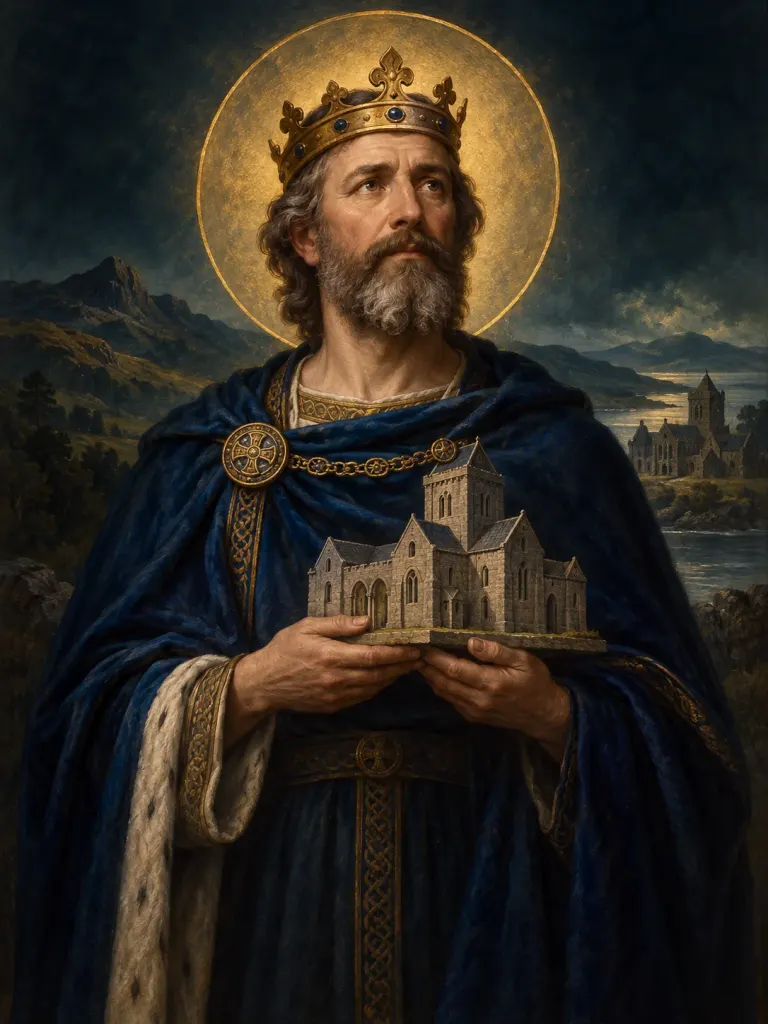
Biography
David I was a twelfth-century Scottish king whose support for religious communities helped reshape the Church in Scotland. A son of Malcolm III and Margaret of Scotland, he ruled from 1124 until his death in 1153.
His religious patronage continued initiatives associated with his mother and brother. He supported Benedictine, Cistercian, and Augustinian communities, endowing monasteries that connected Scotland with wider European movements of reform. Holyrood Abbey was among the foundations associated with his reign.
He also reorganized dioceses and defended the Scottish Church against claims of authority from York. These changes were connected with royal government, towns, and landholding: monastic foundations were places of worship and learning but also important institutions within the kingdom.
David's reputation for devotion should not obscure the political realities of kingship. He intervened in the English conflict between Stephen and Matilda and participated in warfare. After his death, Aelred of Rievaulx helped shape his favorable religious memory. His saintly reputation developed through local veneration rather than a modern canonization process; May 24 is his traditional commemoration.
Context & contribution
A foundation that outlived its founder
Holyrood offers a concrete way to follow David's patronage beyond his reign. Founded in 1128 for Augustinian canons, it preserved the Black Rood associated with his mother Margaret. Its first abbot, Alwyn, was also the king's confessor: royal counsel and the life of a religious house were closely connected.
The abbey subsequently became a setting for royal births, marriages, and coronations. That later history is part of David's institutional legacy, although he did not plan every subsequent use. The story of a stag and a miraculous cross explains the foundation devotionally; the abbey's charters and surviving fabric provide different kinds of historical evidence.
Explore the sources for this section
AI-assisted source comparison updated 2026-09-26. Editorial approach
From the Saint Discovery blog
Keep exploring your faith
Practical guides to prayer, the saints, and living the Catholic faith.
Why Do Catholics Pray to Saints? Intercession Explained
Why do Catholics pray to saints? Learn how intercession differs from worship, how it relates to Jesus, and a simple way to ask a saint to pray for you.
A next step with your saintRead the article Living the seasonsHow to Celebrate Your Patron Saint's Feast Day at Home
Celebrate your patron saint's feast day with prayer, a short biography, and an act of kindness. A practical plan for families, sponsors, and individuals.
A next step with your saintRead the articleFrom reading to reflection
What will you carry with you?
After reading about St. David I of Scotland, take a moment to consider:
- Trace Holyrood from religious foundation to royal gathering place. Which later developments can fairly be called David's legacy, and which belong to his successors?
These are reflection prompts from Saint Discovery, not quotations from the saint.
Sources and further reading
- New Catholic Encyclopedia: David I ↗
- Catholic Encyclopedia: Holyrood Abbey ↗
- Catholic Online: David I of Scotland ↗
Biography source comparison recorded on . This is an AI-assisted comparison, not independent human or ecclesiastical approval.
What the recorded review covers
AI-assisted expansion checked against cited sources; historical traditions distinguished from documented evidence; not ecclesiastical approval
A source list helps you check an account; it does not establish that every claim is certain. Follow the biography’s qualifications about historical evidence, traditions and feast calendars.
Suggest a correction to this biography
How we research these pages and handle corrections · Directory corrections log
More lives to explore
Suggestions based on the site’s quiz themes, not a historical relationship or a measure of holiness.