Catholic saint biography
St. Mark the Evangelist
- Commemoration:
- April 25
- Lived:
- First century — Early Christian Mediterranean world
Why dates and liturgical observances can differ
Read the sources for this biography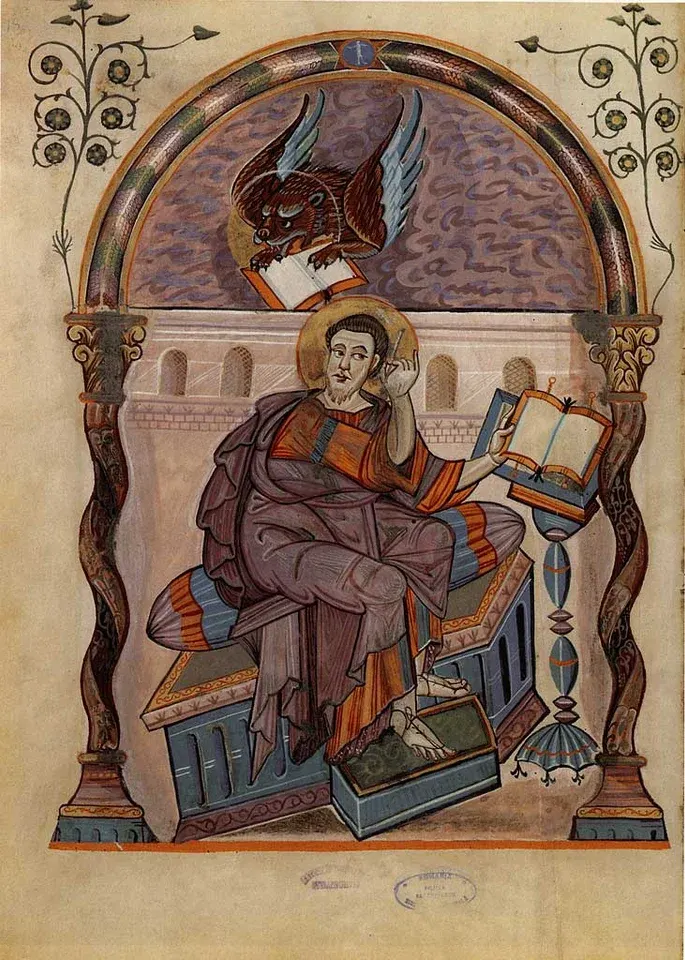
Biography
Christian tradition identifies Mark with John Mark, who appears in Acts as a companion of Paul and Barnabas. An early account preserved through Papias also associates him with Peter's preaching. The Gospel bearing Mark's name presents Jesus' public ministry, suffering, death, and resurrection in a brief and vivid narrative.
Acts connects John Mark with the Jerusalem household of his mother Mary and later records disagreement over taking him on another missionary journey. Those passages give texture to the traditional identification: apostolic cooperation involved difficulty as well as success. They do not by themselves provide the complete biography of the Gospel's author.
Later tradition places Mark in Alexandria and remembers him as the founder of its church. The details of his final journeys and martyrdom are less securely documented than his place in early Christian literary tradition. His symbol in Christian art is a winged lion. The Western Church celebrates him on April 25 as an evangelist.
The association with Peter comes through early Christian testimony outside the Gospel itself. Alexandria's tradition likewise belongs to the reception of Mark's memory in a particular church. Distinguishing these sources allows readers to understand why he is honored as both evangelist and missionary without turning each later episode into equally certain evidence.
Context & contribution
The later letters preserve a repaired partnership
The disagreement in Acts is not the final New Testament reference to Mark's relationship with Paul. Colossians 4:10 asks that Mark be welcomed, while Philemon 24 includes him among Paul's fellow workers. Second Timothy 4:11 presents him as someone whose assistance in ministry is wanted. These references belong in any study of the traditional identification of the evangelist with John Mark.
Read together, the passages prevent one failed journey from becoming his entire portrait. They show later cooperation without supplying a detailed account of how reconciliation occurred. It is therefore reasonable to explore restored usefulness and trust, while resisting the temptation to invent an undocumented conversation between the two men.
Explore the sources for this section
AI-assisted source comparison updated 2026-09-26. Editorial approach
From the Saint Discovery blog
Keep exploring your faith
Practical guides to prayer, the saints, and living the Catholic faith.
Why Is Saint Luke's Symbol an Ox? Meaning and Biblical Roots
Discover why Saint Luke's symbol is a winged ox, its biblical roots, and how the image connects his Gospel with priesthood and sacrifice.
Go deeper into ScriptureRead the article Prayer & reflectionHow to Pray the Jesus Prayer: A Catholic Beginner's Guide
Learn the Jesus Prayer, its Eastern Christian roots and biblical meaning, with a simple Catholic practice focused on Christ and mercy.
Go deeper into ScriptureRead the articleFrom reading to reflection
What will you carry with you?
After reading about St. Mark the Evangelist, take a moment to consider:
- Place Acts 15:36–40 beside Colossians 4:10, Philemon 24, and 2 Timothy 4:11; distinguish changes the texts establish from the reconciliation story they leave untold.
These are reflection prompts from Saint Discovery, not quotations from the saint.
Sources and further reading
Biography source comparison recorded on . This is an AI-assisted comparison, not independent human or ecclesiastical approval.
What the recorded review covers
AI-assisted expansion of the existing source-reviewed biography with comparison to retrieved cited sources; not ecclesiastical approval
A source list helps you check an account; it does not establish that every claim is certain. Follow the biography’s qualifications about historical evidence, traditions and feast calendars.
Suggest a correction to this biography
How we research these pages and handle corrections · Directory corrections log
More lives to explore
Suggestions based on the site’s quiz themes, not a historical relationship or a measure of holiness.