Catholic saint biography
St. Robert Bellarmine
- Commemoration:
- September 17
- Lived:
- 1542–1621 — Montepulciano, Italy
Why dates and liturgical observances can differ
Read the sources for this biography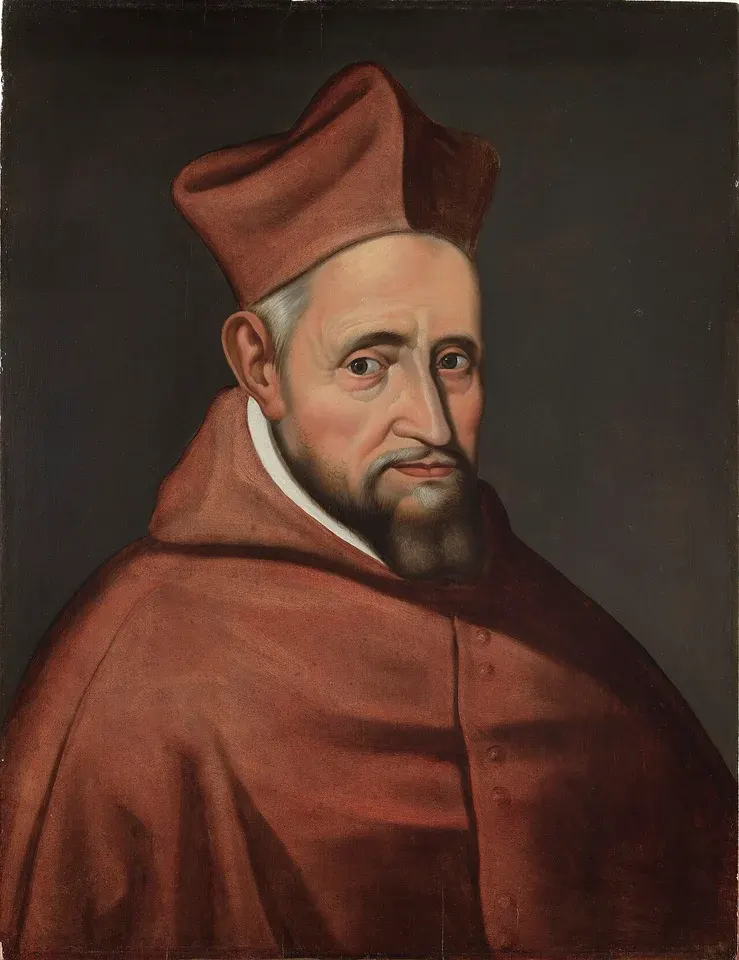
Biography
Robert Bellarmine was a Jesuit theologian whose career developed amid the controversies of the Reformation. He taught at Louvain and the Roman College, studied the arguments of Protestant reformers, and wrote extensive defenses of Catholic teaching. His catechism brought religious instruction to a much wider audience than his scholarly lectures.
Born at Montepulciano in 1542, Bellarmine studied at the Roman College, Padua, and Louvain. Ordained in 1570, he became a theology professor. His major Controversies grew from lectures addressing specific arguments dividing Christians, giving his scholarship a clearly defined historical setting.
His work also included biblical editorial commissions and the guidance of younger Jesuits, among them Aloysius Gonzaga. Even during demanding public responsibilities he maintained annual retreats and wrote about spiritual life. Those practices place the famous controversialist within a broader vocation of teaching and personal formation.
As a cardinal and archbishop of Capua, he combined teaching with responsibilities in church government. The Jesuit account of his life also records spiritual direction, personal simplicity, and giving to the poor. His writings and service made him an influential figure in early modern Catholicism, while placing him within the disputed religious questions of his age.
Context & contribution
A controversial theologian who also taught beginners
Bellarmine’s academic work answered arguments he had studied, especially those of Luther and Calvin. His later catechism served a different audience from the lectures and volumes of Controversies. These forms of writing required different levels of explanation, even when addressing the same faith.
The Jesuit biography also records his spiritual direction of students, including Aloysius Gonzaga, and his use of annual retreats for spiritual writing. The career therefore included attention to individuals as well as public disputes. Understanding that range helps readers evaluate particular works in their intended setting rather than treating every page as the same kind of argument.
Explore the sources for this section
AI-assisted source comparison updated 2026-09-26. Editorial approach
From the Saint Discovery blog
Keep exploring your faith
Practical guides to prayer, the saints, and living the Catholic faith.
Why Do Catholics Pray to Saints? Intercession Explained
Why do Catholics pray to saints? Learn how intercession differs from worship, how it relates to Jesus, and a simple way to ask a saint to pray for you.
A next step with your saintRead the article Living the seasonsHow to Celebrate Your Patron Saint's Feast Day at Home
Celebrate your patron saint's feast day with prayer, a short biography, and an act of kindness. A practical plan for families, sponsors, and individuals.
A next step with your saintRead the articleFrom reading to reflection
What will you carry with you?
After reading about St. Robert Bellarmine, take a moment to consider:
- How should an explanation change when it moves from a scholarly dispute to a beginner’s first questions about faith?
These are reflection prompts from Saint Discovery, not quotations from the saint.
Sources and further reading
Biography source comparison recorded on . This is an AI-assisted comparison, not independent human or ecclesiastical approval.
What the recorded review covers
AI-assisted expansion using the linked historical and ecclesiastical sources; devotional traditions distinguished from documented history.
A source list helps you check an account; it does not establish that every claim is certain. Follow the biography’s qualifications about historical evidence, traditions and feast calendars.
Suggest a correction to this biography
How we research these pages and handle corrections · Directory corrections log
More lives to explore
Suggestions based on the site’s quiz themes, not a historical relationship or a measure of holiness.