Catholic saint biography
St. Frederick of Utrecht
- Commemoration:
- July 18
- Lived:
- Died c. 838 — Utrecht, present-day Netherlands
Local commemoration on July 18.
Why dates and liturgical observances can differ
Read the sources for this biography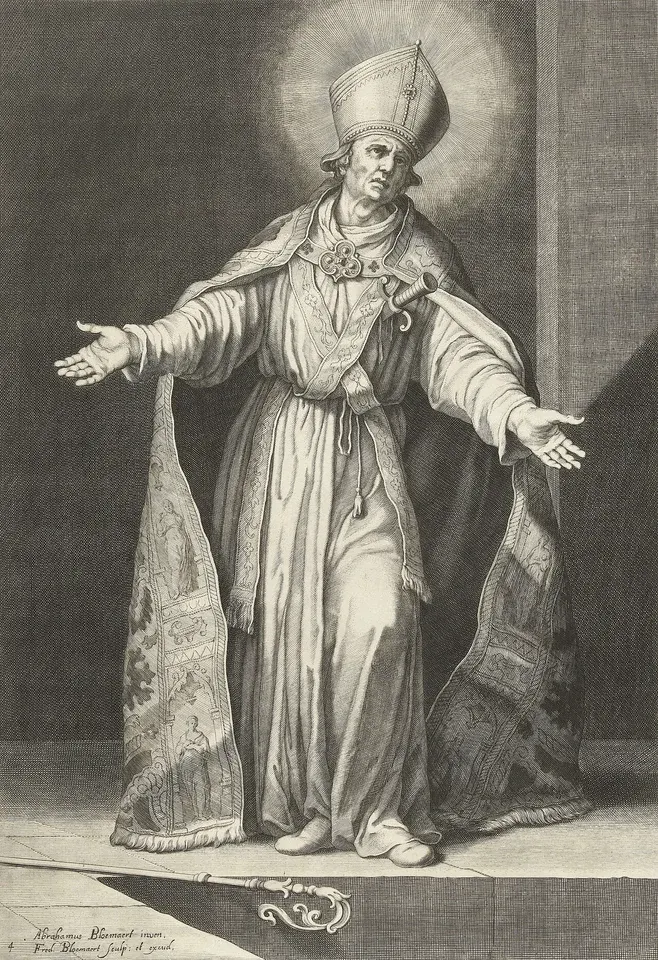
Biography
Frederick was a ninth-century bishop of Utrecht remembered for preaching in Frisia and strengthening Christian practice. His July 18 commemoration belongs to the history of the Church in the northern Frankish world.
His episcopate took place during the reign of Louis the Pious. The sources associate him with close attention to Scripture and missionary responsibilities among the Frisians. His office placed religious instruction within a wider network of royal and ecclesiastical authority.
Later accounts say he was murdered after reproving serious wrongdoing. They differ over the circumstances and the people responsible. In particular, the allegation that an imperial household member arranged his death should be identified as a tradition rather than a securely established political fact.
His veneration continued at Utrecht, where relics and later reliquaries preserved his memory. Those objects document the community's devotion even when they cannot resolve the uncertainties of the death narrative. He should not be confused with other saints named Frederick or described as a generic hermit. The distinctive outline here is that of a bishop, missionary, and locally honored martyr whose surviving personal biography remains limited.
Context & contribution
A fourteenth-century object and a ninth-century bishop
Nominis identifies a gold and silver reliquary commissioned by a bishop of Utrecht in 1362 to preserve Frederick's skull. The object gives a specific later date for investment in his public memory, separated by centuries from the bishop's lifetime.
That gap matters. A reliquary can document the importance of a cult and its institutional patronage without resolving who ordered the saint's death. Frederick's case is a useful example of why the history of veneration and the history of an alleged political assassination require different evidence.
Explore the sources for this section
AI-assisted source comparison updated 2026-09-26. Editorial approach
From the Saint Discovery blog
Keep exploring your faith
Practical guides to prayer, the saints, and living the Catholic faith.
Why Is St. Thérèse the Patron Saint of Missions?
Why is St. Thérèse patron saint of missions? Discover her support for missionaries and practical ways to participate in the Church's mission from home.
Sharing the faithRead the article Everyday faithWhat Is Evangelization? A Catholic Guide to Sharing the Faith
What is evangelization? Learn the Catholic meaning, the new evangelization, and practical ways to share your faith with respect, confidence, and love.
Sharing the faithRead the articleFrom reading to reflection
What will you carry with you?
After reading about St. Frederick of Utrecht, take a moment to consider:
- Write an exhibit caption for the 1362 reliquary that dates the object correctly and avoids implying that its commissioner witnessed Frederick's death.
These are reflection prompts from Saint Discovery, not quotations from the saint.
Sources and further reading
Biography source comparison recorded on . This is an AI-assisted comparison, not independent human or ecclesiastical approval.
What the recorded review covers
AI-assisted expansion checked against cited sources; historical traditions distinguished from documented evidence; not ecclesiastical approval
A source list helps you check an account; it does not establish that every claim is certain. Follow the biography’s qualifications about historical evidence, traditions and feast calendars.
Suggest a correction to this biography
How we research these pages and handle corrections · Directory corrections log
More lives to explore
Suggestions based on the site’s quiz themes, not a historical relationship or a measure of holiness.