Catholic saint biography
St. Rafqa
- Commemoration:
- March 23
- Lived:
- 1832–1914 — Himlaya, Lebanon
Why dates and liturgical observances can differ
Read the sources for this biography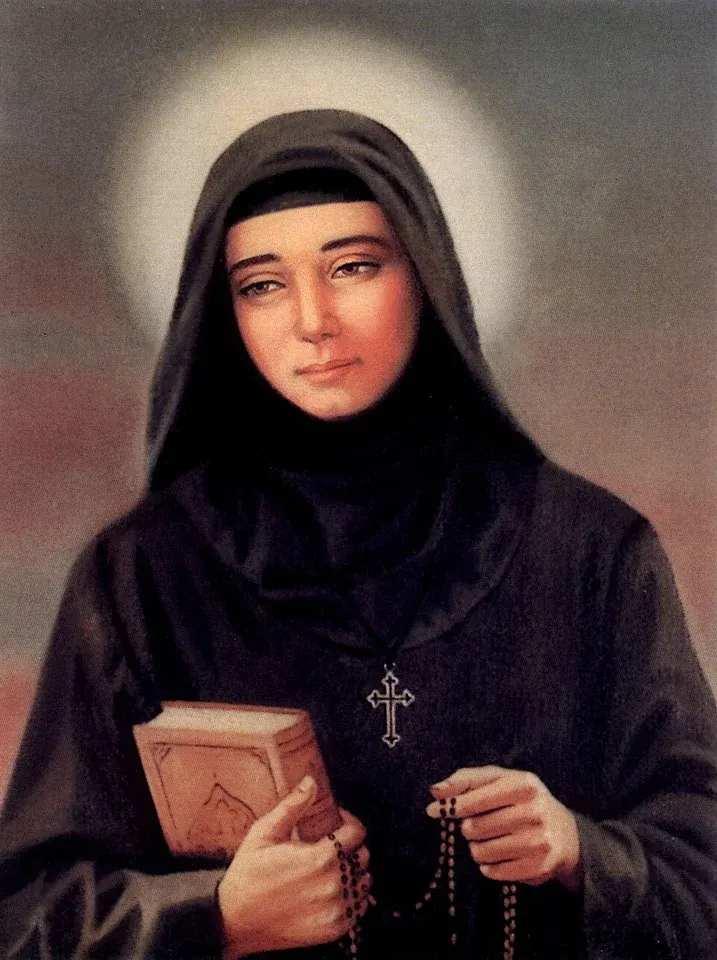
Biography
Rafqa, baptized Boutroussieh, was a Lebanese religious whose vocation included teaching before she entered the Lebanese Maronite Order. She helped establish education for girls and lived through a period of violent conflict in Lebanon. In 1871 she entered the monastery of Saint Simon, later moving with other nuns to Saint Joseph’s monastery at Jrabta.
Born in Himlaya in 1832, she lost her mother as a child and worked in domestic service during family financial difficulty. Her early religious life included kitchen duties, study, and teaching. Establishing a girls' school at Maad gave that service a lasting communal form.
Her movement from an active teaching congregation to enclosed Maronite life was a real change of vocation within the same religious commitment. The accounts of visions and extraordinary experiences belong to her devotional record; the schools, communities, and people she served supply essential context.
Her later years brought blindness and severe physical suffering. The Vatican biography describes her continuing to pray and work with her hands despite these limitations. Her spirituality understood suffering in relation to Christ’s Passion. Her life includes both that interior devotion and the earlier, practical work of education and service.
Context & contribution
The teacher before the years of illness
The Vatican biography remembers Rafqa studying Arabic, calligraphy, and mathematics while serving in Ghazir. It also names her fellow nun and the benefactor involved in establishing a girls’ school at Maad. These details recover intellectual work and collaboration that can disappear when her life is told chiefly through suffering.
Her later knitting and clothing-making likewise belong to a life with concrete skills. They should not be used to imply that a sick person must remain productive to have dignity. Rather, they help preserve the particular person behind a devotional image: someone who learned, taught, worked with others, and eventually needed extensive care.
Explore the sources for this section
AI-assisted source comparison updated 2026-09-26. Editorial approach
From the Saint Discovery blog
Keep exploring your faith
Practical guides to prayer, the saints, and living the Catholic faith.
Why Do Catholics Pray to Saints? Intercession Explained
Why do Catholics pray to saints? Learn how intercession differs from worship, how it relates to Jesus, and a simple way to ask a saint to pray for you.
A next step with your saintRead the article Living the seasonsHow to Celebrate Your Patron Saint's Feast Day at Home
Celebrate your patron saint's feast day with prayer, a short biography, and an act of kindness. A practical plan for families, sponsors, and individuals.
A next step with your saintRead the articleFrom reading to reflection
What will you carry with you?
After reading about St. Rafqa, take a moment to consider:
- What changes in your understanding of Rafqa when her studies and teaching receive as much attention as her illness?
These are reflection prompts from Saint Discovery, not quotations from the saint.
Sources and further reading
Biography source comparison recorded on . This is an AI-assisted comparison, not independent human or ecclesiastical approval.
What the recorded review covers
AI-assisted expansion using the linked historical and ecclesiastical sources; devotional traditions distinguished from documented history.
A source list helps you check an account; it does not establish that every claim is certain. Follow the biography’s qualifications about historical evidence, traditions and feast calendars.
Suggest a correction to this biography
How we research these pages and handle corrections · Directory corrections log
More lives to explore
Suggestions based on the site’s quiz themes, not a historical relationship or a measure of holiness.