Catholic saint biography
St. Cecilia
- Commemoration:
- November 22
- Patron Saint of:
- church music
- Lived:
- Early Christian period; precise dates uncertain — Rome
Why dates and liturgical observances can differ
Read the sources for this biography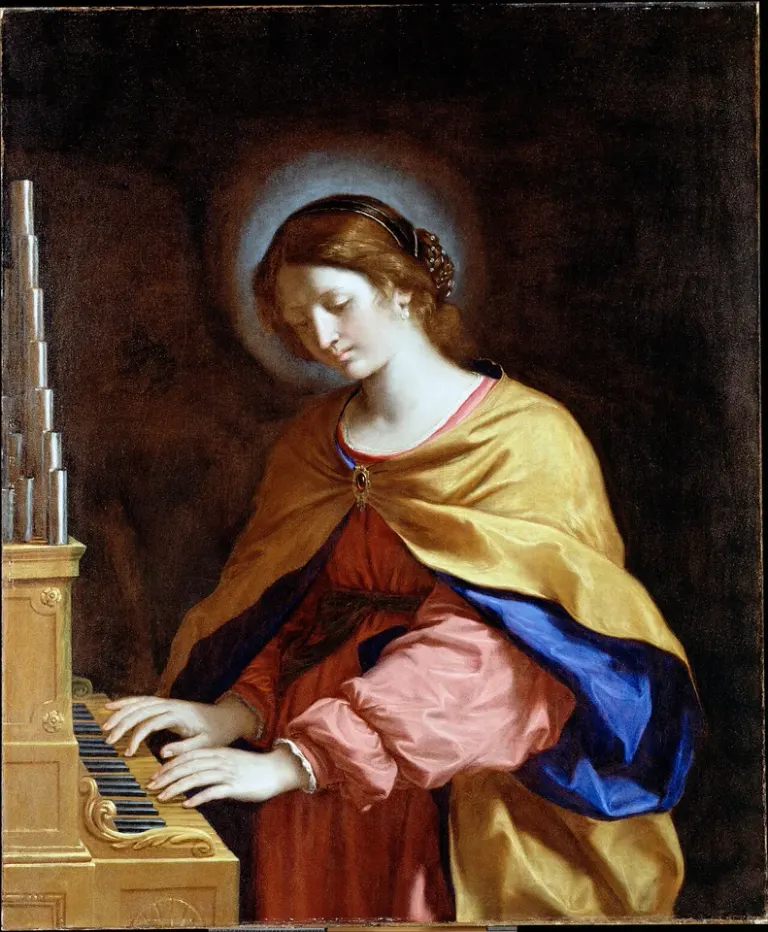
Biography
Cecilia is one of Rome’s best-known early martyrs and is honored as a patron of church music. Evidence for her veneration includes early liturgical records, her association with the Catacomb of Callistus, and the ancient church dedicated to her in Trastevere.
The Roman topography is especially important: her remembered burial near the papal crypt and the church in Trastevere anchor the devotion in identifiable places. Different commemorative dates in ancient lists can reflect burial or church observances rather than separate well-documented life events.
Her later reputation as a patron of music generated paintings, poetry, and musical celebrations. It should not be turned into an unsupported claim that she held a particular professional musical role in ancient Rome. The history of that patronage and the question of her personal biography are distinct.
The detailed story of her marriage, the conversion of her husband, and her martyrdom comes through later accounts whose chronology is difficult to establish. These traditions have deeply influenced art and music, but do not justify a precise modern reconstruction of every event. Her feast on November 22 is connected with the Roman church that bears her name.
Context & contribution
How a martyr became a patron of music
Cecilia's earliest surviving artistic representations emphasize martyrdom and prayer rather than musical performance. The familiar organ appeared much later, especially from the fourteenth and fifteenth centuries. The association grew from her legend's description of inward singing to God while instruments sounded at her wedding; it does not establish that the historical Cecilia played an organ.
This change in imagery had an institutional consequence. When a musical academy was founded in Rome in 1584, Cecilia became its patron, helping consolidate an enduring connection between her feast and musicians. Her reception offers an unusually clear example of a devotional reading shaping art, professional identity, and cultural institutions centuries after a martyr's death.
Explore the sources for this section
AI-assisted source comparison updated 2026-09-26. Editorial approach
From the Saint Discovery blog
Keep exploring your faith
Practical guides to prayer, the saints, and living the Catholic faith.
Why Do Catholics Pray to Saints? Intercession Explained
Why do Catholics pray to saints? Learn how intercession differs from worship, how it relates to Jesus, and a simple way to ask a saint to pray for you.
A next step with your saintRead the article Living the seasonsHow to Celebrate Your Patron Saint's Feast Day at Home
Celebrate your patron saint's feast day with prayer, a short biography, and an act of kindness. A practical plan for families, sponsors, and individuals.
A next step with your saintRead the articleFrom reading to reflection
What will you carry with you?
After reading about St. Cecilia, take a moment to consider:
- Compare an image of Cecilia with a martyr's crown to one with an organ: what different claims about her does each image invite viewers to make?
These are reflection prompts from Saint Discovery, not quotations from the saint.
Sources and further reading
Biography source comparison recorded on . This is an AI-assisted comparison, not independent human or ecclesiastical approval.
What the recorded review covers
AI-assisted expansion checked against retrieved historical and institutional sources; traditions distinguished from documented history; not ecclesiastical approval
A source list helps you check an account; it does not establish that every claim is certain. Follow the biography’s qualifications about historical evidence, traditions and feast calendars.
Suggest a correction to this biography
How we research these pages and handle corrections · Directory corrections log
More lives to explore
Suggestions based on the site’s quiz themes, not a historical relationship or a measure of holiness.