Catholic saint biography
St. Pius X
- Commemoration:
- August 21
- Lived:
- 1835–1914 — Riese, Italy
Why dates and liturgical observances can differ
Read the sources for this biography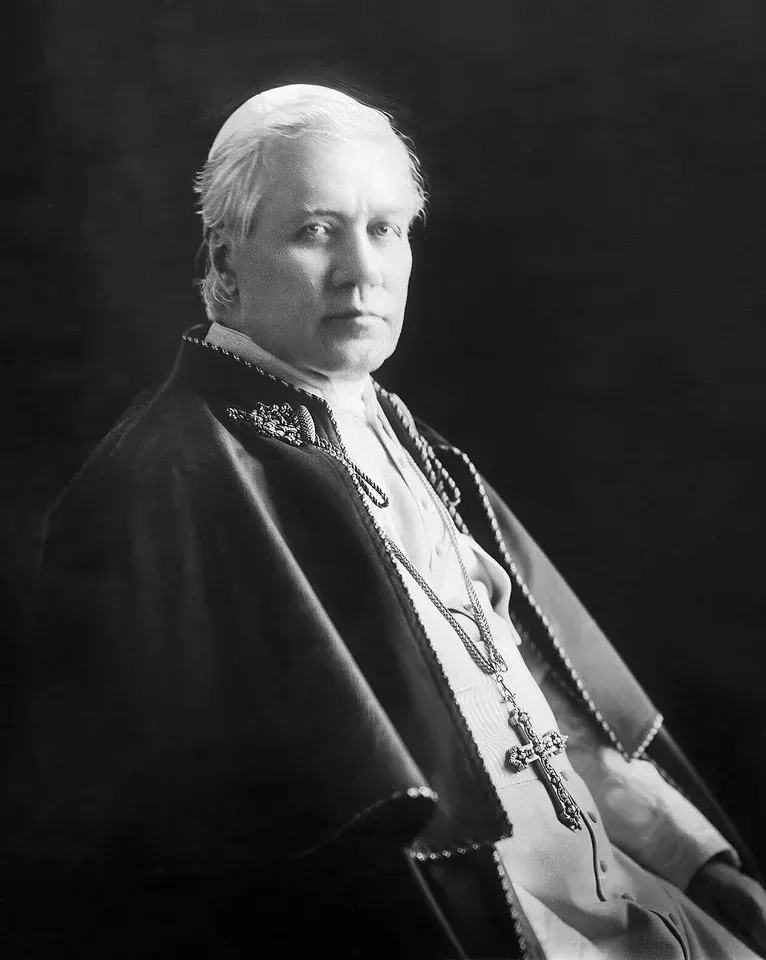
Biography
Pius X, born Giuseppe Sarto, came to the papacy after service as a parish priest, seminary spiritual director, bishop of Mantua, and patriarch of Venice. His pastoral background shaped his concern that ordinary Catholics understand their faith and participate in the Eucharist.
Sarto's route to Rome was predominantly pastoral rather than diplomatic. His mother's support helped him continue toward priesthood after his father's death. Those family and parish experiences provide context for his later emphasis on accessible religious instruction.
The question-and-answer catechism associated with him was designed for ordinary learners. He also abolished the claimed right of secular rulers to veto a papal candidate and encouraged Gregorian chant. His program thus addressed both everyday Catholic practice and the structures governing church life.
His reforms included catechetical instruction, encouragement of earlier First Communion, changes to church administration, and the beginning of a revision of canon law. His pontificate also vigorously opposed theological modernism. These aspects belong together in understanding a pope who sought religious renewal through both accessible instruction and firm doctrinal discipline. His liturgical memorial is August 21.
Context & contribution
Clear teaching and the work of organization
The question-and-answer form of the catechism associated with Pius X reflects a pastoral concern: instruction had to reach people with limited formal education. Its arrangement supplied a repeatable teaching tool. This is one way his earlier parish experience remained visible in a pontificate also concerned with major institutional questions.
His initiation of canon-law reform and reorganization of the Roman Curia show another side of the same task of governance. Teaching depends partly on clear responsibilities and workable institutions. These undertakings should be distinguished from the controversy surrounding his response to modernism, rather than allowing one feature of the pontificate to stand for every other.
Explore the sources for this section
AI-assisted source comparison updated 2026-09-26. Editorial approach
From the Saint Discovery blog
Keep exploring your faith
Practical guides to prayer, the saints, and living the Catholic faith.
Saint Ignatius of Antioch and the Eucharist: A Reading Guide
Explore what Saint Ignatius of Antioch wrote about the Eucharist, with key passages, historical context, and a simple reading plan.
Explore Eucharistic faithRead the article Prayer & reflectionWhat Is Eucharistic Adoration? A Guide to Your First Visit
Learn what Eucharistic adoration is, how it differs from exposition and a holy hour, and what to do during your first visit.
Explore Eucharistic faithRead the articleFrom reading to reflection
What will you carry with you?
After reading about St. Pius X, take a moment to consider:
- Try explaining one catechism answer in everyday language. What would a learner need beyond memorizing the words?
These are reflection prompts from Saint Discovery, not quotations from the saint.
Sources and further reading
Biography source comparison recorded on . This is an AI-assisted comparison, not independent human or ecclesiastical approval.
What the recorded review covers
AI-assisted expansion using the linked historical and ecclesiastical sources; devotional traditions distinguished from documented history.
A source list helps you check an account; it does not establish that every claim is certain. Follow the biography’s qualifications about historical evidence, traditions and feast calendars.
Suggest a correction to this biography
How we research these pages and handle corrections · Directory corrections log
More lives to explore
Suggestions based on the site’s quiz themes, not a historical relationship or a measure of holiness.