Eucharistic adoration is prayer before Jesus Christ present in the Blessed Sacrament. Catholics come to worship him, give thanks, ask for help, and spend time in his presence. You can begin with a brief visit to a church where the Eucharist is reserved, or attend a parish's scheduled time of exposition.
If you have seen an adoration announcement and wondered what you would actually do, the first step is simple: check the parish's hours, bring one intention, and make room for quiet prayer. You do not need a complicated plan.
Why Catholics adore the Eucharist
The reason for adoration is the Church's faith in Christ's real presence. The Eucharist is not treated merely as a reminder of Jesus. Catholics believe that the whole Christ is truly present under the appearances of bread and wine. The Catechism, paragraphs 1374–1380, explains both this presence and the worship offered to the Eucharist during and outside Mass.
That distinction helps make sense of the chapel. The focus is Jesus himself; the beauty of the building, candles, and sacred vessels serves that encounter. Adoration begins with faith, even when your senses register an ordinary-looking host and your mind feels busy.
Adoration, exposition, and a holy hour
Adoration can take place before the Eucharist reserved in a tabernacle, the secure receptacle in which consecrated hosts are kept. Exposition means that the Blessed Sacrament is displayed for the faithful's worship, often in a monstrance. You do not need exposition in order to pray before Christ present in the tabernacle. The Catechism's account of Eucharistic reservation and adoration explains why both settings matter.
A holy hour is a devotional practice of spending an hour in Eucharistic adoration. The USCCB publishes models for communal prayer, including a Holy Hour for Reparation and Healing, with readings, silence, petitions, and Benediction. Benediction is the blessing with the Blessed Sacrament given by a priest or deacon. Adoration outside Mass remains closely connected with the Eucharistic celebration, as Saint John Paul II explains in Ecclesia de Eucharistia, paragraph 25.
A first visit need not last an hour. You might start with ten or fifteen minutes during an open visiting period. If you sign up to cover a particular hour, however, treat that commitment seriously: other people are relying on you.
Before you go
Look for the parish's current schedule rather than assuming the church or chapel is always open. Check which entrance to use, whether visitors need to register, and whether the time includes communal prayers. Asking the parish office beforehand can make a first visit much easier.
Silence your phone and choose somewhere you can pray without distracting others. Kneeling expresses reverence when you are able; sitting quietly is a practical choice when kneeling is difficult. Follow the parish's guidance and the service's directions rather than worrying that everyone else knows something you do not.
During exposition, the Eucharist must never be left unattended. This is an explicit requirement in Redemptionis Sacramentum, paragraph 138. If you are the scheduled adorer and your replacement has not arrived, contact the coordinator. Ask how the parish handles absences before taking a regular turn.
What to do during adoration
For a short personal visit, try beginning with an act of faith and thanksgiving. Acknowledge Christ's presence, then name something for which you are grateful. It may be a person who helped you, an ordinary provision, or the opportunity to begin again.
Next, bring one concern honestly into prayer. Perhaps a family member is struggling, a decision feels heavy, or you need courage to apologize. You do not have to explain the situation perfectly. Leave some silence after naming it.
You can also read a short Gospel passage slowly, using a Catholic Bible such as the NABRE, and then return your attention to Christ. Reading is a help to prayer; finishing a chapter is not the goal. During a communal service, join the readings, hymns, and responses provided.
These suggestions are a flexible starting point for personal prayer, not an official order of service. In Ecclesia de Eucharistia, paragraph 25, Saint John Paul II encourages silent adoration and personal prayer before the Blessed Sacrament, closely connected with the celebration of Mass.
When your mind wanders
You may find yourself making tomorrow's shopping list or replaying an awkward conversation. Notice the distraction and return to your intention. Keeping one simple focus can help: gratitude for a particular gift, prayer for one person, or a request for patience.
Avoid grading the visit by whether it felt peaceful. You are making time for prayer, and some days concentration is difficult. Our guide to starting again when prayer is distracted offers more help with that common experience.
If you spend most of a visit struggling to settle, you can still end honestly: name what occupied you and ask for help carrying it well. A realistic next visit is more useful than an ambitious plan you dread.
A saint who joined adoration with service
Saint Peter Julian Eymard offers a helpful example. He founded the Congregation of the Blessed Sacrament in Paris in 1856. Vatican News's account of his life connects his Eucharistic worship with care for poor people, elderly priests, and people in difficulty. Prayer and charitable work belonged together in his ministry.
Before leaving, choose one small response to what you brought into prayer. Send the message you have delayed, offer practical help, or listen more patiently at home. This is an editorial suggestion inspired by that connection between worship and service, rather than a practice prescribed by Eymard.
An original prayer for a first visit
This prayer is original to Saint Discovery.
Jesus, present in the Blessed Sacrament, help me give you my attention. Receive my gratitude, my questions, and the people I carry in my heart. Teach me to listen with patience and to love with greater generosity. Let this time with you shape how I care for others when I leave. Amen.
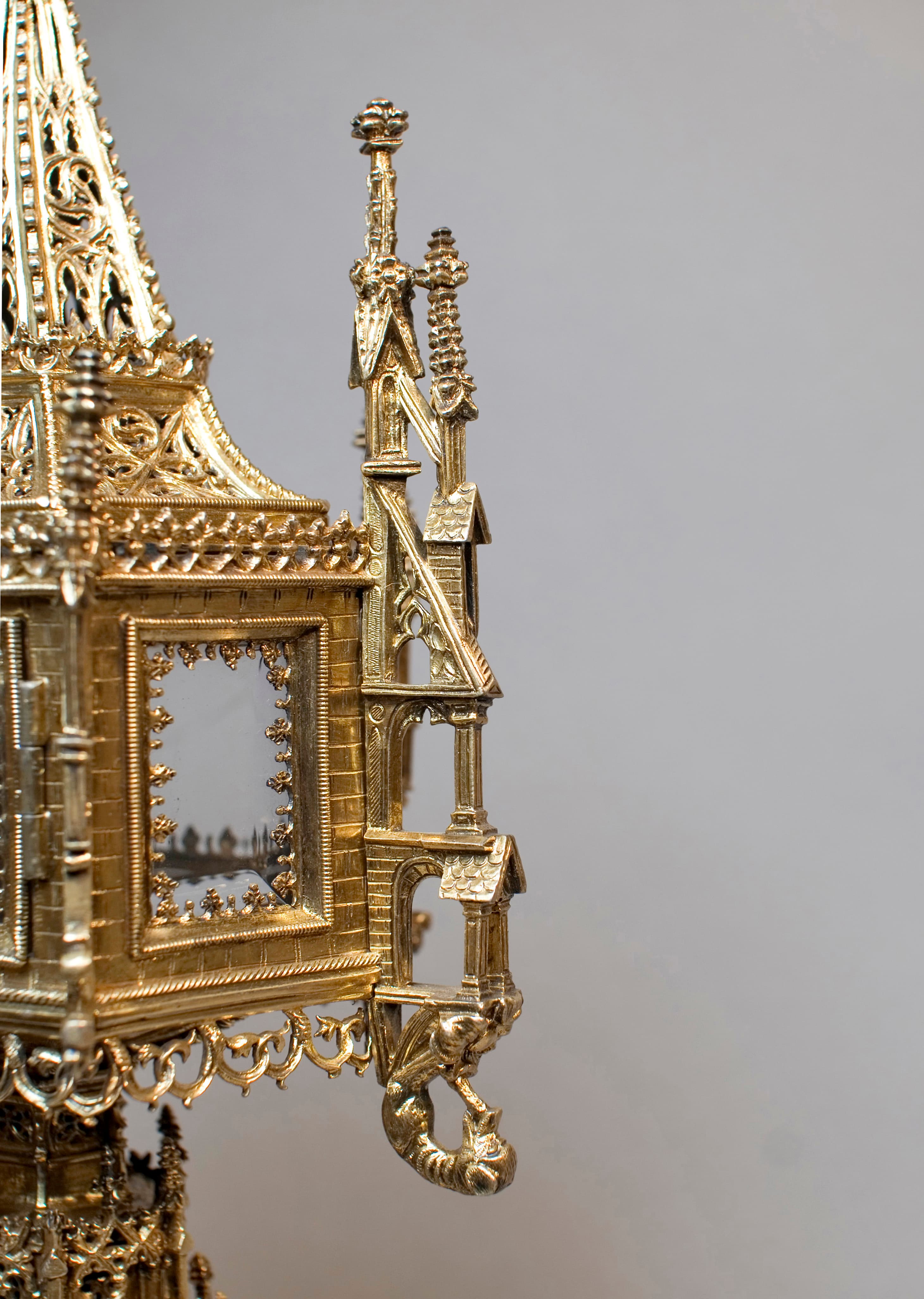
Artwork: detail of a Spanish monstrance, circa 1500, The Cloisters Collection, Metropolitan Museum of Art. The museum photograph is released under CC0; see the Wikimedia Commons file and license. No additional image edits were made for this article; the website may crop its display.
