Catholic saint biography
St. Peter of Alcántara
- Commemoration:
- October 19
- Lived:
- 1499–1562 — Alcántara, Spain
October 19 in particular and local calendars.
Why dates and liturgical observances can differ
Read the sources for this biography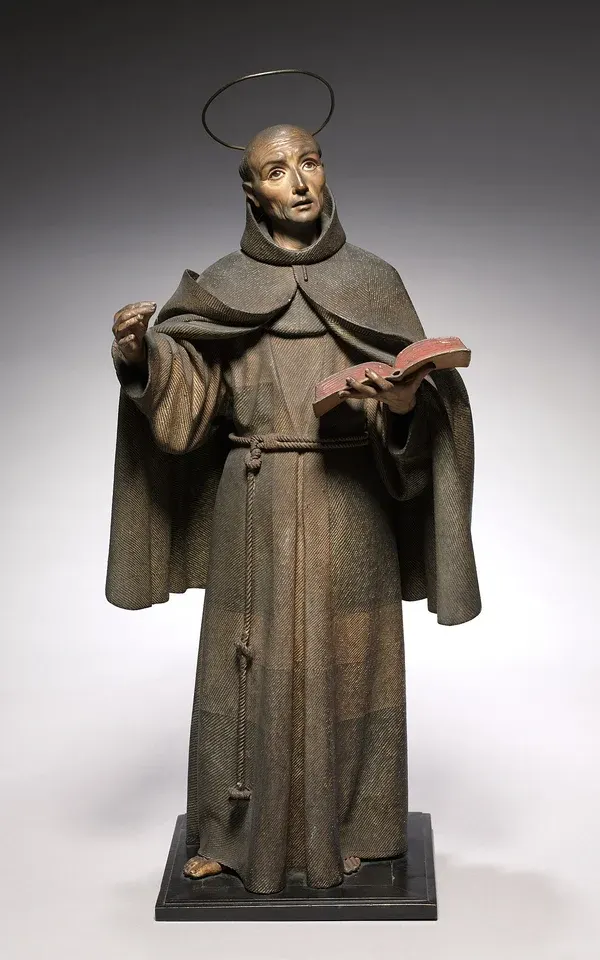
Biography
Peter of Alcántara was a Spanish Franciscan priest who promoted a demanding form of religious life centered on poverty, prayer, and preaching. He entered the Franciscans in 1515 and later helped establish communities committed to stricter observance. His preaching particularly addressed the poor.
Reform did not proceed without resistance. After his proposals met opposition as provincial, he withdrew to Portugal, where smaller communities developed around stricter observance. Later permission from Rome enabled further foundations in Spain, showing the institutional work behind his reputation for austerity.
His encouragement of Teresa included support for the foundation at Ávila in 1562. He also left writings on prayer. His example is best read through these relationships and texts, rather than by treating extreme ascetical practices as a universal model for every reader.
He became an important adviser to Teresa of Ávila during the beginnings of her Carmelite reform. Teresa’s writings are a significant source for his life and spiritual influence. His reputation for contemplation and penance grew alongside his practical work of founding and guiding communities. His October 19 feast is retained in particular calendars rather than the current General Roman Calendar.
Context & contribution
Encouragement that helped another reform begin
Peter’s contribution to Teresa of Avila’s work included counsel and encouragement at a difficult beginning. The Catholic Encyclopedia identifies a letter of April 14, 1562, supporting the foundation that opened that August. This is a concrete example of influence exercised through support for another person’s vocation.
Teresa’s autobiography is also an important source for Peter’s own reputation. The relationship therefore matters both to what happened and to how it was remembered. Her testimony should be read as the testimony of someone who valued his guidance, with that personal standpoint in view, rather than as an impersonal record of every detail.
Explore the sources for this section
AI-assisted source comparison updated 2026-09-26. Editorial approach
From the Saint Discovery blog
Keep exploring your faith
Practical guides to prayer, the saints, and living the Catholic faith.
What Is the Domestic Church? John Paul II on Faith at Home
What Catholics mean by the domestic church, how John Paul II explained family life, and practical ways to begin with prayer, forgiveness and welcome.
Bring reflection into prayerRead the article Prayer & reflectionHow to Make a Spiritual Communion When You Cannot Receive
Learn how to make a spiritual communion, with a short original prayer and clear guidance on Mass, Confession, and times when you cannot receive.
Bring reflection into prayerRead the articleFrom reading to reflection
What will you carry with you?
After reading about St. Peter of Alcántara, take a moment to consider:
- What difference can an experienced person’s timely encouragement make to a project they will not lead themselves?
These are reflection prompts from Saint Discovery, not quotations from the saint.
Sources and further reading
Biography source comparison recorded on . This is an AI-assisted comparison, not independent human or ecclesiastical approval.
What the recorded review covers
AI-assisted expansion using the linked historical and ecclesiastical sources; devotional traditions distinguished from documented history.
A source list helps you check an account; it does not establish that every claim is certain. Follow the biography’s qualifications about historical evidence, traditions and feast calendars.
Suggest a correction to this biography
How we research these pages and handle corrections · Directory corrections log
More lives to explore
Suggestions based on the site’s quiz themes, not a historical relationship or a measure of holiness.