Catholic saint biography
St. Pantaleon
- Commemoration:
- July 27
- Lived:
- Traditionally died about 305 — Nicomedia, according to tradition
Traditional Western and Byzantine feast; also known as Panteleimon.
Why dates and liturgical observances can differ
Read the sources for this biography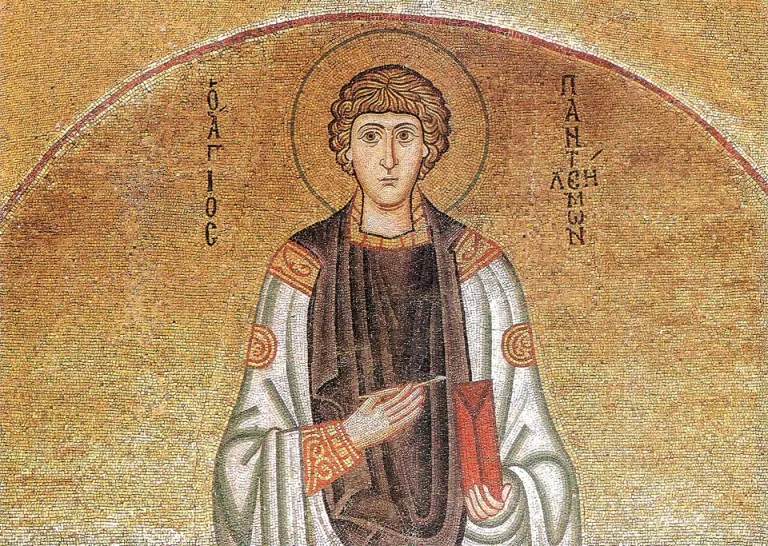
Biography
Pantaleon, called Panteleimon in Eastern tradition, is honored as a physician and martyr associated with Nicomedia. His later life story describes a doctor who embraced Christian faith and healed without demanding payment. He became especially important in devotion to saints associated with medicine and healing.
The later narrative names his Christian mother Eubula and the priest Hermolaus, who recalls him to the faith. It presents medical learning and Christian mercy as mutually reinforcing. These named relationships belong to the hagiographical tradition, not a securely reconstructed family history.
Early references to his veneration carry greater historical weight than the elaborate sequences of miraculous escapes from execution. His association with physicians and midwives explains the enduring medical imagery of his cult and its appeal to people seeking care in illness.
The martyrdom narrative contains elaborate miraculous episodes and should be treated as hagiography rather than a surviving contemporary court record. His cult was nevertheless widespread in both East and West, where he was included among the Fourteen Holy Helpers. His July 27 commemoration preserves the Christian ideal of compassionate healing joined to fidelity under persecution.
Context & contribution
Early veneration and a later dramatic story
The evidence for Pantaleon’s cult and the evidence for each episode in his legend are different kinds of evidence. The Catholic Encyclopedia points to early witnesses to his veneration while rejecting the late narrative as a dependable account of successive tortures. A church dedication or an early mention can attest to remembrance without confirming every later scene.
His association with physicians is best understood within that history of devotion. It expresses a Christian ideal of healing joined to compassion, while leaving historical questions about his medical career open. Readers can appreciate that ideal without treating the elaborate miracle sequence as a surviving judicial report.
Explore the sources for this section
AI-assisted source comparison updated 2026-09-26. Editorial approach
From the Saint Discovery blog
Keep exploring your faith
Practical guides to prayer, the saints, and living the Catholic faith.
Why Do Catholics Pray to Saints? Intercession Explained
Why do Catholics pray to saints? Learn how intercession differs from worship, how it relates to Jesus, and a simple way to ask a saint to pray for you.
A next step with your saintRead the article Living the seasonsHow to Celebrate Your Patron Saint's Feast Day at Home
Celebrate your patron saint's feast day with prayer, a short biography, and an act of kindness. A practical plan for families, sponsors, and individuals.
A next step with your saintRead the articleFrom reading to reflection
What will you carry with you?
After reading about St. Pantaleon, take a moment to consider:
- Take one detail from Pantaleon’s story and identify whether its source attests to early remembrance or narrates a later legend.
These are reflection prompts from Saint Discovery, not quotations from the saint.
Sources and further reading
Biography source comparison recorded on . This is an AI-assisted comparison, not independent human or ecclesiastical approval.
What the recorded review covers
AI-assisted expansion using the linked historical and ecclesiastical sources; devotional traditions distinguished from documented history.
A source list helps you check an account; it does not establish that every claim is certain. Follow the biography’s qualifications about historical evidence, traditions and feast calendars.
Suggest a correction to this biography
How we research these pages and handle corrections · Directory corrections log
More lives to explore
Suggestions based on the site’s quiz themes, not a historical relationship or a measure of holiness.