Catholic saint biography
St. Andrew Kim Taegon
- Commemoration:
- September 20
- Lived:
- 1821–1846 — Korea
Why dates and liturgical observances can differ
Read the sources for this biography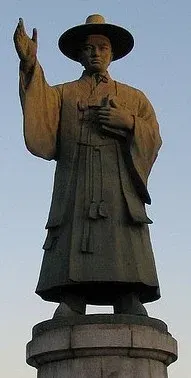
Biography
Andrew Kim Taegon became the first native-born Korean Catholic priest. Baptized as a teenager, he traveled to Macau for formation and was ordained in Shanghai. He returned to minister to a Korean community that had grown through the initiative of lay believers despite persecution.
Born in 1821, Andrew belonged to a family that had already suffered because of its faith. His journey for formation required leaving Korea, and his return brought a locally born priest to believers who had often lacked access to the sacraments. His ordination was therefore a milestone for that community.
The Korean Church had begun through lay study of Christian writings and contact with believers in China. Andrew inherited that history rather than founding Christianity in Korea by himself. Later Church commemorations emphasize his witness to human dignity and equality within a society marked by strong social hierarchies.
His ministry in Korea was brief: he was arrested and killed on September 16, 1846. His witness is commemorated with Paul Chong Hasang and their companions on September 20. The distinction between his death date and the group memorial explains why both September dates appear in accounts of his life.
Context & contribution
A bicentenary connected martyr memory with equality
The 2021 celebration of Andrew Kim's birth interpreted his witness through human dignity in a society structured by inherited rank. Archbishop Lazarus You emphasized that the early Korean Christians attempted to put their beliefs about equality into practice. This is a later Church interpretation of his legacy, clearly distinguished from a record written during Andrew's lifetime.
The commemoration also addressed discrimination during the pandemic and the hope of reconciliation on the Korean peninsula. These applications show how a martyr's memory can pose questions to a later generation. Andrew's short ministry becomes a point of reflection on belonging and shared dignity, rather than merely an anniversary of national religious achievement.
Explore the sources for this section
AI-assisted source comparison updated 2026-09-26. Editorial approach
From the Saint Discovery blog
Keep exploring your faith
Practical guides to prayer, the saints, and living the Catholic faith.
Why Do Catholics Pray to Saints? Intercession Explained
Why do Catholics pray to saints? Learn how intercession differs from worship, how it relates to Jesus, and a simple way to ask a saint to pray for you.
A next step with your saintRead the article Living the seasonsHow to Celebrate Your Patron Saint's Feast Day at Home
Celebrate your patron saint's feast day with prayer, a short biography, and an act of kindness. A practical plan for families, sponsors, and individuals.
A next step with your saintRead the articleFrom reading to reflection
What will you carry with you?
After reading about St. Andrew Kim Taegon, take a moment to consider:
- Separate the nineteenth-century events from the 2021 applications in the bicentenary address. What makes an application faithful to a historical witness?
These are reflection prompts from Saint Discovery, not quotations from the saint.
Sources and further reading
- Vatican News: Andrew Kim, Paul Chong Hasang and companions ↗
- Vatican News: Korean archbishop on Andrew Kim Taegon ↗
Biography source comparison recorded on . This is an AI-assisted comparison, not independent human or ecclesiastical approval.
What the recorded review covers
AI-assisted expansion checked against retrieved historical and institutional sources; traditions distinguished from documented history; not ecclesiastical approval
A source list helps you check an account; it does not establish that every claim is certain. Follow the biography’s qualifications about historical evidence, traditions and feast calendars.
Suggest a correction to this biography
How we research these pages and handle corrections · Directory corrections log
More lives to explore
Suggestions based on the site’s quiz themes, not a historical relationship or a measure of holiness.