Catholic saint biography
St. Pacian of Barcelona
- Commemoration:
- March 9
- Lived:
- Died about 390 — Barcelona, Roman Hispania
Local and martyrological commemoration; May 9 was incorrect.
Why dates and liturgical observances can differ
Read the sources for this biography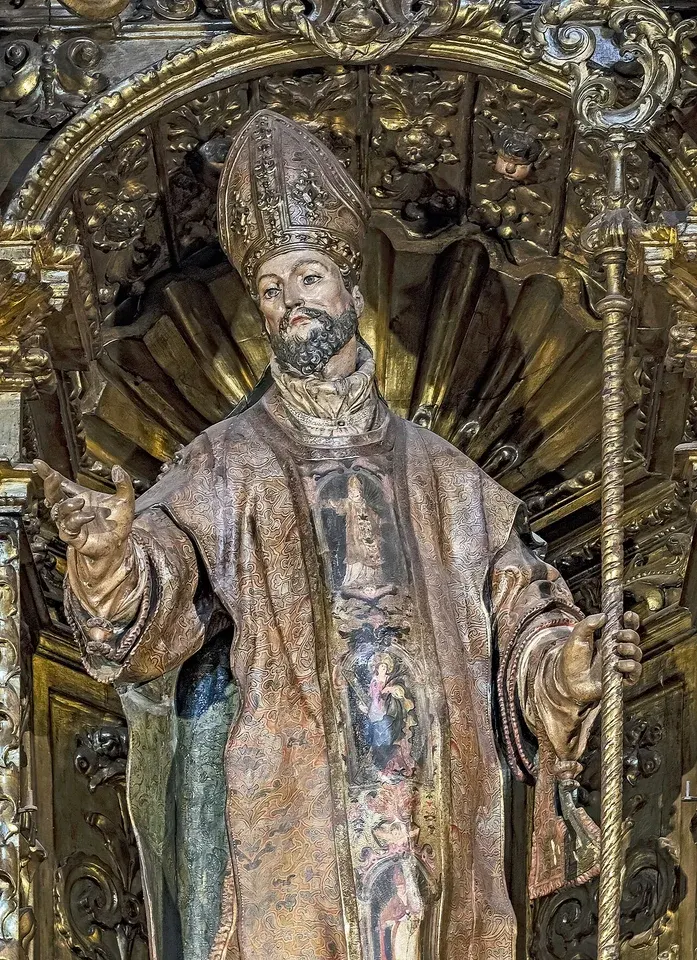
Biography
Pacian was a fourth-century bishop of Barcelona whose surviving writings address baptism, repentance, and the identity of the Catholic Church. Jerome remembered him as a learned Christian writer. His teaching belongs to the effort to explain church life and reconciliation after baptism.
Jerome's notice is valuable because it locates Pacian among recognizable Christian writers rather than only in a later calendar of saints. Baptism and penance were concrete pastoral concerns: they addressed entry into Christian life and the possibility of reconciliation after serious failure.
His argument against Novatian rigorism therefore concerned more than terminology. It defended a community in which repentance and restoration remained possible. The surviving literary witness provides the clearest route into his episcopal work; details of childhood and a complete chronology are not comparably preserved.
He corresponded with a supporter of the Novatian movement, defending the Church's authority to receive repentant sinners. These texts provide a more substantial basis for understanding him than later devotional anecdotes. His ministry shows how theological argument and pastoral care overlapped in the late Roman Church. He died around 390 and is commemorated on March 9, especially in the church associated with Barcelona.
Context & contribution
A bishop who examined his own teaching methods
At the beginning of his Exhortation to Penance, Pacian reflects uneasily on an earlier work called Cervulus. He fears that describing objectionable practices in order to condemn them may instead have taught readers how to imitate them. This is a striking admission from a bishop: moral instruction could fail through its own method, even when its intended purpose was correction.
The same treatise develops a medical comparison for repentance. Concealing a wound prevents treatment, while admitting an injury without accepting a remedy leaves it unhealed. Pacian also tells the community to grieve with its wounded members instead of taking pleasure in their disgrace. These particular images show how he tried to make difficult pastoral teaching intelligible.
Explore the sources for this section
AI-assisted source comparison updated 2026-09-26. Editorial approach
From the Saint Discovery blog
Keep exploring your faith
Practical guides to prayer, the saints, and living the Catholic faith.
How to Make a Spiritual Communion When You Cannot Receive
Learn how to make a spiritual communion, with a short original prayer and clear guidance on Mass, Confession, and times when you cannot receive.
Explore mercy and reconciliationRead the article Prayer & reflectionHow to Pray the Jesus Prayer: A Catholic Beginner's Guide
Learn the Jesus Prayer, its Eastern Christian roots and biblical meaning, with a simple Catholic practice focused on Christ and mercy.
Explore mercy and reconciliationRead the articleFrom reading to reflection
What will you carry with you?
After reading about St. Pacian of Barcelona, take a moment to consider:
- Read Pacian’s concern about Cervulus beside his image of a wound needing treatment. Explain why one teaching method worried him and what the second image was intended to accomplish.
These are reflection prompts from Saint Discovery, not quotations from the saint.
Sources and further reading
Biography source comparison recorded on . This is an AI-assisted comparison, not independent human or ecclesiastical approval.
What the recorded review covers
AI-assisted expansion using the linked historical and ecclesiastical sources; devotional traditions distinguished from documented history.
A source list helps you check an account; it does not establish that every claim is certain. Follow the biography’s qualifications about historical evidence, traditions and feast calendars.
Suggest a correction to this biography
How we research these pages and handle corrections · Directory corrections log
More lives to explore
Suggestions based on the site’s quiz themes, not a historical relationship or a measure of holiness.