Catholic saint biography
St. John I
- Commemoration:
- May 18
- Lived:
- Died 526; pope from 523 — Tuscany, Italy
Roman optional memorial.
Why dates and liturgical observances can differ
Read the sources for this biography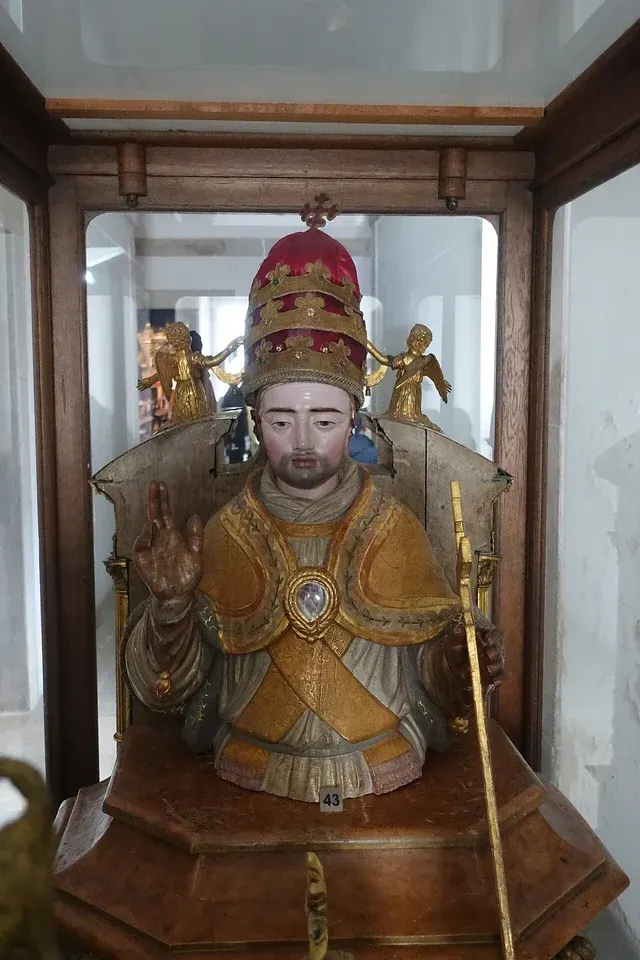
Biography
John I became bishop of Rome in 523, during the rule of the Ostrogothic king Theodoric. Tensions between Arian and Nicene Christians were intertwined with relations between Italy and the Eastern Roman Empire. Theodoric compelled John to lead an embassy to Emperor Justin in Constantinople concerning the treatment of Arians.
The embassy put John in a difficult position: he was sent by an Arian king to negotiate with an emperor who upheld the Nicene faith. The king wanted restrictions on Arians relaxed, while the pope could not endorse abandoning Catholic belief. Religious policy was also a contest over political loyalty between Rome, Ravenna, and Constantinople.
John received an impressive welcome in the East, but the mission did not satisfy Theodoric. On returning to Italy, he was imprisoned at Ravenna and died in 526. He is venerated as a martyr. Little reliable evidence survives about the ordinary administration of his pontificate, and letters formerly attributed to him are not regarded as authentic.
His remains were eventually brought to Rome and buried at Saint Peter's. The surviving accounts illuminate this final diplomatic journey much more clearly than his earlier life. His martyrdom is remembered in connection with the imprisonment that ended his pontificate, not a well-documented public trial or execution.
Context & contribution
Reading a diplomatic mission through its witnesses
The account of John's embassy depends on a small group of narrative witnesses, including the Anonymous Valesianus, the Liber Pontificalis, Gregory of Tours, and Agnellus of Ravenna. Their survival gives historians something more complicated than an official diplomatic transcript: later reports with different interests and uneven detail.
One concrete episode is John's celebration of Easter at Constantinople in 526 using the Latin rite. It demonstrates that communion between the churches did not require identical liturgical practice. The ceremony and the emperor's welcome also made a religious visit politically conspicuous, helping explain why its meaning could differ so sharply between Constantinople and Theodoric's court.
Explore the sources for this section
AI-assisted source comparison updated 2026-09-26. Editorial approach
From the Saint Discovery blog
Keep exploring your faith
Practical guides to prayer, the saints, and living the Catholic faith.
Why Do Catholics Pray to Saints? Intercession Explained
Why do Catholics pray to saints? Learn how intercession differs from worship, how it relates to Jesus, and a simple way to ask a saint to pray for you.
A next step with your saintRead the article Living the seasonsHow to Celebrate Your Patron Saint's Feast Day at Home
Celebrate your patron saint's feast day with prayer, a short biography, and an act of kindness. A practical plan for families, sponsors, and individuals.
A next step with your saintRead the articleFrom reading to reflection
What will you carry with you?
After reading about St. John I, take a moment to consider:
- Draw two columns for the emperor and Theodoric, then explain how each might interpret the same ceremonial welcome for John.
These are reflection prompts from Saint Discovery, not quotations from the saint.
Sources and further reading
Biography source comparison recorded on . This is an AI-assisted comparison, not independent human or ecclesiastical approval.
What the recorded review covers
AI-assisted expansion of the existing source-reviewed biography with comparison to retrieved cited sources; not ecclesiastical approval
A source list helps you check an account; it does not establish that every claim is certain. Follow the biography’s qualifications about historical evidence, traditions and feast calendars.
Suggest a correction to this biography
How we research these pages and handle corrections · Directory corrections log
More lives to explore
Suggestions based on the site’s quiz themes, not a historical relationship or a measure of holiness.