Catholic saint biography
St. Olga of Kyiv
- Commemoration:
- July 11
- Lived:
- Died 969 — Kyivan Rus
Byzantine commemoration; Julian July 11 corresponds to civil July 24.
Why dates and liturgical observances can differ
Read the sources for this biography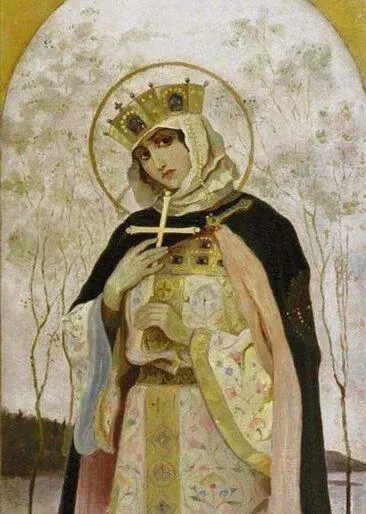
Biography
Olga was a tenth-century ruler of Kyivan Rus and an early Christian within its ruling family. Following the death of her husband Igor, she governed while their son Sviatoslav was young, exercising political authority before and after her conversion.
Chronicles associate her government with arrangements for collecting tribute and organizing administrative centers. They also preserve dramatic stories of revenge against those responsible for Igor's death. Such narratives require historical interpretation rather than being repeated as either exemplary Christian conduct or an exact contemporary record.
She received the baptismal name Helen. Her relationship with Constantinople connects religious conversion with diplomacy, although accounts differ over the chronology of her baptism and visits. She also sought clergy from the West, showing that the establishment of Christian institutions involved relationships beyond a single court.
Sviatoslav did not adopt her faith, and the wider Christianization of Rus is associated with her grandson Vladimir. Olga died in 969 and was buried as a Christian. Her July 11 commemoration and title Equal to the Apostles honor her role in preparing that later transformation, without implying that Christianity became universal during her lifetime.
Context & contribution
A conversion within an already mixed society
The account preserved by the Orthodox Church in America discusses a treaty in which Christian and non-Christian people of Rus swore oaths in different ways. That detail complicates a simple story in which Christianity first appears only when a ruler converts. Olga’s importance belongs within a society where Christian communities and diplomatic contacts already existed.
The same devotional narrative interprets political events through providence and includes judgments about other peoples that require critical historical reading. Readers should distinguish a treaty or named institution from the author’s explanation of why events happened. Olga’s remembered role as a precursor to later Christianization is not a reason to endorse every action or prejudice found in chronicles about her.
Explore the sources for this section
AI-assisted source comparison updated 2026-09-26. Editorial approach
From the Saint Discovery blog
Keep exploring your faith
Practical guides to prayer, the saints, and living the Catholic faith.
Why Do Catholics Pray to Saints? Intercession Explained
Why do Catholics pray to saints? Learn how intercession differs from worship, how it relates to Jesus, and a simple way to ask a saint to pray for you.
A next step with your saintRead the article Living the seasonsHow to Celebrate Your Patron Saint's Feast Day at Home
Celebrate your patron saint's feast day with prayer, a short biography, and an act of kindness. A practical plan for families, sponsors, and individuals.
A next step with your saintRead the articleFrom reading to reflection
What will you carry with you?
After reading about St. Olga of Kyiv, take a moment to consider:
- Identify one institutional detail and one religious interpretation in the source. Explain why they are different kinds of historical claim.
These are reflection prompts from Saint Discovery, not quotations from the saint.
Sources and further reading
Biography source comparison recorded on . This is an AI-assisted comparison, not independent human or ecclesiastical approval.
What the recorded review covers
AI-assisted expansion using the linked historical and ecclesiastical sources; devotional traditions distinguished from documented history.
A source list helps you check an account; it does not establish that every claim is certain. Follow the biography’s qualifications about historical evidence, traditions and feast calendars.
Suggest a correction to this biography
How we research these pages and handle corrections · Directory corrections log
More lives to explore
Suggestions based on the site’s quiz themes, not a historical relationship or a measure of holiness.