Catholic saint biography
St. Apollonius of Rome
- Commemoration:
- April 21
- Lived:
- Died about 185 — Rome
April 21 in the Vatican calendar; April 18 occurs in older collections.
Why dates and liturgical observances can differ
Read the sources for this biography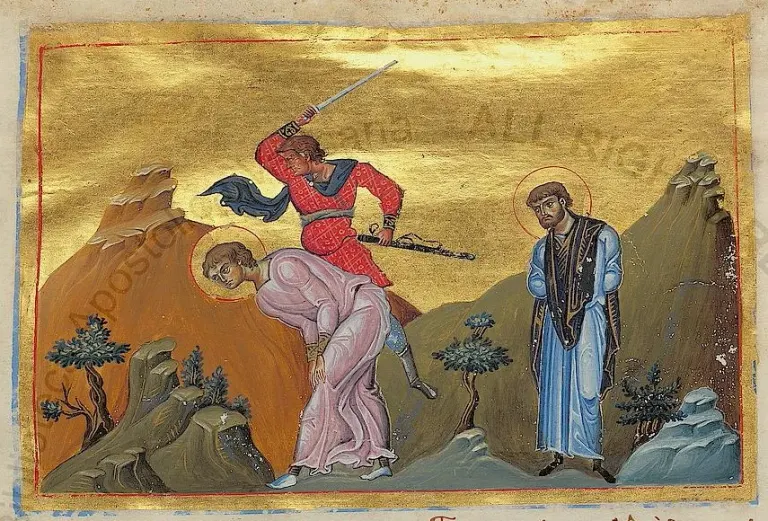
Biography
Apollonius was a learned Christian in Rome who was tried during the reign of Commodus. Eusebius reports that a servant denounced him and that he delivered a reasoned defense of his faith before the Roman authorities. Despite this defense, he was sentenced to death. Jerome subsequently describes him as a senator and says that he was beheaded.
The significance of his defense lies in its attempt to explain Christian belief before people with power over his life. The name apologist refers to such a reasoned presentation, not to an admission that his religion was wrong. The surviving historical notices connect intellectual witness and martyrdom.
Eusebius and Jerome are distinct witnesses in the transmission of the story and do not supply identical details. Calling him a senator relies especially on Jerome’s account. Recognizing that distinction helps avoid treating every later summary as if it were a surviving Roman court transcript.
The surviving tradition makes Apollonius an early example of an apologist whose public explanation of Christianity ended in martyrdom. His case belongs to Rome, not Alexandria, and he should also be distinguished from the anti-Montanist writer Apollonius of Ephesus. The Vatican calendar commemorates him on April 21; older devotional collections sometimes place him on April 18.
Context & contribution
An individual trial within a comparatively peaceful period
Eusebius introduces Apollonius's trial by describing improving conditions for Christians under Commodus. The juxtaposition is important: a generally more favorable climate did not guarantee safety for every believer. An accusation and a refusal to recant could still produce a fatal case.
The historian directs readers elsewhere for a fuller defense, making clear that his own chapter is a summary. This helps explain why a modern account should distinguish the reported opportunity to address the authorities from words it cannot securely quote. Apollonius's contribution is remembered as reasoned public witness under pressure, without requiring an invented reconstruction of his courtroom speech.
Explore the sources for this section
AI-assisted source comparison updated 2026-09-26. Editorial approach
From the Saint Discovery blog
Keep exploring your faith
Practical guides to prayer, the saints, and living the Catholic faith.
Why Do Catholics Pray to Saints? Intercession Explained
Why do Catholics pray to saints? Learn how intercession differs from worship, how it relates to Jesus, and a simple way to ask a saint to pray for you.
A next step with your saintRead the article Living the seasonsHow to Celebrate Your Patron Saint's Feast Day at Home
Celebrate your patron saint's feast day with prayer, a short biography, and an act of kindness. A practical plan for families, sponsors, and individuals.
A next step with your saintRead the articleFrom reading to reflection
What will you carry with you?
After reading about St. Apollonius of Rome, take a moment to consider:
- Why might an individual remain vulnerable even when Eusebius describes conditions as comparatively peaceful? Identify what the trial summary can and cannot establish.
These are reflection prompts from Saint Discovery, not quotations from the saint.
Sources and further reading
- Eusebius: Church History V, chapter 21 ↗
- Jerome: On Illustrious Men, chapter 42 ↗
- Vatican News: April 21 saints ↗
Biography source comparison recorded on . This is an AI-assisted comparison, not independent human or ecclesiastical approval.
What the recorded review covers
AI-assisted expansion checked against retrieved historical and institutional sources; traditions distinguished from documented history; not ecclesiastical approval
A source list helps you check an account; it does not establish that every claim is certain. Follow the biography’s qualifications about historical evidence, traditions and feast calendars.
Suggest a correction to this biography
How we research these pages and handle corrections · Directory corrections log
More lives to explore
Suggestions based on the site’s quiz themes, not a historical relationship or a measure of holiness.