Catholic saint biography
St. Notburga of Eben
- Commemoration:
- September 14
- Lived:
- Traditionally about 1265–1313 — Tyrol, present-day Austria
Traditional local feast in Tyrol.
Why dates and liturgical observances can differ
Read the sources for this biography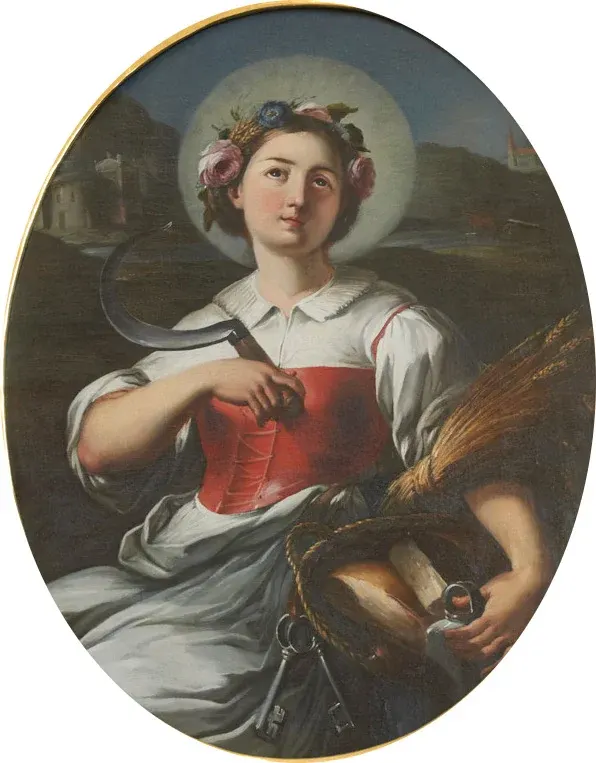
Biography
Notburga is a Tyrolean saint associated with domestic service, agricultural labor, and generosity toward poor people. Traditionally placed around 1265–1313, she is especially remembered at Eben and honored as a patron of servants and rural workers.
Her familiar life story was compiled centuries after her death. It describes a cook in the household of the count of Rothenburg who shared food with people in need. When forbidden to distribute leftovers, she is said to have saved portions of her own meals. These episodes belong to her later devotional biography rather than a contemporary employment record.
Another story places her on a farm at Eben, where she had secured permission to attend worship. When ordered to continue harvesting instead, she reportedly threw her sickle into the air and it remained suspended. This miracle explains the sickle and grain often shown in her images; it should be presented as legend, not independently established history.
Her longstanding cult received papal confirmation in 1862. September 14 is her traditional feast. The devotion preserves a distinctive concern for workers' religious lives and for charity within ordinary household responsibilities, while the historical limits of its detailed narratives remain important.
Context & contribution
What a worker’s legend preserves
The source history matters here: the Catholic Encyclopedia identifies a seventeenth-century compilation behind the familiar narrative, long after Notburga’s lifetime. The suspended sickle cannot responsibly be used as a documented workplace incident. It can, however, be examined as a story through which later communities expressed the religious dignity of agricultural and domestic workers.
Food, working hours, and permission to worship are the story’s concrete concerns. These give the devotion a recognizable social setting without supplying a recoverable contract or exact conversation. Separating those two kinds of evidence allows a saint report to discuss why workers remembered Notburga while being honest about what her surviving biography cannot establish.
Explore the sources for this section
AI-assisted source comparison updated 2026-09-26. Editorial approach
From the Saint Discovery blog
Keep exploring your faith
Practical guides to prayer, the saints, and living the Catholic faith.
Why Do Catholics Pray to Saints? Intercession Explained
Why do Catholics pray to saints? Learn how intercession differs from worship, how it relates to Jesus, and a simple way to ask a saint to pray for you.
A next step with your saintRead the article Living the seasonsHow to Celebrate Your Patron Saint's Feast Day at Home
Celebrate your patron saint's feast day with prayer, a short biography, and an act of kindness. A practical plan for families, sponsors, and individuals.
A next step with your saintRead the articleFrom reading to reflection
What will you carry with you?
After reading about St. Notburga of Eben, take a moment to consider:
- In a picture of Notburga, identify the tools or food shown. Explain their meaning in the tradition without presenting the associated miracle as a contemporary record.
These are reflection prompts from Saint Discovery, not quotations from the saint.
Sources and further reading
Biography source comparison recorded on . This is an AI-assisted comparison, not independent human or ecclesiastical approval.
What the recorded review covers
AI-assisted expansion using the linked historical and ecclesiastical sources; devotional traditions distinguished from documented history.
A source list helps you check an account; it does not establish that every claim is certain. Follow the biography’s qualifications about historical evidence, traditions and feast calendars.
Suggest a correction to this biography
How we research these pages and handle corrections · Directory corrections log
More lives to explore
Suggestions based on the site’s quiz themes, not a historical relationship or a measure of holiness.