Catholic saint biography
St. Isaac Jogues
- Commemoration:
- October 19
- Lived:
- 1607–1646 — France
Roman and U.S. commemoration with the North American Martyrs; Canada celebrates September 26.
Why dates and liturgical observances can differ
Read the sources for this biography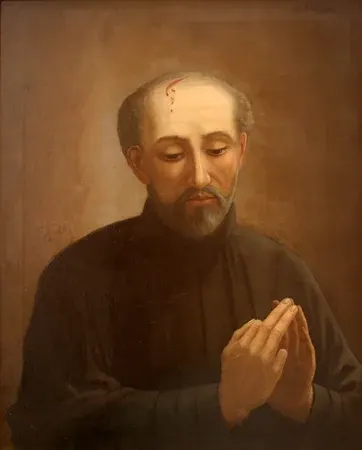
Biography
Saint Isaac Jogues was a French Jesuit missionary in seventeenth-century North America. His work among Indigenous communities unfolded amid epidemic disease, European colonization, and warfare, and ended with his death in 1646.
After arriving in New France in 1636, Jogues traveled to Wendat communities and began learning their language. Missionary activity took place within a fragile political situation: disease increased mistrust, while French alliances and conflicts affected both missionaries and Indigenous people.
Captured with companions in 1642, he endured severe injuries and prolonged captivity. Dutch assistance enabled his escape and return to France. Because his hands had been mutilated, he received permission to celebrate Mass despite the physical limitations that would ordinarily have prevented it. He chose to return to North America.
Jogues subsequently served as an envoy during peace negotiations. On another journey he was killed after renewed conflict and accusations surrounding crop failure and illness. The Jesuit account records disagreement among his captors, some of whom favored peace and protection. Remembering those differences avoids reducing diverse Indigenous communities to a single hostile group. He is honored among the North American Martyrs.
Context & contribution
The support and limits of a traveling mission
Jogues's first journey from Quebec to the Wendat settlement of Ihonatiria required nineteen days of paddling and carrying canoes around obstacles, according to the Jesuit account. The route depended on Indigenous companions and their knowledge. Those practical conditions belong within mission history as much as the actions of the European priest.
The same account records an invitation from a Chippewa group in 1641 that could not be followed by a permanent new mission because too few Jesuits were available. It also identifies René Goupil as a surgeon and Jean de La Lande as an experienced woodsman. Such details reveal requests, staffing limits, and specialized skills behind a narrative often reduced to captivity and death.
Explore the sources for this section
AI-assisted source comparison updated 2026-09-26. Editorial approach
From the Saint Discovery blog
Keep exploring your faith
Practical guides to prayer, the saints, and living the Catholic faith.
Why Is St. Thérèse the Patron Saint of Missions?
Why is St. Thérèse patron saint of missions? Discover her support for missionaries and practical ways to participate in the Church's mission from home.
Sharing the faithRead the article Everyday faithWhat Is Evangelization? A Catholic Guide to Sharing the Faith
What is evangelization? Learn the Catholic meaning, the new evangelization, and practical ways to share your faith with respect, confidence, and love.
Sharing the faithRead the articleFrom reading to reflection
What will you carry with you?
After reading about St. Isaac Jogues, take a moment to consider:
- Outline the people and skills needed for Jogues's nineteen-day journey. Discuss how local invitations and limited personnel shaped where missionary work could proceed.
These are reflection prompts from Saint Discovery, not quotations from the saint.
Sources and further reading
Biography source comparison recorded on . This is an AI-assisted comparison, not independent human or ecclesiastical approval.
What the recorded review covers
AI-assisted expansion checked against cited sources; historical traditions distinguished from documented evidence; not ecclesiastical approval
A source list helps you check an account; it does not establish that every claim is certain. Follow the biography’s qualifications about historical evidence, traditions and feast calendars.
Suggest a correction to this biography
How we research these pages and handle corrections · Directory corrections log
More lives to explore
Suggestions based on the site’s quiz themes, not a historical relationship or a measure of holiness.