Catholic saint biography
St. Florian
- Commemoration:
- May 4
- Patron Saint of:
- firefighters
- Lived:
- Died 304 — Roman Noricum, present-day Austria
May 4, with particular observance in Austria and central Europe.
Why dates and liturgical observances can differ
Read the sources for this biography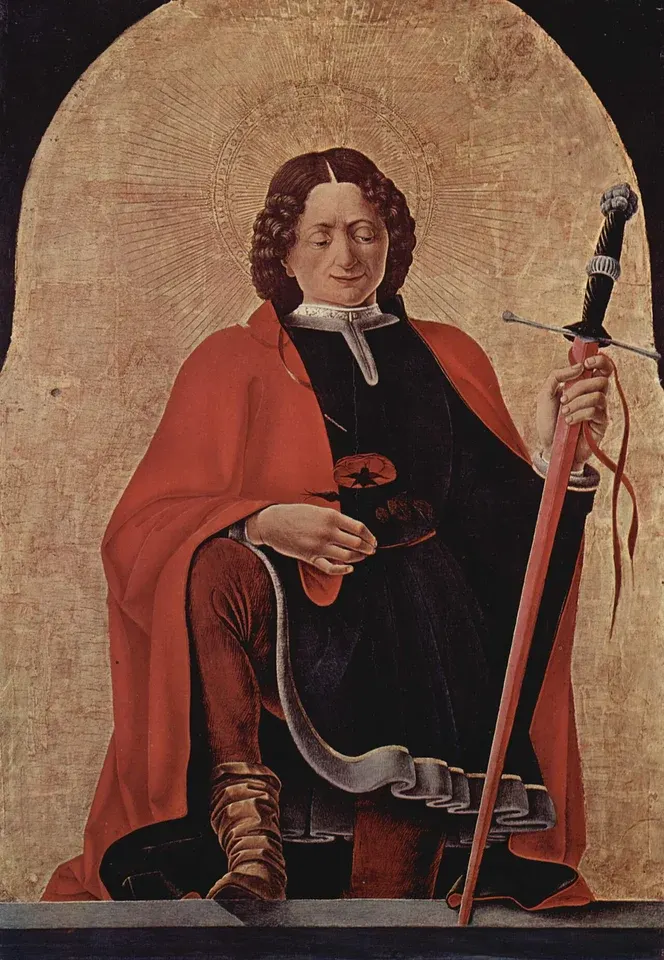
Biography
Florian was a Roman Christian associated with Noricum, in present-day Austria, who is honored as a martyr of the Diocletianic persecution. His memory is especially strong among firefighters and in the Diocese of Linz.
The traditional account places him in military and administrative service, eventually working with the imperial governor's office at Lauriacum. His position made his refusal to sacrifice to the Roman gods a public challenge to official expectations.
When Christians were imprisoned, Florian attempted to help them. Brought before the governor Aquilinus, he refused to abandon his faith. The martyr narrative describes his being tortured and drowned in the River Enns with a millstone attached to him on May 4, 304.
A woman named Valeria is remembered for recovering and burying his body. A church and later monastery developed at the site associated with his burial, and relics helped extend his cult to Kraków and other places. These later institutions give visible form to the spread of his devotion. His association with protection from fire belongs to that history of patronage rather than proving that he held a modern firefighting occupation.
Context & contribution
Patronage as a later public decision
The Diocese of Linz's account distinguishes the ancient martyr from modern acts recognizing his patronage. Florian and the companions of Lorch became principal diocesan patrons in 1971; his recognition as a patron of Upper Austria followed in 2004.
These dates describe the public reception of his memory, not new events in his Roman lifetime. They also keep the companions visible beside the better-known individual. A patron can express the historical identity of a region and the vocation of people serving it, while the documentary basis for the original martyr narrative remains a separate question.
Explore the sources for this section
AI-assisted source comparison updated 2026-09-26. Editorial approach
From the Saint Discovery blog
Keep exploring your faith
Practical guides to prayer, the saints, and living the Catholic faith.
Why Do Catholics Pray to Saints? Intercession Explained
Why do Catholics pray to saints? Learn how intercession differs from worship, how it relates to Jesus, and a simple way to ask a saint to pray for you.
A next step with your saintRead the article Living the seasonsHow to Celebrate Your Patron Saint's Feast Day at Home
Celebrate your patron saint's feast day with prayer, a short biography, and an act of kindness. A practical plan for families, sponsors, and individuals.
A next step with your saintRead the articleFrom reading to reflection
What will you carry with you?
After reading about St. Florian, take a moment to consider:
- Explain the difference between a martyr's death date and the date a region adopts that martyr as patron, using Florian's two modern recognitions.
These are reflection prompts from Saint Discovery, not quotations from the saint.
Sources and further reading
Biography source comparison recorded on . This is an AI-assisted comparison, not independent human or ecclesiastical approval.
What the recorded review covers
AI-assisted expansion checked against cited sources; historical traditions distinguished from documented evidence; not ecclesiastical approval
A source list helps you check an account; it does not establish that every claim is certain. Follow the biography’s qualifications about historical evidence, traditions and feast calendars.
Suggest a correction to this biography
How we research these pages and handle corrections · Directory corrections log
More lives to explore
Suggestions based on the site’s quiz themes, not a historical relationship or a measure of holiness.