Catholic saint biography
St. John the Baptist
- Commemoration:
- June 24
- Lived:
- First century — Judea
Solemnity of his Nativity; August 29 commemorates his martyrdom.
Why dates and liturgical observances can differ
Read the sources for this biography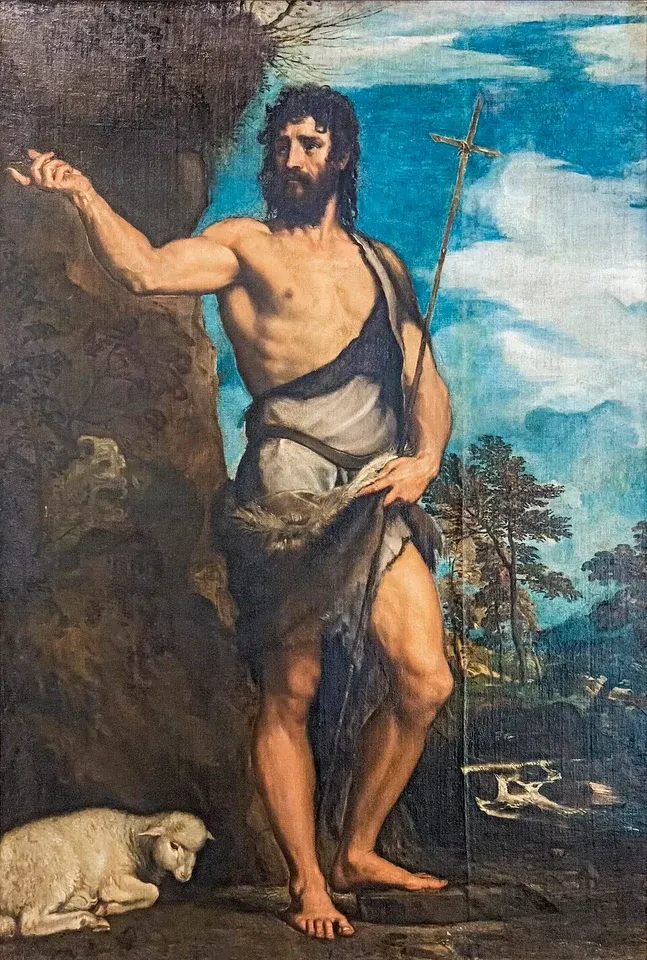
Biography
John the Baptist appears in all four Gospels as a prophetic preacher who prepared the way for Jesus. Luke describes him as the son of Elizabeth and Zechariah. His public ministry called people to repentance and included baptism, while his teaching directed attention beyond himself to the one who would follow.
Luke places his birth within the story of parents who had long been childless and connects it with the naming of the child. His later activity takes place beyond the normal centers of authority. The movement toward the Jordan expresses the seriousness of his call to a changed life, not merely membership in a new group.
The Gospels recount Jesus' baptism by John and John's eventual imprisonment and execution under Herod Antipas. Christian interpretation sees him as a bridge between Israel's prophetic tradition and the proclamation of Christ. His birth is celebrated on June 24, with a separate commemoration of his death. Precise modern birth and death dates are not supplied by the biblical accounts.
The accounts of his death connect imprisonment with his criticism of Herod's marriage and describe the ruler's fatal response to a courtly request. Christian liturgy therefore remembers both his beginning and the cost of his prophetic ministry. He is distinct from John the Apostle: their names are shared, but their roles in the Gospel narratives differ.
Context & contribution
Repentance given a practical shape
In Luke 3, John's listeners ask what repentance should change. His answers address three groups differently: those with spare food and clothing should share, tax collectors should stop taking more than required, and soldiers should reject extortion and intimidation. The scene gives content to a word that could otherwise remain abstract.
The instructions concern the use of possessions and power in existing relationships. John does not give every listener the same task. Francis's commentary on this passage emphasizes that conversion becomes visible through justice and solidarity. This teaching complements the Baptist's dramatic public witness with the ordinary economic choices he asked others to make.
Explore the sources for this section
AI-assisted source comparison updated 2026-09-26. Editorial approach
From the Saint Discovery blog
Keep exploring your faith
Practical guides to prayer, the saints, and living the Catholic faith.
How to Pray the Jesus Prayer: A Catholic Beginner's Guide
Learn the Jesus Prayer, its Eastern Christian roots and biblical meaning, with a simple Catholic practice focused on Christ and mercy.
Explore mercy and reconciliationRead the article Prayer & reflectionHow to Read Saint Faustina's Diary: A Catholic Beginner's Guide
New to Saint Faustina's Diary? Learn how to read it with the Gospel, understand private revelation, and turn reflection on Divine Mercy into daily action.
Explore mercy and reconciliationRead the articleFrom reading to reflection
What will you carry with you?
After reading about St. John the Baptist, take a moment to consider:
- Rewrite John's three instructions as a checklist for handling shared resources, collecting payments, and exercising authority in a modern organization.
These are reflection prompts from Saint Discovery, not quotations from the saint.
Sources and further reading
Biography source comparison recorded on . This is an AI-assisted comparison, not independent human or ecclesiastical approval.
What the recorded review covers
AI-assisted expansion of the existing source-reviewed biography with comparison to retrieved cited sources; not ecclesiastical approval
A source list helps you check an account; it does not establish that every claim is certain. Follow the biography’s qualifications about historical evidence, traditions and feast calendars.
Suggest a correction to this biography
How we research these pages and handle corrections · Directory corrections log
More lives to explore
Suggestions based on the site’s quiz themes, not a historical relationship or a measure of holiness.