Catholic saint biography
St. Lydia of Thyatira
- Commemoration:
- May 20
- Lived:
- First century — Thyatira; active in Philippi
Roman Martyrology commemoration; August 3 is another traditional observance.
Why dates and liturgical observances can differ
Read the sources for this biography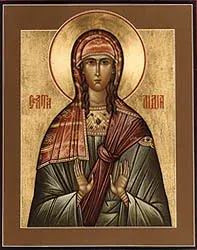
Biography
Lydia appears in Acts 16 as a dealer in purple goods from Thyatira who was living in Philippi. She listened to Paul's preaching beside a river, accepted his message, and was baptized with her household. She then offered Paul and his companions hospitality in her home.
The narrative identifies both her place of origin and the commercial activity that brought her into a wider Mediterranean setting. Purple goods connect her story with trade, but Acts does not provide a balance sheet or establish her exact social rank. Her named presence contrasts with the many early believers whose identities are lost.
After Paul and Silas were released from prison, they returned to Lydia's house and encouraged the Christian community gathered there. These scenes show the importance of household hospitality in the earliest churches. Acts does not supply her later history or death date, so a subsequent biography would be speculative. The Roman Martyrology commemorates her on May 20; August 3 also occurs in devotional calendars.
Her invitation makes a private household available to traveling missionaries and the emerging church. The text gives her an active voice in offering that hospitality. Later silence about her cannot be used to calculate when she died; absence from a subsequent letter is not a dated death notice.
Context & contribution
Her household within the wider Philippi narrative
Acts 16 places Lydia's reception of the missionaries before the story of an enslaved girl whose owners profit from her divination and the imprisonment of Paul and Silas. These neighboring scenes portray sharply different uses of economic power: Lydia offers her resources, while the girl's owners defend an income derived from another person's captivity.
Lydia's hospitality also frames the chapter's later events, because the missionaries return to her house after leaving prison. This narrative structure gives her more than an introductory conversion scene. Her home provides continuity for the new community across a period of public hostility, without Acts needing to supply a later biography or formal title for her.
Explore the sources for this section
AI-assisted source comparison updated 2026-09-26. Editorial approach
From the Saint Discovery blog
Keep exploring your faith
Practical guides to prayer, the saints, and living the Catholic faith.
Why Is St. Thérèse the Patron Saint of Missions?
Why is St. Thérèse patron saint of missions? Discover her support for missionaries and practical ways to participate in the Church's mission from home.
Sharing the faithRead the article Everyday faithWhat Is Evangelization? A Catholic Guide to Sharing the Faith
What is evangelization? Learn the Catholic meaning, the new evangelization, and practical ways to share your faith with respect, confidence, and love.
Sharing the faithRead the articleFrom reading to reflection
What will you carry with you?
After reading about St. Lydia of Thyatira, take a moment to consider:
- Compare the use of money and power by Lydia and the enslaved girl's owners in Acts 16; explain how their contrasting actions shape the chapter.
These are reflection prompts from Saint Discovery, not quotations from the saint.
Sources and further reading
Biography source comparison recorded on . This is an AI-assisted comparison, not independent human or ecclesiastical approval.
What the recorded review covers
AI-assisted expansion of the existing source-reviewed biography with comparison to retrieved cited sources; not ecclesiastical approval
A source list helps you check an account; it does not establish that every claim is certain. Follow the biography’s qualifications about historical evidence, traditions and feast calendars.
Suggest a correction to this biography
How we research these pages and handle corrections · Directory corrections log
More lives to explore
Suggestions based on the site’s quiz themes, not a historical relationship or a measure of holiness.