Catholic saint biography
St. Medard of Noyon
- Commemoration:
- June 8
- Lived:
- Sixth century; exact dates disputed — Northern Gaul
Why dates and liturgical observances can differ
Read the sources for this biography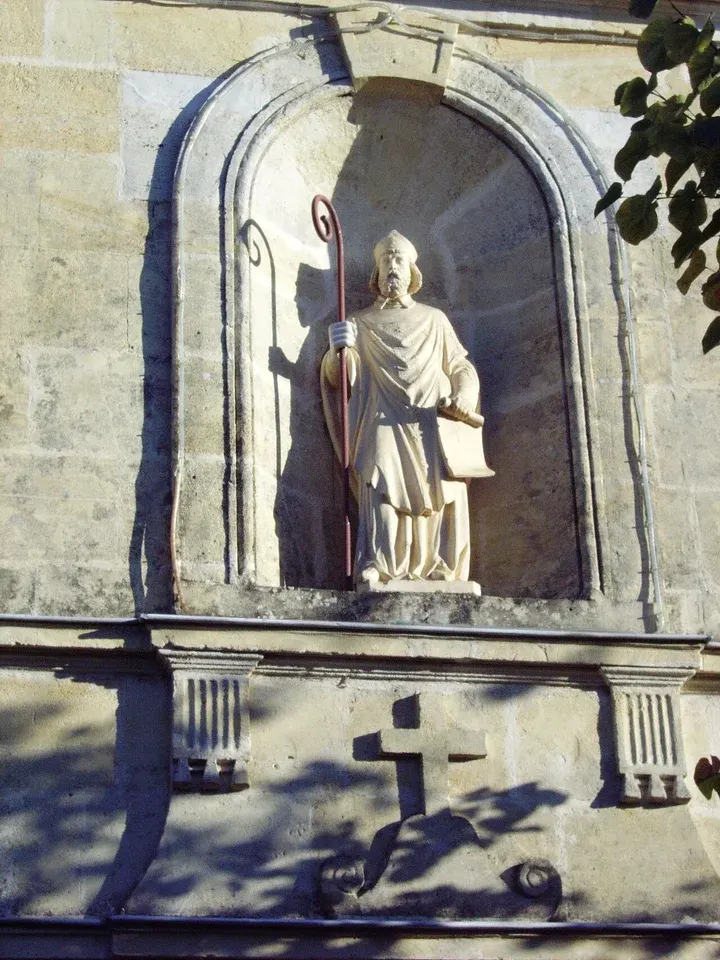
Biography
Medard was a bishop associated with Noyon in northern Gaul. His ministry belongs to the period of Frankish rule and the development of diocesan structures amid political insecurity. Traditional accounts connect him with the movement of an episcopal center from Vermand to the more defensible town of Noyon.
The movement from Vermand to Noyon is traditionally explained through security: a bishop needed a place from which ministry could continue amid conflict. Later accounts also connect him with Tournai. These details belong to the complicated development of northern Gallic sees and should not be harmonized into false chronological precision.
His reputation spread widely after his death, and a major abbey near Soissons developed around his tomb. Numerous popular stories later attached themselves to him, including weather-related legends, which should not be confused with firmly documented events. Even his precise chronology varies between accounts. The Church's June 8 commemoration preserves the memory of an influential early medieval bishop.
Royal interest in his burial helped give the shrine near Soissons prominence. The abbey that developed there made his memory part of the religious landscape of the Frankish kingdoms. Later weather folklore records popular reception, whereas his bishopric and the spread of his cult are the more useful foundation for understanding his historical importance.
Context & contribution
Architecture shaped by access to the tomb
The surviving crypt at Saint-Médard in Soissons shows how veneration affected a building's design. The city's heritage account describes three adjoining burial chambers beneath the church's east end, reached by stairs on both the north and south. Pilgrims could approach the sacred space while the community retained room for its liturgical celebrations.
The same account leaves some features unresolved: the purpose of later niches is unknown, and the well has not been dated. Those admissions help distinguish archaeological observation from devotional interpretation. Medard's legacy can therefore be studied through circulation routes, building alterations, and burial arrangements, even where stories about his lifetime cannot be established with comparable precision.
Explore the sources for this section
AI-assisted source comparison updated 2026-09-26. Editorial approach
From the Saint Discovery blog
Keep exploring your faith
Practical guides to prayer, the saints, and living the Catholic faith.
Why Do Catholics Pray to Saints? Intercession Explained
Why do Catholics pray to saints? Learn how intercession differs from worship, how it relates to Jesus, and a simple way to ask a saint to pray for you.
A next step with your saintRead the article Living the seasonsHow to Celebrate Your Patron Saint's Feast Day at Home
Celebrate your patron saint's feast day with prayer, a short biography, and an act of kindness. A practical plan for families, sponsors, and individuals.
A next step with your saintRead the articleFrom reading to reflection
What will you carry with you?
After reading about St. Medard of Noyon, take a moment to consider:
- Sketch the crypt's paired stairways and burial chambers, then explain how their arrangement could accommodate both pilgrims and a worshipping monastic community.
These are reflection prompts from Saint Discovery, not quotations from the saint.
Sources and further reading
Biography source comparison recorded on . This is an AI-assisted comparison, not independent human or ecclesiastical approval.
What the recorded review covers
AI-assisted expansion of the existing source-reviewed biography with comparison to retrieved cited sources; not ecclesiastical approval
A source list helps you check an account; it does not establish that every claim is certain. Follow the biography’s qualifications about historical evidence, traditions and feast calendars.
Suggest a correction to this biography
How we research these pages and handle corrections · Directory corrections log
More lives to explore
Suggestions based on the site’s quiz themes, not a historical relationship or a measure of holiness.