Catholic saint biography
St. Martial of Limoges
- Commemoration:
- June 30
- Lived:
- Traditionally third century — Limoges, Gaul
Why dates and liturgical observances can differ
Read the sources for this biography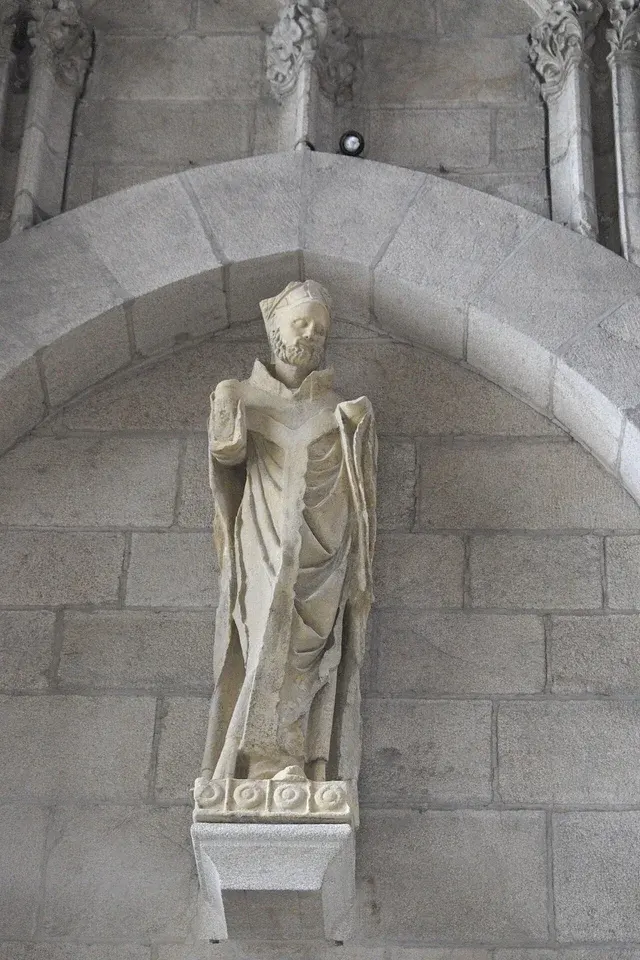
Biography
Martial is remembered as the first bishop and evangelizer of Limoges. Gregory of Tours places him among bishops sent to preach in Gaul during the third century. His precise birthplace, dates, and activities cannot be reconstructed confidently from the surviving evidence, but his local veneration is ancient.
The account of Gregory of Tours belongs to a narrative of the evangelization of Gaul. Its broad setting is different from the later claim that Martial personally witnessed Gospel events. The distinction changes the chronology by centuries and is more significant than a minor variation in a feast date.
Later writers expanded his story dramatically, presenting him as one of Jesus' disciples and connecting him directly with Peter. The Catholic Encyclopedia rejects that identification, and the Holy See declined to grant him the title of disciple of Christ in the nineteenth century. His historical identity should therefore remain the early missionary bishop of Limoges, commemorated on June 30.
The eleventh-century life attributed to a supposed early successor illustrates how local prestige could encourage increasingly elaborate origin stories. His real importance does not depend on those additions. The memory of a founding bishop, preserved at Limoges, is sufficient to explain his place in the region's Christian history.
Context & contribution
Enamel and manuscripts preserve the later legend
Martial's cultural legacy can be studied through surviving objects from the abbey that bore his name. Limoges's museum acquired six enamel plaques by Jean II Pénicaud, dated 1544, from an altarpiece of the former basilica of the Savior. Their scenes illustrate the expanded legend, including the child Martial present at the multiplication of the loaves.
The city's library also acquired a book of hours from the 1490s made for Saint-Martial's liturgical use. Such objects document what later communities prayed, pictured, and valued. The enamel scenes are evidence for Renaissance devotion and local artistic production; their survival does not turn the episodes they depict into eyewitness evidence about the early bishop.
Explore the sources for this section
AI-assisted source comparison updated 2026-09-26. Editorial approach
From the Saint Discovery blog
Keep exploring your faith
Practical guides to prayer, the saints, and living the Catholic faith.
Why Do Catholics Pray to Saints? Intercession Explained
Why do Catholics pray to saints? Learn how intercession differs from worship, how it relates to Jesus, and a simple way to ask a saint to pray for you.
A next step with your saintRead the article Living the seasonsHow to Celebrate Your Patron Saint's Feast Day at Home
Celebrate your patron saint's feast day with prayer, a short biography, and an act of kindness. A practical plan for families, sponsors, and individuals.
A next step with your saintRead the articleFrom reading to reflection
What will you carry with you?
After reading about St. Martial of Limoges, take a moment to consider:
- Choose one of Pénicaud's Martial scenes and write two labels: one describing the legend represented, the other explaining what the object proves about sixteenth-century Limoges.
These are reflection prompts from Saint Discovery, not quotations from the saint.
Sources and further reading
Biography source comparison recorded on . This is an AI-assisted comparison, not independent human or ecclesiastical approval.
What the recorded review covers
AI-assisted expansion of the existing source-reviewed biography with comparison to retrieved cited sources; not ecclesiastical approval
A source list helps you check an account; it does not establish that every claim is certain. Follow the biography’s qualifications about historical evidence, traditions and feast calendars.
Suggest a correction to this biography
How we research these pages and handle corrections · Directory corrections log
More lives to explore
Suggestions based on the site’s quiz themes, not a historical relationship or a measure of holiness.