Catholic saint biography
St. Ansgar
- Commemoration:
- February 3
- Lived:
- 801–865 — Picardy and northern Europe
Why dates and liturgical observances can differ
Read the sources for this biography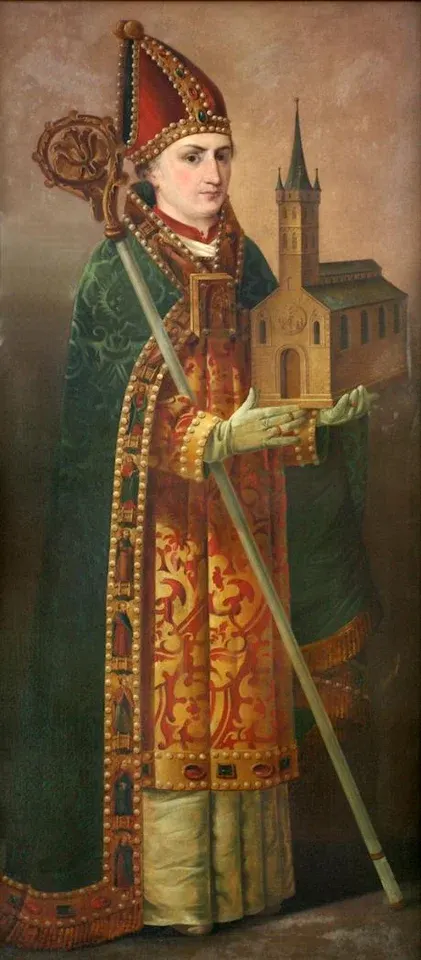
Biography
Ansgar, also called Anschar or Oskar, was a Benedictine monk associated with Corbie and its foundation in Westphalia. He undertook missions to Denmark and Sweden, establishing Christian communities in places where their survival depended on changing political conditions.
His first Danish mission depended on the return of a Christian ruler and suffered when that ruler was again expelled. In Sweden he received permission to preach and helped establish a church. These beginnings were limited footholds, not evidence that the region immediately became Christian.
After the destruction of Hamburg, he had to rebuild the institutional basis of his work. The tradition also remembers hospitals, aid to captives, and generous almsgiving. His title Apostle of the North describes the lasting importance of these efforts despite their uneven immediate results.
He became bishop of Hamburg and continued his work after the city was destroyed in 845. His ministry subsequently connected Hamburg with Bremen. His legacy rests on sustained missionary work through setbacks, rather than on an immediate conversion of all Scandinavia. The Catholic calendar commemorates him on February 3.
Context & contribution
Schools, captives, and the infrastructure of a mission
Ansgar's northern journeys depended on supporting institutions outside the immediate mission field. The Catholic Encyclopedia records schools at Schleswig and Turholt, alongside churches and appointed clergy. Education and a stable base helped make preaching something that could continue after an individual visit.
His work also included hospitals, assistance to captives, and efforts to reduce the harms of the slave trade. These concerns connect evangelization with the vulnerabilities of people moving through northern Europe's political and commercial networks. His career is therefore best measured through several forms of continuity: people trained, worship maintained, and care renewed after disruptions, rather than a simple count of royal conversions.
Explore the sources for this section
AI-assisted source comparison updated 2026-09-26. Editorial approach
From the Saint Discovery blog
Keep exploring your faith
Practical guides to prayer, the saints, and living the Catholic faith.
What Is the Domestic Church? John Paul II on Faith at Home
What Catholics mean by the domestic church, how John Paul II explained family life, and practical ways to begin with prayer, forgiveness and welcome.
Bring reflection into prayerRead the article Prayer & reflectionHow to Make a Spiritual Communion When You Cannot Receive
Learn how to make a spiritual communion, with a short original prayer and clear guidance on Mass, Confession, and times when you cannot receive.
Bring reflection into prayerRead the articleFrom reading to reflection
What will you carry with you?
After reading about St. Ansgar, take a moment to consider:
- Map the resources Ansgar's mission needed besides a preacher: a school, local clergy, shelter, and protection. Which were most vulnerable when a ruler changed?
These are reflection prompts from Saint Discovery, not quotations from the saint.
Sources and further reading
Biography source comparison recorded on . This is an AI-assisted comparison, not independent human or ecclesiastical approval.
What the recorded review covers
AI-assisted expansion checked against retrieved historical and institutional sources; traditions distinguished from documented history; not ecclesiastical approval
A source list helps you check an account; it does not establish that every claim is certain. Follow the biography’s qualifications about historical evidence, traditions and feast calendars.
Suggest a correction to this biography
How we research these pages and handle corrections · Directory corrections log
More lives to explore
Suggestions based on the site’s quiz themes, not a historical relationship or a measure of holiness.