Catholic saint biography
St. Marguerite Bourgeoys
- Commemoration:
- January 12
- Lived:
- 1620–1700 — Troyes, France; active in Montreal
Memorial in Canada.
Why dates and liturgical observances can differ
Read the sources for this biography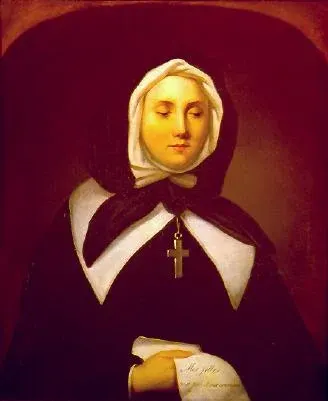
Biography
Marguerite Bourgeoys was born in Troyes and developed a vocation to teach while living outside a cloister. Invited to serve the settlement of Ville-Marie, she sailed to Canada in 1653. There she helped meet the educational needs of a small and vulnerable colonial community.
On the Atlantic crossing she cared for sick travelers, and in the settlement she assisted Jeanne Mance at the hospital. In 1658 a former stable became the setting for her school. Teaching took shape amid practical shortages and the work of building a settlement, rather than in an established educational system.
Her work led to the Congregation of Notre Dame, whose members combined religious commitment with active ministry in the world. This form of life reflected her desire to imitate Mary's presence among ordinary people. Marguerite died in Montreal on January 12, 1700, and was canonized in 1982. Her legacy includes the community she founded and its continuing educational mission.
Journeys back to France brought support and companions, while Canadian women also entered the community. Maintaining an active form of religious life required ecclesiastical negotiation. The resulting institute joined catechesis and practical education; its colonial setting and its work with Indigenous pupils belong to the same history and should not be treated as unrelated stories.
Context & contribution
A school supported by migrant hospitality
Bourgeoys's educational work included helping women establish households in a precarious settlement. The Canadian bishops' account describes her community receiving the filles du roi, women sent to New France with royal dowries, at Saint-Gabriel Farm. Domestic instruction and needlework belonged to this wider preparation for life in the colony; education extended beyond children's lessons.
The community also gradually drew its members from Canada. When the bishop discouraged further recruitment from France, Canadian women entered, including two Iroquois women. This development complicates a story told only as Europeans bringing institutions overseas: local women became participants in the congregation, within the unequal conditions of a colonial society.
Explore the sources for this section
AI-assisted source comparison updated 2026-09-26. Editorial approach
From the Saint Discovery blog
Keep exploring your faith
Practical guides to prayer, the saints, and living the Catholic faith.
Why Do Catholics Pray to Saints? Intercession Explained
Why do Catholics pray to saints? Learn how intercession differs from worship, how it relates to Jesus, and a simple way to ask a saint to pray for you.
A next step with your saintRead the article Living the seasonsHow to Celebrate Your Patron Saint's Feast Day at Home
Celebrate your patron saint's feast day with prayer, a short biography, and an act of kindness. A practical plan for families, sponsors, and individuals.
A next step with your saintRead the articleFrom reading to reflection
What will you carry with you?
After reading about St. Marguerite Bourgeoys, take a moment to consider:
- Compare the needs of a newly arrived woman at Saint-Gabriel with those of a child in Bourgeoys's classroom; identify one shared need and one distinct need.
These are reflection prompts from Saint Discovery, not quotations from the saint.
Sources and further reading
Biography source comparison recorded on . This is an AI-assisted comparison, not independent human or ecclesiastical approval.
What the recorded review covers
AI-assisted expansion of the existing source-reviewed biography with comparison to retrieved cited sources; not ecclesiastical approval
A source list helps you check an account; it does not establish that every claim is certain. Follow the biography’s qualifications about historical evidence, traditions and feast calendars.
Suggest a correction to this biography
How we research these pages and handle corrections · Directory corrections log
More lives to explore
Suggestions based on the site’s quiz themes, not a historical relationship or a measure of holiness.