Catholic saint biography
St. Martin of Tours
- Commemoration:
- November 11
- Lived:
- About 316–397 — Pannonia; active in Gaul
Why dates and liturgical observances can differ
Read the sources for this biography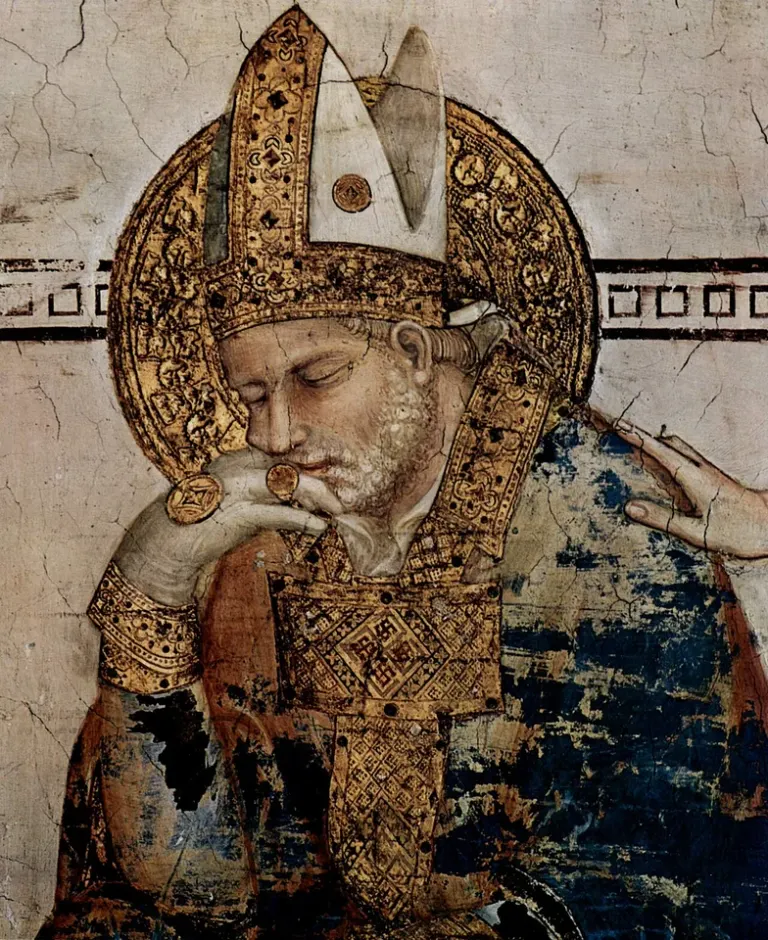
Biography
Martin served in the Roman army before becoming a monk and eventually bishop of Tours. Sulpicius Severus, a near-contemporary admirer, wrote an influential account of his life. Its best-known episode describes Martin sharing his cloak with a poor man and subsequently recognizing Christ in a dream.
His monastic formation is connected with Hilary of Poitiers. The movement from soldier to catechumen, baptized Christian, monk, and bishop gives his life a sequence more extensive than the familiar cloak scene. Communities around him provided a base for ministry beyond the city of Tours.
As bishop, Martin retained a monastic way of life and helped extend Christianity beyond urban centers. His ministry combined preaching, communities of monks, and involvement in the religious conflicts of his time. The miraculous episodes in his biography belong to its hagiographical presentation. His burial at Tours became a major focus of pilgrimage, and his feast is November 11.
Sulpicius wrote as an admirer who knew the religious world he described, but his purpose was to portray holiness. The work consequently joins valuable testimony with miracle narratives and exemplary episodes. Martin's later shrine helped carry that portrait across Europe, making him one of the most influential saints of the Latin West.
Context & contribution
Opposing execution without endorsing the accused
Martin intervened with Emperor Maximus on behalf of Priscillian and his followers when accusations of heresy became a capital case. He opposed putting their fate in the hands of imperial criminal justice without accepting their teaching. After their execution, he refused communion with Ithacius, a bishop who had pressed the prosecution.
The affair also exposed the cost of negotiation. On a later visit to Trier, Maximus made clemency for two other condemned men conditional on Martin's reconciliation with Ithacius. This episode gives his public ministry a difficult moral texture: preserving lives could require dealing with rulers and churchmen whose previous actions he strongly opposed.
Explore the sources for this section
AI-assisted source comparison updated 2026-09-26. Editorial approach
From the Saint Discovery blog
Keep exploring your faith
Practical guides to prayer, the saints, and living the Catholic faith.
What Is the Domestic Church? John Paul II on Faith at Home
What Catholics mean by the domestic church, how John Paul II explained family life, and practical ways to begin with prayer, forgiveness and welcome.
Bring reflection into prayerRead the article Prayer & reflectionHow to Make a Spiritual Communion When You Cannot Receive
Learn how to make a spiritual communion, with a short original prayer and clear guidance on Mass, Confession, and times when you cannot receive.
Bring reflection into prayerRead the articleFrom reading to reflection
What will you carry with you?
After reading about St. Martin of Tours, take a moment to consider:
- Discuss Martin's intervention using three separate questions: whether a teaching is true, who should judge its adherents, and whether execution is an acceptable response.
These are reflection prompts from Saint Discovery, not quotations from the saint.
Sources and further reading
Biography source comparison recorded on . This is an AI-assisted comparison, not independent human or ecclesiastical approval.
What the recorded review covers
AI-assisted expansion of the existing source-reviewed biography with comparison to retrieved cited sources; not ecclesiastical approval
A source list helps you check an account; it does not establish that every claim is certain. Follow the biography’s qualifications about historical evidence, traditions and feast calendars.
Suggest a correction to this biography
How we research these pages and handle corrections · Directory corrections log
More lives to explore
Suggestions based on the site’s quiz themes, not a historical relationship or a measure of holiness.