Catholic saint biography
St. Margaret of Antioch
- Commemoration:
- July 20
- Lived:
- Traditional early martyr; exact dates uncertain — Antioch in Pisidia, according to tradition
Traditional Western commemoration; known as Marina in Eastern tradition.
Why dates and liturgical observances can differ
Read the sources for this biography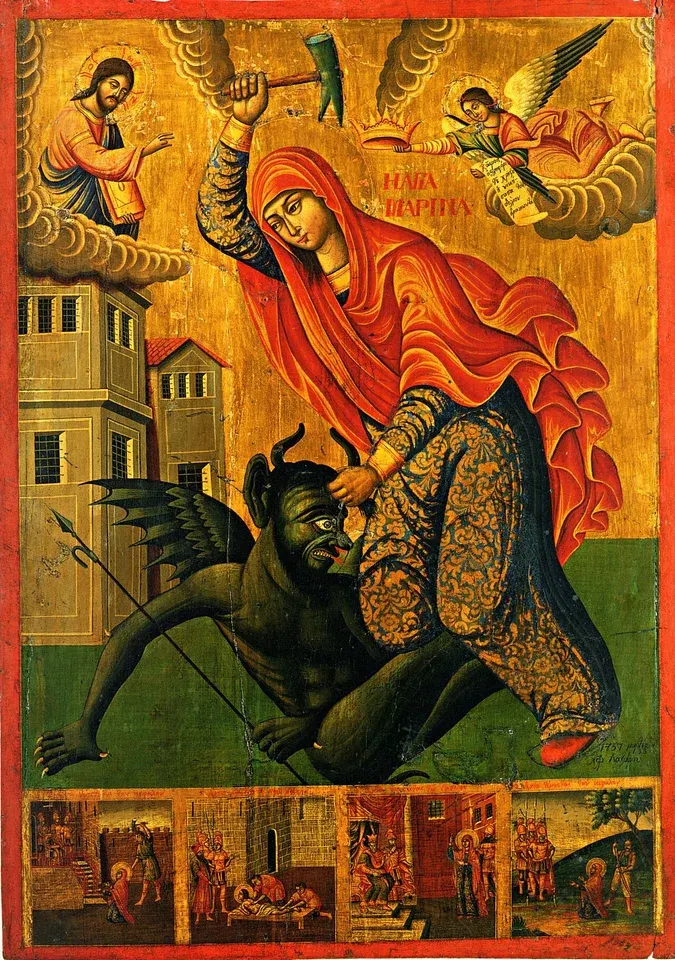
Biography
Margaret of Antioch is venerated as an early Christian martyr and is known in Eastern Christianity as Marina. Her story tells of a young Christian woman who resisted a powerful man's demands and remained faithful under persecution. The details come from legendary accounts rather than contemporary evidence.
Her legendary acts present several forms of coercion: unwanted sexual claims, threats, and demands for pagan worship. The narrative repeatedly portrays her refusing to surrender her faith. This pattern helps explain the appeal of her story to medieval readers, even where particular ordeals follow familiar literary conventions.
The famous episode involving a dragon became especially influential in Christian art and medieval devotion. It should not be presented as a documented historical event. The Catholic Encyclopedia explicitly questions the reliability of her narrative while describing the widespread growth of her cult. Her importance in religious history lies partly in this lasting devotional influence, with a traditional Western feast on July 20.
Images of a dragon, cross, or vessel refer to episodes in those acts. They are visual identifiers rather than corroborating evidence. A distinction between the history of her cult and the uncertain history of her life is especially necessary here, since even the century of the supposed martyrdom cannot be established confidently.
Context & contribution
A manuscript used in the fears of childbirth
The British Library's Egerton manuscript 877 contains an illustrated account of Margaret's passion followed by a prayer for a woman in childbirth. The catalogue notes wear apparently caused by kissing and the suggestion that the book served as a birthing aid. These physical and textual features document how her cult entered intimate family circumstances.
They do not verify the dragon episode or establish the details of her martyrdom. Instead, they show readers using a saint's narrative, images, and prayer in response to danger. Margaret's historical importance includes this material reception: a small book could connect an uncertain ancient biography with the well-attested anxieties and religious practices of medieval women.
Explore the sources for this section
AI-assisted source comparison updated 2026-09-26. Editorial approach
From the Saint Discovery blog
Keep exploring your faith
Practical guides to prayer, the saints, and living the Catholic faith.
Why Do Catholics Pray to Saints? Intercession Explained
Why do Catholics pray to saints? Learn how intercession differs from worship, how it relates to Jesus, and a simple way to ask a saint to pray for you.
A next step with your saintRead the article Living the seasonsHow to Celebrate Your Patron Saint's Feast Day at Home
Celebrate your patron saint's feast day with prayer, a short biography, and an act of kindness. A practical plan for families, sponsors, and individuals.
A next step with your saintRead the articleFrom reading to reflection
What will you carry with you?
After reading about St. Margaret of Antioch, take a moment to consider:
- Examine the catalogue description of Egerton 877 and separate observations about wear from interpretations of use; explain why both matter for Margaret's devotional history.
These are reflection prompts from Saint Discovery, not quotations from the saint.
Sources and further reading
Biography source comparison recorded on . This is an AI-assisted comparison, not independent human or ecclesiastical approval.
What the recorded review covers
AI-assisted expansion of the existing source-reviewed biography with comparison to retrieved cited sources; not ecclesiastical approval
A source list helps you check an account; it does not establish that every claim is certain. Follow the biography’s qualifications about historical evidence, traditions and feast calendars.
Suggest a correction to this biography
How we research these pages and handle corrections · Directory corrections log
More lives to explore
Suggestions based on the site’s quiz themes, not a historical relationship or a measure of holiness.